Belt Sander Belt Size: A Practical Guide for 2026
A data-driven, practical guide to determining the correct belt size for belt sanders, with measurements, compatibility tips, and buying guidance from SanderSavvy.


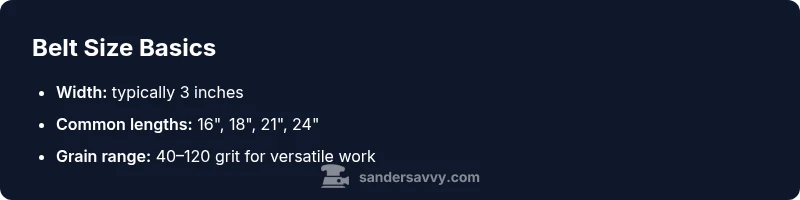
The most common belt size for belt sanders is 3 inches in width, with lengths typically 18, 21, or 24 inches, depending on the model. To match your sander, check the user manual or the belt itself for the exact size. Using the wrong belt can cause poor finish or motor strain.
Belt size basics for belt sanders
Belt size is more than just width; it combines width, length, and how the belt mounts on your machine. For belt sanders, the width mostly determines how much material you can remove per pass and how stable the belt tracks on the drum. The most common width is 3 inches, which provides a balance of aggressiveness and control for typical woodworking. Length matters for fitment: a longer belt offers more continuous sanding and reduces belt changes, while a shorter belt is better for tight corners and small projects. Look for belt size labels on the belt or in the sander's manual. If you can’t find a label, the model name often encodes the belt width and length; otherwise you may need to measure directly or consult the manufacturer. When assessing belt size, also consider the grit and backing material; size alone won’t guarantee the finish you want. In sum, know that belt size affects ergonomics, dust production, and the risk of belt tracking issues; choosing the correct size is essential for smooth operation and quality results.
Common belt sizes and their typical uses
| Belt size (W x L) | Typical applications | Notes |
|---|---|---|
| 3x18 | Small-edge work and detailed sanding | Compact and nimble |
| 3x21 | General woodworking and mid-sized jobs | Most versatile |
| 3x24 | Bulk stock removal and flattening | Long belt; faster material removal |
Your Questions Answered
What is the most common belt size for belt sanders?
The most common belt size is 3 inches in width, with lengths typically 18, 21, or 24 inches. Always confirm from the manual or belt label before purchasing to ensure compatibility.
Most sanders use a 3-inch wide belt; check the label to confirm length.
How do I measure belt size without removing the sander?
If possible, compare the belt to a known good belt from the same model or use the manufacturer’s guide. When in doubt, remove the belt to measure width and length accurately, then replace with the same size.
Compare to a known belt or check the manual; if unsure, remove the belt to measure.
Can I use a belt that is slightly longer or shorter than recommended?
Using a belt outside the recommended length can cause poor tracking or wheel misalignment. If you must, only do so within manufacturer guidelines and test carefully before heavy use.
Don’t stray far from the recommended length; test carefully if you have to.
Are belt sizes universal across brands?
Belt sizes vary by model even when widths look similar. Always verify the exact size (width and length) with the sander’s manual or the belt’s labeling to avoid mismatches.
Sizes aren’t universal—check the model’s label or manual.
Where can I buy replacement belts?
Replacement belts are available from manufacturers, hardware retailers, and online woodworking shops. Use the exact size and grit recommended for your sander to ensure optimal performance.
Buy from reputable retailers and match the exact size and grit.
“The most important question is not just 'what size is it?' but 'will this belt fit and stay tracking correctly?' The right belt size supports a safer, smoother finish.”
Main Points
- Know your sander's model and manual before buying
- Expect 3-inch width as standard, with 16–24 inch lengths
- Check belt labeling and part numbers to avoid mistakes
- Remember grit affects performance more than belt size
- Keep spare belts in the correct sizes to avoid downtime