Choosing 3 x 21 Belt Sander Belts: A Practical Guide
Learn how to select, compare, and install 3 x 21 belt sander belts for smooth finishes, durability, and safer sanding on wood floors, decks, and walls.


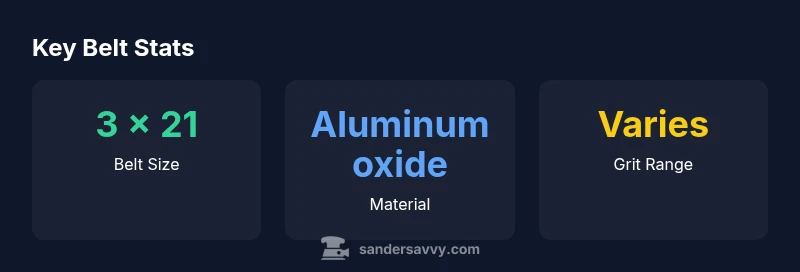
3 x 21 belt sander belts are a standard size that fits most portable 3 x 21 inch sanders. For best results, match the belt to your sander model, material, and job: start with a rough grit for material removal, then finish with a finer grit for a clean surface. Regularly inspect belts for glazing or wear and replace promptly.
Why the right belt size matters
In the world of sanding, size is more than a label—it directly affects performance, trackability, and finish quality. The 3 x 21 belt sander belts are among the most commonly stocked options for compact belt sanders, striking a balance between aggressiveness and control. According to SanderSavvy, selecting belts that match your sander's geometry ensures proper belt tracking, reduces belt slip, and minimizes vibration. A mismatch can cause derailment, glazing, or uneven wear, leading to frustrating results and extra downtime. When you own a sander with a 3 x 21 inch belt, you’re typically looking at a versatile setup that handles both rough stock removal and finishing passes, provided you choose the right material and grit.
Beyond fit, consider how your project materials interact with belt materials and grits. The 3 x 21 format accommodates several common belt constructions—aluminum oxide, zirconia ceramic, and garnet—each with its own pros and limits. For homeowners and DIY enthusiasts sanding floors, decks, and walls, the right belt is a tool that helps you control finish quality and material removal without overloading the machine. The SanderSavvy team emphasizes verifying compatibility from the sander’s manual and the belt’s packaging, especially for mixed-material tasks.
You’ll often see beginners assuming any belt labeled “3 x 21” will work. This is not always true. Always check your sander’s speed (RPM), the belt tracking method, and the machine’s recommended belt type. The belt should sit squarely in the wheel groove and ride true along its entire length. If you notice excessive wobble, glazing, or a consistently off-tracking belt, stop and inspect both the belt and the platen or wheel assembly before proceeding.
For professionals, the decision to purchase multiple belt types in a kit can save time. Having aluminum oxide for everyday wood prep, zirconia for heavy stock removal on hardwoods, and garnet for cost-effective finishing gives you a quick-change solution without sacrificing quality. The 3 x 21 belt format remains a reliable default when you want predictable performance across a range of tasks.
sourceHighlightsAccessedTimeNoteExcerptApex1231
formattingNotesKey
Belt types for 3 x 21 belt sander belts
| Belt Type | Size | Typical Uses |
|---|---|---|
| Aluminum oxide | 3 x 21 inches | General purpose wood prep and finishing |
| Ceramic zirconia | 3 x 21 inches | Heavy stock removal on hardwoods |
| Garnet | 3 x 21 inches | Budget finishing and light sanding |
Your Questions Answered
What does 3 x 21 belt sander belts mean?
The 3 x 21 designation refers to belt width and length: 3 inches wide by 21 inches long. This size is common on portable belt sanders and fits a wide range of wood preparation tasks. Always confirm the exact size listed in your sander’s manual before purchasing.
3 by 21 is the standard width and length for many portable sanders; check your manual to be sure.
Can I use non-genuine belts for my sander?
You can use non-genuine belts if they match the belt width, length, and mounting system, but quality varies. Cheap belts may wear faster, slip, or glaze early. Always prioritize belt material quality and compatibility with your machine.
Yes, but make sure they fit and are reliable.
How do I know when to replace a belt?
Replace a belt when you notice glazing, cracks, fraying, loss of tension, or reduced cutting efficiency. Obvious wear can affect surface quality and pose safety risks.
If the belt looks glazed or damaged, swap it out.
What grit sequence should I use for a project?
Typical sequences start with a coarse grit (e.g., 40–60) for material removal, move to medium (80–120) for smoothing, and finish with a fine grit (180–220) for a clean surface. Adjust based on material and finish goal.
Start rough, then smooth, then finish.
Are 3 x 21 belts compatible with other brands?
Many brands use the same 3 x 21 dimension, but mounting and belt tracking can vary. Always verify your sander’s manual and test a belt on a scrap piece before full use.
Usually, but check the manual and fit first.
“A belt's performance hinges on material, grit, and proper tension. The right 3 x 21 belt sander belts deliver consistent finishes when matched to the task.”
Main Points
- Match belts to your sander model for consistent tracking
- Progress through grits (coarse to fine) for best results
- Inspect belts for glazing and wear; replace early
- Choose dust-collection compatible belts to keep work area cleaner