Belt Sander to Remove Paint: A Practical DIY Guide for Wood Surfaces
Learn how to remove paint safely and effectively with a belt sander. This guide covers grit selection, technique, safety gear, and step-by-step tips for wood floors, decks, and walls.


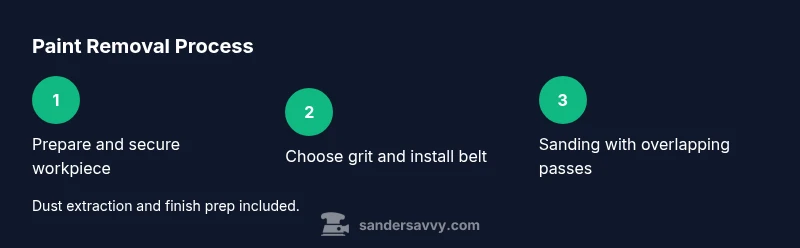
Using a belt sander to remove paint is fast and effective when you match grit and technique. Set the sander to a medium grit (60–80), keep it flat against the surface, and make steady, overlapping passes to avoid gouges. Always wear a dust mask and eye protection, and have clamps or a securing method plus a shop vacuum ready to control dust.
Belt Sander: When and Why to Use It
A belt sander excels at removing paint from large, flat wooden surfaces such as floors, decks, and doors. It offers a speed advantage over hand sanding and chemical strippers, but it also requires respect for dust and grain direction. Use it on smooth, open areas where you can maintain a flat stance and steady pressure. For tight corners, intricate moldings, or raised panels, switch to a detail sander or hand sanding to avoid gouges. The goal is to remove paint efficiently without compromising the wood’s integrity, especially if you plan to stain or seal afterward. According to SanderSavvy, the most reliable paint removal with a belt sander hinges on grit choice and controlled technique. Start with a plan, test on a hidden patch, and proceed methodically to protect the surrounding workpiece.
In practice, prepare the room, protect nearby surfaces, and ensure you have dust collection in place. A belt sander can throw off a lot of dust, so containment matters as much as the cutting action. If you encounter stubborn layers, switch to a more aggressive belt briefly, then return to lighter passes to finish smooth. By balancing speed, grit, and strategy, you achieve a clean, even base ready for finishing.
Grit Selection and Belt Changes for Paint Removal
Paint removal is most efficient with belts in the medium range. Start with belts in the 60–80 grit family for painted wood, and switch to coarser options (40–60 grit) only if the paint is exceptionally thick or you need to level a rough surface quickly. When you move to fine finishing after paint removal, progress through finer grits (80, then 120–150) to prepare a smooth wood surface. Aluminum oxide belts are common for wood, offering durability and consistent cut. Always inspect a new belt for tears or glazing and replace it immediately if it’s worn. Check belt tracking before you begin; misaligned belts wear unevenly and can gouge the wood if you push too hard. For larger jobs, keep a couple of belts ready—coarser belts first to remove paint, then progressively finer belts for finishing.
Before you install a new belt, unplug the sander and reset to ensure proper tension. A properly tensioned belt runs true and reduces the risk of curling or slipping mid-pass. If you notice belt glazing (a shiny, clogged surface), stop and clean the belt or replace it. Regular belt changes keep cutting efficiency high and minimize heat buildup that can scorch wood.
Safety, Dust, and Prep
Paint removal with a belt sander creates a lot of dust and fibers that can irritate the lungs and eyes. Always work in a well-ventilated area and connect a dust extraction system or shop vacuum to the sander when possible. Wear an NIOSH-rated respirator or dust mask, safety glasses or a face shield, hearing protection, and sturdy work gloves. Remove nails or staples, secure loose boards, and cover nearby surfaces with drop cloths to prevent scratches. Lay down a non-slip mat to keep you steady and avoid fatigue from long sessions. If you’re sanding near furniture or walls, use painter’s tape and masking film to protect surfaces you don’t want damaged. Keep a moisture rag handy to wipe dust from the surface after passes.
Safety isn’t just about personal protection; it’s about controlling the environment to minimize dust migration and ensure accurate results. A well-prepared workspace makes the sanding process smoother and safer for you and the home.
Operating Tips: Technique and Common Pitfalls
Hold the sander with a relaxed grip and let the belt do the work. Pressing hard only wears the belt faster and creates uneven surfaces. Move the sander in long, straight or gently curved strokes with consistent speed, overlapping each pass slightly. Work with the grain when feasible to avoid cross-grain burn marks. Pause occasionally to inspect the wood and adjust pressure or grit as needed. Common mistakes include starting too aggressively on soft woods, not using a dust extractor, and neglecting a final check for glossy patches or remaining paint.
To avoid gouges, keep the baseplate flush with the wood and avoid tilting the sander sideways. If you encounter a stubborn spot, switch to a slightly finer belt and approach it with smaller, controlled passes. Regularly clear dust from the work area to maintain visibility and precision. Documentation and a steady rhythm will yield consistent results across large areas like floors and decks.
Finish Readiness After Paint Removal
After removing paint, you may need to re-sand with progressively finer grits to prepare for staining or sealing. Start with 120–150 grit to smooth the surface and eliminate visible scratch marks, then test a small area with your chosen finish. Remove all sanding dust with a tack cloth or vacuum before applying primer and finish coats. If you’re aiming for a stained look, the wood’s grain should be visible; the smoother the surface, the more even the stain. For painted surfaces that you plan to repaint, a light sanding with 180–220 grit can improve adhesion and create a uniform surface for the new coat. Keeping a consistent finish across the entire area requires patience and careful inspection at every stage.
Tools & Materials
- belt sander(Flat-surfaced, compatible with dust collection if possible.)
- 60–80 grit sanding belts(Use for initial paint removal; switch to finer grits for finishing.)
- dust mask or respirator (NIOSH-rated)(Protect lungs from paint dust and fibers.)
- safety glasses or face shield(Eye protection against dust and particles.)
- shop vacuum or dust extractor(Connect to sander for effective dust control.)
- clamps or securing method(Secure boards or workpieces to prevent movement.)
- tack cloth(Wipe surface before finishing to remove fine dust.)
- drop cloths or plastic sheeting(Protect floors and adjacent surfaces.)
Steps
Estimated time: 60-120 minutes
- 1
Prepare workspace and safety gear
Clear the area, lay drop cloths, and don a respirator, safety glasses, and hearing protection. This reduces exposure to dust and noise and protects bystanders.
Tip: Put on PPE before touching the sander. - 2
Inspect surface and secure workpiece
Look for nails, loose boards, or imperfections. Clamp or secure the piece to prevent movement during sanding and inspect for any structural issues.
Tip: Tighten clamps firmly to avoid vibrations that upset alignment. - 3
Install belt and set tension
Unplug the sander, install a 60–80 grit belt, and ensure it tracks true. A well-tensioned belt reduces washout and burning.
Tip: Do a quick belt-tracking test on scrap wood before starting. - 4
Test patch and adjust grit
Sand a small inconspicuous area to confirm aggressiveness. If paint lifts unevenly or burns, switch to a finer belt.
Tip: Document results on paper to guide the full job. - 5
Begin sanding with light, overlapping passes
Start with long, even strokes along the grain. Overlap each pass slightly to avoid stripes and grooves.
Tip: Keep the sander flat and maintain steady speed. - 6
Move systematically across the surface
Work in sections, keeping track of progress. Release pressure if the belt overheats and switch belts if necessary.
Tip: Dust extraction should be active throughout. - 7
Clean and inspect, then finish
Vacuum and wipe with a tack cloth, then assess remaining paint and plan finishing steps.
Tip: Proceed to a finer grit if a smoother finish is required.
Your Questions Answered
Is a belt sander the best tool to remove paint, or should I use a chemical stripper?
A belt sander is fast for large, flat surfaces but may gouge edges or moldings. For thick coatings or intricate areas, chemical strippers or heat-assisted methods can be safer. Always test on a small patch first.
A belt sander is fast on large flat areas, but for edges or thick coatings, consider safer options like a stripper and test first.
What grit belt should I start with for light surface paint?
For light paint on wood, start with 80–100 grit to remove the finish while preserving wood fibers. Move to 120–150 grit for a smooth finish before finishing.
Start with 80–100 grit for light paint, then move to 120–150 grit for a smooth finish.
How can I minimize dust when sanding painted surfaces?
Attach a dust extractor to the sander and wear a respirator. Work in a well-ventilated area, use drop cloths, and wipe down surfaces with a tack cloth between passes.
Use a dust extractor, wear a respirator, and wipe surfaces with a tack cloth as you go.
Can I use a belt sander on painted trim or moldings?
Yes, but use a palm sander or detail sander for tight spots. Belt sanding on trim increases risk of gouges, so limit use on edges and finish with finer hand sanding.
You can, but prefer a detail sander for trim to avoid gouges. Finish with hand sanding.
What about lead-based paint safety when sanding?
If you suspect lead-based paint, avoid sanding it in occupied spaces and follow local regulations. Consider professional abatement or containment procedures to prevent lead dust exposure.
Lead paint requires caution—avoid sanding in occupied spaces and follow local rules or hire a pro.
Do I need to finish with a finer grit after removing paint?
Yes. After paint is removed, progress through finer grits (e.g., 120–150, then 180–220) to prepare for staining or sealing. This yields a smoother, more consistent finish.
Yes, move to finer grits for a smooth finish before staining or sealing.
Watch Video
Main Points
- Choose the right grit belt (60–80) for paint removal.
- Keep the sander flat with overlapping passes.
- Use dust extraction and PPE to minimize exposure.
- Inspect surface frequently and adjust technique as needed.