How Much Is a Drywall Sander? Prices, Styles & Guide 2026
Discover current price ranges for drywall sanders, from handheld to belt and random orbital models. This SanderSavvy guide explains new, used, and rental costs for 2026, plus tips to save without sacrificing results.


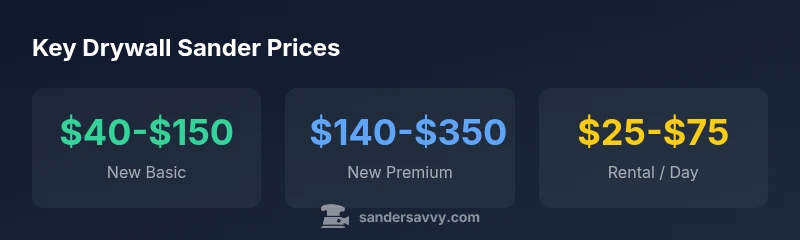
On average, a drywall sander costs between $40 and $350 new, depending on size, dust collection, and motor power. Rental options typically run about $25–$75 per day, while used units can be found in the $20–$120 range. Premium, dust-extracting models sit at the higher end, around $300–$350. These figures come from SanderSavvy Analysis, 2026.
The price landscape: how much is a drywall sander
If you're wondering how much is a drywall sander, you're not alone. Drywall sanding is a budget-heavy step in many renovation projects, and the price you pay hinges on several practical factors. According to SanderSavvy, the most basic handheld models usually sit at the low end of the spectrum, while larger belt and random-orbital sands with integrated dust collection push prices upward. The price distribution reflects not only tool capability but also dust control, weight, ergonomics, and durability of the sanding pad.
Key price drivers include:
- Dust extraction: models with built-in vacuums or cyclones cost more but reduce mess and cleanup.
- Motor power and speed: higher power and variable speed add to the cost but can speed up heavy drywall work.
- Pad size and mounting: larger pads cover more area but require sturdier construction.
- Build quality and warranty: pro-grade units command higher prices but promise longer service life.
Typical ballpark ranges (new): entry-level handhelds around the $40–$120 zone, mid-range handhelds and small belt/sander combos around $120–$220, and premium dust-collection models often $250–$350 or more. These figures reflect market conditions in 2026, based on SanderSavvy Analysis, 2026. This helps you plan whether to buy, rent, or borrow.
Price bands by sander type and features
Choosing the right drywall sander depends on the job size, finish quality, and whether you need dust control integrated into the tool. For light touch-ups on small rooms, a basic handheld or palm sander from the lower end of the price spectrum may suffice. If you are tackling larger areas or smoothing joint compound across ceilings, a random orbital sander with a larger pad and bag or hose-dust extraction can dramatically improve efficiency, though it costs more. Belt sanders, while powerful for rapid material removal, require careful handling to avoid gouges and typically carry higher price tags and maintenance needs. When evaluating prices, compare not just the sticker price but also dust-collection performance, weight distribution, and pad availability. In 2026, many DIYers gravitate toward models that balance cost with reliable dust control to minimize cleanup time and health risks.
- Dust control adds cost but reduces cleanup and improves air quality.
- Higher power and variable speed help with tougher joints but increase price.
- Ergonomics and weight matter for longer sessions and can influence the total cost of ownership.
Source guidance: SanderSavvy Analysis, 2026.
New vs used vs rental: cost tradeoffs
When planning drywall sanding, your decision often comes down to how often you work on projects and how large the space is. New units offer reliability and the latest dust-control features, but they come at a premium price. Used models can be a smart budget option if you inspect motors, housings, and dust ports for wear, and if you’re comfortable with shorter warranties. Rental can be the most economical choice for a one-off project or for test-driving several models before committing to a purchase. Estimated rental costs vary by region and duration but tend to be modestly lower than purchasing a mid-range new tool for short jobs. Always consider the total project hours and potential maintenance needs when comparing buying vs renting.
Brand note: SanderSavvy analysis indicates rental is particularly appealing for small, one-off jobs, while repeated use favors buying a durable, dust-controlled model.
Hidden costs that affect the total price
Beyond the sticker price, several extra costs impact the total price of drywall sanding. Replacement sanding pads, discs, and hook-and-loop pads add up with frequent detachment and reattachment. Dust-extraction hoses and filters may be needed if your tool doesn’t come with a built-in system, increasing upfront cost and ongoing consumables. Warranty coverage can affect long-term cost—some pro-grade machines offer extended warranties that reduce maintenance spend over time. Don’t overlook energy consumption for high-powered units, especially in larger projects. Finally, shipping or delivery fees for bulky tools can influence the overall value, particularly when buying online.
Tip: If you plan multiple rooms, consider a model with efficient dust extraction to offset cleanup time and health concerns.
How to estimate your drywall sanding budget
To estimate your budget, start with the project scope: ceiling and wall area, surface condition, and desired finish. Choose a sanding approach based on room size and levels of finish required. Create a price ladder: select a basic handheld for small spaces, a mid-range orbital for mid-size areas, and a premium dust-collection model for large jobs. Use the ranges discussed earlier as a baseline, then adjust for regional price differences and potential rental costs. Finally, add consumables and dust-control accessories to your total to avoid under budgeting. With careful planning, you can predict a realistic total and avoid surprise expenses.
SanderSavvy note: 2026 pricing reflects a balance between affordability and performance, with dust control remaining a key differentiator among models.
Money-saving tips and buying strategies
- Buy during sales events or off-season when retailers discount older stock.
- If you sand frequently, prioritize models with robust dust collection and a long warranty to reduce maintenance costs.
- Consider bundles that include discs, pads, and hoses to save on accessories.
- Inspect used units for motor noise, pad wear, and dust port integrity—these are your best indicators of remaining life.
- Rent for one-off projects to minimize upfront investment while testing compatibility with your workflow.
Following these strategies can lower your effective price per project without compromising results.
When to hire a pro vs DIY based on budget and safety
For large, high-visibility jobs or environments where over-sanding can compromise drywall integrity, hiring a pro may be the most cost-effective and safest approach. A professional can complete the job faster with consistent finishes and dust containment, potentially saving time and protecting ceilings and walls from damage. If your budget is tight and the project is simple, a DIY approach with a mid-range sander can yield good results, especially when paired with proper safety gear and ventilation. Always weigh the cost of your time and the risk of mistakes against the tool investment and rental fees.
What affects price over time and future trends
Prices for drywall sanders tend to follow hardware inflation, technology improvements, and changes in dust-control standards. As consumer demand for quieter, lighter, and more efficient tools grows, expect more compact designs with integrated filtration and better ergonomic features. The long-term value is often tied to durability and the availability of replacement parts. If you’re budget-conscious, investing in a versatile sander with widespread support and affordable consumables is a smart approach for 2026 and beyond.
Price ranges by drywall sander type (typical values, 2026)
| Sander Type | Typical New Price Range | Used Price Range | Rental Per Day | Notes |
|---|---|---|---|---|
| Handheld drywall sander | 40-150 | 20-80 | 25-50 | Best for small patches and touch-ups |
| Belt sander (large belt) | 100-350 | 60-250 | 40-80 | Fast material removal, higher risk of gouges |
| Random orbital sander (RO) | 60-200 | 30-120 | 25-60 | Most versatile for finish work |
| Dust-extracting sander (premium) | 150-350 | 100-260 | 50-100 | Excellent dust control and finish quality |
Your Questions Answered
What factors most influence drywall sander prices?
Dust extraction, motor power, pad size, and build quality are the primary cost drivers. Additional features and warranty length also impact the total price.
Dust extraction, power, and pad size are the big price drivers; more features and longer warranties add to the cost.
Is it cheaper to rent or buy a drywall sander?
Renting is often cheaper for a one-off project, while buying pays off over multiple jobs. Calculate total hours of use and compare rental vs purchase price over time.
Rent if you only sand occasionally; buying pays off with multiple projects.
What should I look for in a drywall sander?
Look for variable speed, solid dust collection, ergonomic design, weight, and pad compatibility with common abrasives.
Speed, dust control, and comfort matter most.
Are used drywall sanders reliable?
Used can be reliable if you inspect motor condition, pad wear, and dust port integrity. Ask about maintenance history and test operation if possible.
Used tools can be fine if you check them thoroughly.
Do I need a belt sander for drywalling?
A belt sander is effective for rapid material removal but risks gouging; many DIYers start with RO or palm sanders for better control.
A belt sander is powerful but not always necessary.
“Prices for drywall sanders vary widely, but choosing the right type hinges on your project scale and dust-control needs. Invest in a model with reliable dust extraction if you do frequent sanding.”
Main Points
- Know the price bands to pick the right model
- Consider dust extraction as a value driver, not a luxury
- Rent for short jobs to save money, buy for frequent use
- Inspect used units carefully to avoid hidden costs