Sanding Over Drywall Tape: Safe, Smooth Finishes
Learn how to sand over drywall tape for a flawless wall finish. Prep, feather the seam, control dust, and finish with prime and paint—guided by SanderSavvy.


You will learn how to sand over drywall tape to create a seamless wall finish. This guide covers surface prep, choosing the right sanding tools, feathering the seam, and finishing with dust control and coatings. You’ll avoid ridges, tears, and drywall damage by using proper technique, protective gear, and safe cleanup steps.
What sanding over drywall tape is and why it matters
Sanding over drywall tape is the process of smoothing the joint where drywall panels meet by feathering the joint compound beyond the tape edge. A properly sanded seam disappears under primer and paint, yielding a uniform wall surface. If you skip feathering or press too hard, you risk ridges, gouges, or pulled tape. This is especially important in high traffic rooms where lighting can reveal flaws. According to SanderSavvy, the most common mistake DIYers make is sanding too aggressively near the tape, creating dips rather than a flat plane. The SanderSavvy team found that the best results come from maintaining light, even pressure and using a sanding block that conforms to the wall contour. The goal is to flatten the joint without removing too much mud or exposing tape. This section sets the foundation for the rest of the workflow, emphasizing planful steps rather than brute sanding.
Preparation and assessment before you begin
Before you grab sandpaper, inspect the joint for bulges, dimples, or missing mud around the tape. If the joint shows multiple coats of mud, allow each layer to dry fully and lightly sand between coats to keep the surface flat. Gather your materials, protect adjacent surfaces, and set up a vacuum system or damp towels to capture dust. Decide whether the seam needs a third skim coat; if so, you will need to wait for full cure before sanding. With drywall tape, the key is to know whether the tape has lifted or bubbled. If there are bubbles, you may need to re-embed the tape with a thin layer of joint compound and let it cure. This step reduces the risk of sanding through tape later. Overall, a deliberate plan saves time and reduces the number of reworks.
Feathering technique and seam blending
Feathering is the act of tapering the mud outward from the tape to blend into the surrounding wall. Start with a thin coat over the tape, and extend the mud a few inches beyond the seam. Let it dry completely, then sand with a 120–150 grit sanding block to remove raised ridges. Move in long, even passes, keeping the block nearly parallel to the wall. After the initial pass, check the seam with a raking light: shift your angle until you can see any ridges or pits. If you see a slight depression or ridge after the first sand, apply a light second skim coat, feathering farther out. The goal is a smooth, homogeneous surface that looks flat under light. Avoid cross strokes that create swirl marks; keep your strokes consistent and controlled.
Tools, materials, and setup you need
Select tools that provide even pressure and good dust control. A sanding block or soft sponge sanding pad helps maintain a flat surface and avoids gouges. Use 120–150 grit paper for initial smoothing, then finish with 180–220 grit to refine. Keep a putty knife and joint compound on hand for touch ups. A vacuum with a HEPA filter or a wet dry vacuum keeps dust manageable, while a misting bottle helps dampen surfaces to reduce dust without saturating mud. Don’t forget PPE: respirator or dust mask, eye protection, and long sleeves. Position fans to create a cross breeze that moves dust away from your breathing zone.
Step by step workflow overview you can follow
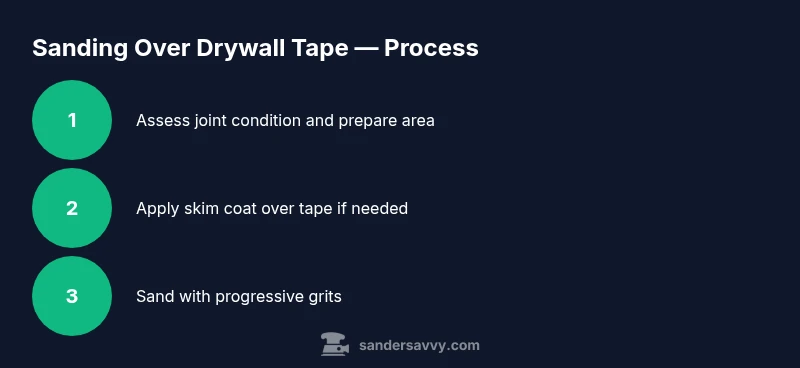
This overview maps to the detailed steps in the next block. Start with space prep and masking, then verify the tape integrity, apply a skim coat, and move through staged sanding with gradually finer grit. Maintain light pressure and frequent surface checks under bright light. If you notice ridges, apply a narrow skim to reset the blend and avoid over sanding the edges. Finally, clean thoroughly and test the area with a primer coat to confirm a uniform surface before painting.
Dust control, safety, and cleanliness during sanding
Dust control is essential for health and cleanliness. Use containment strategies like closing doors, hanging plastic sheeting, and using a shop vac at the source of sanding. Wear a respirator rated for fine dust and protect eyes and skin. Work with good lighting and minimal room airflow to keep dust out of adjacent areas. After sanding, wipe the surface with a damp cloth to remove fine particles and reduce the chance of dust getting trapped under primer.
Finishing touches: priming and painting after sanding over drywall tape
Once you achieve a flush seam, clean the surface of all dust and apply a drywall primer suitable for mud. Primer helps seal the joint compound and improves paint adhesion, ensuring a uniform finish. If you detect tiny imperfections, perform a final light sanding with 220 grit, then re-prime. After primer dries, you are ready for paint. With patience, the taped seam blends invisibly under color and sheen, delivering a professional look. The SanderSavvy team emphasizes that final inspection and proper paint selection are key to lasting results.
Tools & Materials
- Dust mask or respirator(NIOSH approved; use P100 or N95+ for fine dust)
- Sanding block or sanding sponge(Medium density; supports flat pressure)
- Sandpaper 120-150 grit(Initial smoothing over mud)
- Sandpaper 180-220 grit(Finish sanding for feathered seams)
- Joint compound (premixed or powder)(Thin skim coats for tape blending)
- Putty knife(Scrape and feather mud as needed)
- Vacuum with HEPA or damp towels(Dust containment and cleanup)
- Drop cloths and plastic sheeting(Protect adjacent surfaces and floors)
- Safety glasses(Eye protection during sanding)
- Primer and paint(Seal and finish after sanding)
Steps
Estimated time: 2-4 hours
- 1
Prep area and protect space
Clear the room, lay down drop cloths, and seal doors with plastic. Put on PPE before you start. Ensure ventilation is controlled to reduce dust spread.
Tip: Use a microfiber cloth to capture fine dust at the source. - 2
Inspect tape and decide on skim coats
Look for bubbles, loose tape, or uneven mud. If needed, embed tape with a thin layer of joint compound and let cure before sanding.
Tip: Address any tape issues first to avoid rework later. - 3
Apply thin skim over tape
Use a putty knife to apply a light skim coat over the tape, extending a few inches beyond the seam. Let it dry fully.
Tip: Keep coats thin to prevent cracking and trapping air pockets. - 4
First light sanding pass
Sand with 120–150 grit in long, even strokes. Check for ridges or dips and adjust pressure as needed.
Tip: Keep the sanding block nearly flat and parallel to the wall. - 5
Second skim for feathering
If needed, apply a second feather coat farther from the seam and let dry completely.
Tip: Feather out the edges gradually to blend into surrounding drywall. - 6
Final sanding with finer grit
Sand with 180–220 grit to achieve a flush surface. Wipe away dust and inspect under bright light.
Tip: Use small circular passes for stubborn ridges, but avoid over-sanding the tape edge. - 7
Clean up and prime
Vacuum and wipe surfaces, then apply a drywall primer to seal mud. Let primer dry before painting.
Tip: Primer helps reveal any remaining imperfections for a quick fix. - 8
Paint test and final inspection
Apply a test coat in a small area to verify even absorption and color match. Re-sand and re-prime if necessary.
Tip: Always test on a small area before committing to the full wall.
Your Questions Answered
Can I sand drywall tape without applying joint compound?
No, tape needs joint compound to fill gaps and wrap the tape. Sanding bare tape will not create a smooth surface.
Tape needs mud to create a smooth seam; sanding alone won’t fix it.
What grit should I start sanding with for drywall tape?
Start with 120 to 150 grit for the initial smoothing, then move to 180 to 220 grit for finishing.
Begin with 120 to 150 grit, then finish with 180 to 220 grit.
Is it safe to sand in a small apartment?
Yes, but prioritize dust containment. Use a vacuum, plastic barriers, and a respirator to minimize airborne dust.
Yes, but control dust with barriers and a good vacuum.
Should I prime after sanding over tape?
Yes. Priming seals the mud and helps paint adhesion, ensuring a uniform finish.
Yes, prime after sanding for a smooth finish.
How long should joint compound dry before sanding?
Let each coat dry fully as recommended by the product instructions, usually 24 hours, then sand lightly before applying the next coat.
Let the mud dry completely per product instructions.
What if the tape bubbled after drying?
If tape has bubbled, re-embed it with a thin coat of joint compound and let cure before sanding again.
If bubbled, re-embed tape with mud and reseal.
Watch Video
Main Points
- Feather seams for a seamless finish
- Begin with light passes and gradull to finer grit
- Dust control is essential for health and cleanliness
- Prime before painting to ensure color uniformity