How to Make a Dust Bag for a Sander: DIY Guide
Learn how to craft a durable, reusable dust bag for your sander with step-by-step instructions, material options, and safety tips. This SanderSavvy guide covers sizing, sewing, attachment, and maintenance to improve dust control and prolong tool life.


You’ll learn how to make a dust bag for a sander that fits common orbital and palm sanders, improves dust collection, and extends tool life. The guide covers fabric options, closures, sizing, sewing steps, and safety tips so you can build a reusable bag that reduces dust exposure and keeps your workspace cleaner.
Why a DIY dust bag for a sander matters
Dust control is a critical part of any sanding project. Fine dust from wood, finishes, and composites can irritate eyes and lungs, cling to surfaces, and foul filters. A DIY dust bag designed to fit your sander’s dust port can dramatically improve capture efficiency, reduce cleanup time, and extend the life of your sander by keeping debris out of internal mechanisms. According to SanderSavvy, a well-designed bag tailored to your sander’s port typically yields better containment than generic bags. For homeowners and DIY enthusiasts, investing a little time in a custom solution pays off with a cleaner workspace, safer breathing air, and more consistent finishes.
Design options and material considerations
There isn’t a one-size-fits-all bag. You’ll choose based on your sander’s port size, the type of dust you generate, and how you plan to attach the bag. Common options include a flexible fabric sleeve with a drawstring or zip closure, and a bottom panel that helps trap heavy particles while allowing fine dust to be captured by the vacuum system. Fabric choices range from heavyweight canvas to coated nylon or a breathable polypropylene. For fine sanding dust, consider a liner or inner filter layer to increase capture efficiency. The bottom line is to balance seal, airflow, and durability while ensuring the bag does not obstruct the sander’s venting. SanderSavvy’s practical guidance emphasizes testing different fabrics with your equipment to find the best balance between dust control and ease of use.
Planning and sizing for your sander port
Accurate sizing is essential for a snug fit that prevents leaks. Start by measuring the port diameter, height, and any lips or flanges that will influence how the bag attaches. Add a conservative seam allowance (usually 1–2 cm) so you can sew clean edges without constricting the port. If your sander uses a detachable dust canister, plan for a throat where the bag will attach, and decide whether you want a closure that’s quick to open for emptying. A simple drawstring is often enough, but a zipper can provide a tighter seal if you frequently sand in dusty environments. The goal is a bag that slides on without kadding threads or requiring tools to attach.
Cutting and prepping fabric
With measurements in hand, lay out the fabric on a flat surface. Mark the main panel, bottom circle (or rectangle), and any closure flaps. Use sharp scissors or a rotary cutter to ensure clean, straight edges. If you’re adding a liner, cut it slightly smaller to prevent bulk. Pre-wash or pre-seal the fabric if needed to reduce shrinkage after sewing. Press the fabric to remove wrinkles before cutting, which helps ensure even seams and a better fit on the sander port. Label pieces to avoid mix-ups during assembly.
Sewing the bag and attaching to the sander
Sew the main body and bottom, using reinforced seams along all edges that will bear tension. If you’re using a zipper, install it on a side seam with a lined flap to prevent dust from bypassing the closure. For a drawstring, add a channel along the top edge and thread a sturdy cord. Finish raw edges with bias tape or a zigzag stitch to prevent fraying. Once the bag is assembled, test-fit it on the sander port without power to ensure a smooth slip-on and a snug seal. It’s normal to refine the fit a couple of times until the bag sits evenly and does not obstruct the sanding action.
Attach, test, and maintain
Power up the sander with the bag in place to verify airflow and dust capture. Look for leaks around seams and ports; reseal any gaps with additional stitching or a light coating of fabric adhesive if permitted by your fabric. After use, empty the bag and shake out dust outdoors; wash or air-dry according to fabric care instructions. Regular maintenance is key: inspect seams for wear, replace the bag when the fabric shows thinning, and store it clean and dry with the sander so it’s ready for the next project.
Safety, maintenance, and common mistakes
Follow safety guidelines: wear a dust mask or respirator when testing and cleaning, and unplug tools before any adjustments. Common mistakes include using thin, lint-prone fabrics, skimping on seam allowances, and selecting closures that don’t seal well. A well-executed bag requires attention to fit, material durability, and ease of removal for cleaning. For longer life, consider occasional hand washing and air drying, and replace the bag at the first sign of wear or soiling that can’t be cleaned.
A primer on testing and optimization
Begin with a basic bag and compare its performance against a standard shop vacuum. If you notice air leaks around the seams, reinforce with additional stitching or edging. Track how much dust is captured on each pass and adjust the liner or fabric type accordingly. Small adjustments—like using a stiffer bottom panel or a tighter closure—can noticeably improve results over several sanding projects. The goal is a practical, reusable dust bag that you can customize for different sander models and dust types.
Tools & Materials
- Durable fabric (canvas or coated nylon)(Heavyweight material, 1–2 mm thick; choose a color that hides dust.)
- Strong polyester thread(Resists abrasion and moisture; match fabric color.)
- Sewing needle or sewing machine(For heavy fabric, a heavy-duty needle (size 90/14 or larger) is recommended.)
- Zipper or drawstring closure(Drawstring is simpler; zipper provides a tighter seal.)
- Scissors and rotary cutter(Sharp blades for clean cuts; keep them separate from fabrics that shed.)
- Ruler, measuring tape, chalk marker(Precise markings prevent miscuts and waste.)
- Pins or fabric clips(Hold pieces securely during sewing.)
- Grommets (optional)(If you plan to use a bolt-on port adapter.)
- Bias tape or edge finishing (optional)(Protects raw edges and improves durability.)
- Sander port adapter (optional)(Helps achieve a snug fit on different models.)
- Inner filter liner (optional)(Enhances dust capture for fine particles.)
Steps
Estimated time: 60-120 minutes
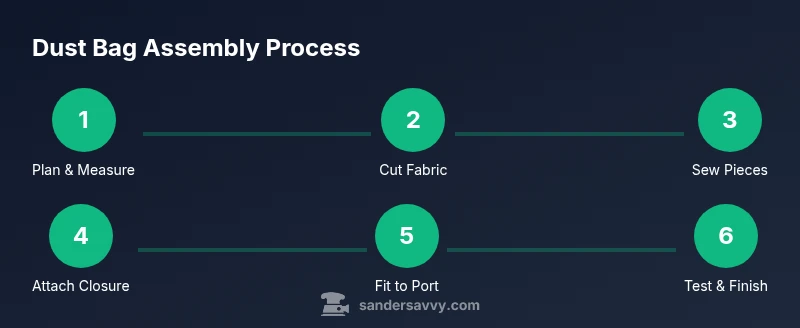
- 1
Measure and plan
Record port diameter, height, and any lips that affect attachment. Decide on a closure type and add 1–2 cm seam allowance for each cut. This planning minimizes later adjustments and ensures a clean fit.
Tip: Always double-check your sander’s port dimensions before cutting fabric. - 2
Cut fabric pieces
Lay out the fabric on a flat surface and cut the main panel, bottom, and closure flap with sharp scissors. Mark all pieces with labels to avoid mix-ups during assembly.
Tip: Cut slightly oversized for test fittings, then trim to final size. - 3
Sew the main body
Sew exterior seams first with reinforced stitches. If adding a liner, sew it separately and insert it before closing the bag. Finish edges with bias tape if available.
Tip: Use a straight stitch on the bulkier seams and backstitch at the start and end for strength. - 4
Install closure and edges
Attach the closure (drawstring or zipper) to the top edge. If using a drawstring, create a channel across the top and thread the cord, securing both ends.
Tip: Test the closure for smooth operation before sealing the top seam. - 5
Attach to sander port
Slide the bag onto the port and secure with the chosen method. Ensure there’s no obstruction to the sander’s exhaust path and that the bag sits flush against the port.
Tip: If needed, use a port adapter to improve fit and prevent leaks. - 6
Test and finish
Run the sander briefly to check for dust leakage; observe seams for separation. Clean the bag after use and air dry if washed. Store with the sander for quick access next time.
Tip: Begin with scrap material to verify the fit before committing to final fabric.
Your Questions Answered
What fabric is best for a dust bag?
Heavy-duty canvas or coated nylon is preferred for durability and dust resistance. Avoid fabrics that shed lint excessively.
The best fabrics are heavy-duty canvas or coated nylon because they resist wear and trap dust effectively.
Will a dust bag fit all sanders?
Most bags can be adapted with a port adapter or adjustable closure, but always measure your sander’s port first and choose a bag size that allows some clearance.
Most bags can be adjusted to fit many sanders, but verify port size before cutting.
How do I clean a DIY dust bag?
Shake out loose dust outdoors after use. If the fabric is washable, hand wash or machine wash on gentle cycle and air dry completely before next use.
Shake it outside, then wash if the fabric allows and let it air dry fully.
Is a dust bag better than a bagless canister?
A bag that seals at the port often reduces airborne dust more effectively when connected to a vacuum. A bagless canister can be convenient but may require more frequent cleaning.
Dust bags often minimize airborne dust better when used with a vacuum, but canisters can be convenient with regular maintenance.
Can I reuse the bag for finishes or hazardous dust?
Only reuse if the bag materials are compatible with the dust type and you have cleaned it, as hazardous dust could require specialized filtration. For unsafe materials, follow safety guidelines and dispose of the bag properly.
Reuse depends on dust type and fabric compatibility; for hazardous dust, follow safety rules and replace as needed.
How do I attach the bag to a random-orbital sander?
Use a port adapter or craft a snug fit with elastic closure so the bag sits securely without blocking the sander’s exhaust.
Attach with an adapter or snug elastic fit so the bag stays put and the exhaust remains clear.
Watch Video
Main Points
- Measure port size and plan before cutting fabric.
- Choose durable fabric and a secure closure.
- Test fit and adjust for a tight seal.
- Regularly inspect seams and clean after use.
- Store with the sander for quick setup