Sander and Dust Extractor: A Practical, DIY-Friendly Comparison
Explore a detailed comparison of sander and dust extractor setups, including performance, filtration, noise, and value. Learn how to choose the right pairing for safer sanding and cleaner finishes in DIY projects.


Compared to using a sander alone, pairing a sander with a dust extractor delivers markedly better dust control, cleaner finishes, and easier cleanup. The best setup depends on dust type, project size, and budget; in most DIY scenarios, a dedicated dust extractor connected to a random orbital sander offers the best balance of performance and cost. According to SanderSavvy, effective dust management is essential for safer sanding.
Why Dust Control Matters in Sanding
Dust control is more than a clean shop. Fine wood dust poses respiratory risks and can irritate eyes and skin. When you pair a sander with a dust extractor, you dramatically reduce airborne particles at the source, which benefits both health and finish quality. In a typical home workshop, a portable dust extractor connected to a sander captures particles before they escape the tool’s exhaust. This setup also makes cleanup easier and minimizes dust migration to adjacent rooms. For homeowners and DIY enthusiasts, investing in a sander and dust extractor combo often translates to safer, neater projects and fewer health concerns over time. According to SanderSavvy, a disciplined approach to dust management helps you maintain air quality and sustain longer tool life.
- Health-first rationale for using a dust extractor with sanding tools
- Cleaner work surfaces and less cleanup time
- Better visibility of the sanding surface due to reduced dust haze
- Reduced risk of cross-contamination between work areas
Comparison
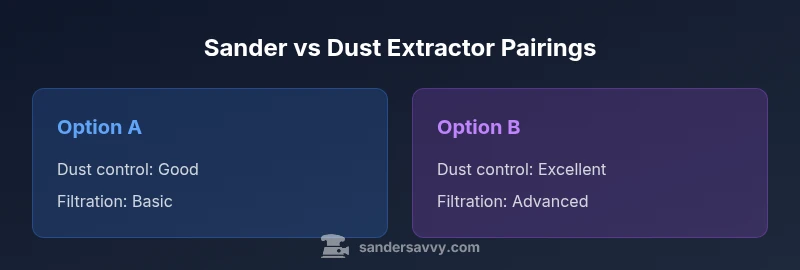
| Feature | Option A: Random Orbital Sander + Entry-Level Dust Extractor | Option B: Belt Sander + Mid-Range Dust Extractor |
|---|---|---|
| Dust Collection Efficiency | Good to excellent | Excellent |
| Filtration Type | Bag-based or basic cartridge | Canister with better filtration |
| Noise Level | Moderate | Low to moderate |
| Price Range | Moderate upfront, reasonable ongoing costs | Higher upfront with better long-term value |
| Best For | Finish-heavy detail work in smaller spaces | Versatile removal with solid extraction |
What's Good
- Substantial dust reduction improves health and visibility
- Cleaner finishes and easier cleanup after sanding
- Compatible with a wide range of sanders and workloads
- Can extend tool life by reducing debris intake
Weaknesses
- Higher upfront cost compared to basic setups
- Requires regular maintenance and emptying of dust bins
- May require additional hoses or adapters for different tools
In most DIY contexts, a sander paired with a dust extractor offers the best balance of dust control, finish quality, and practicality.
Choose this pairing for safer sanding, cleaner surfaces, and smoother transitions between coats. If budget or space is tight, start with a mid-range extractor and a compatible random orbital sander to get proven benefits first.
Your Questions Answered
What is the main benefit of using a dust extractor with a sander?
The primary benefit is significantly reduced airborne dust, which protects health, improves visibility, and yields cleaner finishes. A dedicated extractor captures particles at the source, making sanding safer and more efficient.
Using a dust extractor with a sander dramatically lowers dust in the air, helping you breathe easier and see the surface clearly for a better finish.
Can I substitute a shop vacuum for a dust extractor?
A shop vacuum can work in a pinch, but dedicated dust extractors typically offer better filtration, higher airflow control, and a more secure connection to sanding tools. For long-term results, choose a purpose-built dust extractor.
A shop vac can help, but a proper dust extractor usually handles fine dust better and stays connected to the sander more reliably.
What size extractor do I need for projects around the home?
For most home projects, a mid-range extractor with a good canister filter is sufficient. If you sanding larger surfaces or hardwoods regularly, consider a higher-capacity unit with better filtration.
Most home projects do fine with a mid-range extractor; bigger jobs may benefit from a higher-capacity model.
Is HEPA filtration necessary for sanding?
HEPA-style filtration is beneficial when you work with fine dust or have sensitive occupants nearby. It reduces fine particle escape and improves overall indoor air quality.
HEPA filtration helps trap the finest dust particles, which is good for sensitive spaces.
Which sander types pair best with dust extractors?
Random orbital sanders and detail sanders are widely compatible with most dust extractors. Belt sanders generate more dust and benefit especially from strong extraction and sealed dust paths.
Orbital and detail sanders pair very well with dust extractors; belt sanders need solid extraction to keep dust low.
How do I connect a dust extractor to a sander?
Check the sander’s dust port size and use a compatible hose and adapter. Secure all connections to prevent leaks, and maintain a clear airflow path from tool to canister.
Make sure the hose fits the tool port and is snug so dust can’t escape.
Main Points
- Prioritize dust control to protect health and air quality
- Pair a sander with a dedicated dust extractor for best finishes
- Choose a setup that balances upfront cost with long-term value
- Ensure proper filtration and compatible hoses/adapters