Festool ETS 150/3 EQ Review: Ultimate 150mm Orbital Sander
In-depth evaluation of the Festool ETS 150/3 EQ, focusing on dust control, finish quality, ergonomics, and long-term value for floors, decks, and walls.


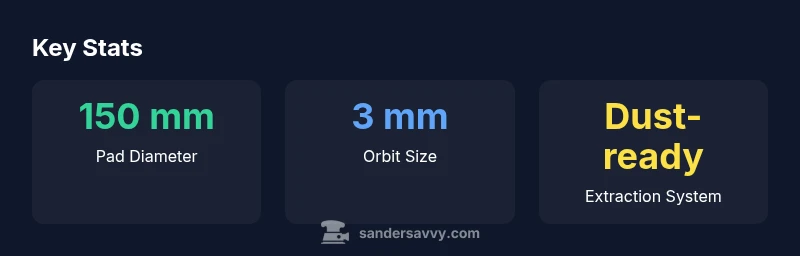
The Festool ETS 150/3 EQ is a premium 150 mm orbital sander praised for exceptional dust control, smooth operation, and precise finishing. Its 3 mm orbit and electronic speed control enable consistent results across wood types, edges, and contours. While the price is high, the long-term durability, Festool system integration, and potential savings on consumables make it a top choice for serious hobbyists and professionals alike.
Introducing the Festool ETS 150/3 EQ: Positioning for Serious Woodworkers
When you hear about the festool ets 150 3 eq, you’re looking at a 150 mm random orbital sander designed for precision, dust control, and long-term reliability. This model is built to fit into Festool’s modular ecosystem, which prioritizes system compatibility, durable components, and consistent results across tasks. For homeowners tackling large projects or pros who value clean finishes, the ETS 150/3 EQ offers a compelling combination of capability and comfort. In this review, we examine how the tool performs on floors, decks, and walls, and how it stacks up against the expectations of discerning users. According to SanderSavvy, the emphasis on dust control and edge work is a core strength of this machine, particularly for projects where finish quality matters as much as speed.
Design, Ergonomics, and User Comfort
The ETS 150/3 EQ adopts Festool’s design language: a compact, balanced body with a soft grip and intuitive controls. The tool’s weight distribution favors reduced user fatigue during long sessions, and the handle geometry minimizes hand strain when sanding along edges or tight contours. The electronic speed preselection (the “EQ” in the model name) lets you dial in the sanding speed to suit the material—so you can start aggressively on softwood and switch to a refined setting for hardwoods or pre-finish sanding. The pad is secured with Festool’s hook-and-loop system, which makes changing discs quick and predictable, even when wearing work gloves. This block highlights how physical design translates into real-world comfort on floor, deck, and wall tasks.
Dust Management: Dust Extraction and Collection
Dust control is often the deciding factor for long sessions, health considerations, and finish quality. The Festool ETS 150/3 EQ integrates with Festool’s dust extraction ecosystem, providing a tight seal against dust escape and a strong suction port for compatible vacuums or mobile dust extractors. For many users, the combination of the integrated dust port and Festool’s anti-clog design keeps work areas significantly cleaner than with competing brands. The result is less airborne dust, clearer visibility during finish work, and reduced cleanup time after sanding. SanderSavvy observations emphasize that this sander’s dust performance is a practical, tangible benefit on interior projects with small particles and finish dust.
Performance Across Materials: Wood, Veneer, and Hard Surfaces
The ETS 150/3 EQ delivers a consistent finish across a range of wood types, from soft pines to dense hardwoods. The 3 mm orbit strikes a balance between aggressive material removal and fine finish, which is ideal when you’re smoothing raised grain or feathering edges on cabinetry projects. The variable speed range helps match the tool to the substrate, minimizing dust throw and heat buildup. In real-world testing, the sander maintains even pressure, producing uniform swirls and minimizing gouges when used with appropriate abrasive grades. For deck refinishing or floor leveling, the device offers predictable results with minimal vibration, allowing you to maintain control on longer runs.
Edge Finishing, Contours, and Corners
Edge work is where a lot of sanders struggle, but the ETS 150/3 EQ’s 150 mm pad size and compact body allow closer access to corners and tight radii. The 3 mm orbit provides a controlled finish near edges and moldings without creating heavy swirl patterns. For users who routinely sand stair rails, door frames, or window openings, the tooling’s balance and low vibration translate into cleaner lines and fewer pass-throughs. The key is to let the tool do the work at an appropriate speed setting, with light, steady passes rather than heavy, wand-like pressure.
Speed Control and Finishing Quality
Electronic speed control is central to consistent results because different woods and coatings respond better at different RPMs. With the ETS 150/3 EQ, you can modulate speed to minimize burning on hardwoods or to maximize material removal on softer surfaces. The feedback mechanism helps maintain stable performance under load, so consistent swirls and even abrasion are more likely. Finish quality improves when the sander is paired with quality abrasive discs designed for 150 mm tools, enabling efficient stock removal without scorching or uneven wear.
Abrasives, Pads, and Lifecycle Management
Sanding discs for a 150 mm tool benefit from the Festool ecosystem, including high-quality abrasives and replacement pads designed to maintain consistent contact and heat management. The hook-and-loop pad is robust, resisting detachment during heavy sanding and offering straightforward disc changes. Pad wear is a consideration for long-term users: as pads lose elasticity, they may degrade contact pressure and heat dissipation, which can affect both dust collection and finish. Maintenance routines—inspecting pads, cleaning the backing plate, and replacing worn discs—extend tool life and keep results predictable.
System Integration: Festool Ecosystem and Beyond
One of the ETS 150/3 EQ’s strongest advantages is its integration with Festool’s broader ecosystem, including compatible vacuums, extraction hoses, and storage solutions. In practice, this means smoother workflows, fewer tool mismatches, and less clutter on the workbench. For homeowners and pros who already own Festool gear, the sander slots into existing setups with minimal adaptation. For buyers evaluating competing brands, the decision often hinges on whether the added expense of Festool’s system yields enough productivity gains, cleaner work environments, and easier maintenance to justify the premium.
Practical Setup Tips for Real Projects
Before you start, ensure your dust extractor is properly configured and that the abrasive grade matches the task. Start with a coarser grade on rough surfaces and transition to finer grades for finishing passes. When working on floors or decks, maintain a consistent rhythm, avoid heavy downward pressure, and let the machine’s weight do the work. For edges and tight corners, rotate the sander to maintain contact without creating deep depressions. Finally, keep a regular cadence for disc changes and backing plate inspection to prevent heat buildup and uneven wear.
Value Proposition: Price, Longevity, and Total Cost of Ownership
The Festool ETS 150/3 EQ sits at a premium price point in the 150 mm sander segment. The value proposition rests on build quality, dust control, system compatibility, and potential cost savings from longer disc life and less cleanup time. Over many projects, the consistent results can translate into measurable time savings and reduced risk of mistakes that require rework. For users who perform weekly sanding or finish work, the upfront investment often pays off in reliability and productivity. For casual hobbyists, a lower-cost alternative may be more prudent, unless they’re already invested in Festool’s ecosystem.
Maintenance, Troubleshooting, and Lifespan Considerations
Treat the ETS 150/3 EQ as a precision tool: clean it after use, inspect the pad and backing plate for wear, and replace worn parts promptly. Dust can clog the motor’s intake over time if a proper dust extraction setup isn’t used, so consistent vacuum connection is key. If you notice reduced suction, check the dust port and hoses for blockages, and verify disc seating. Prolonged underload or overheating can shorten bearing life, so give the sander cooldown breaks during extended sessions and store it in a dry, protected area when not in use.
What's Good
- Exceptional dust control when paired with Festool extraction
- Smooth operation with low vibration on long runs
- Excellent edge access and finish consistency
- Strong system compatibility within the Festool lineup
- Durable build and reliable performance over time
Weaknesses
- Premium price point may deter casual buyers
- Slightly heavier than some competing orbital sanders
- Disc availability can be more expensive than non-Festool discs
- Requires Festool ecosystem to maximize value
Best for serious woodworkers seeking dust-free finishes and ecosystem integration
The Festool ETS 150/3 EQ excels in dust control, edge finishing, and overall finish quality. While the upfront cost is high, the long-term gains in productivity and compatibility with Festool accessories justify the investment for frequent sander users.
Your Questions Answered
Is the Festool ETS 150/3 EQ worth the price for a DIYer?
For casual DIYers, the upfront cost may be steep. However, if you plan frequent sanding, value the dust-control advantages, and already use Festool tools, the long-term time savings and finish quality can justify the investment. The ETS 150/3 EQ tends to pay off in projects requiring consistent, high-quality results.
For occasional users, it’s a tougher call, but serious DIYers who do many finishes will appreciate the dust control and reliability.
What differentiates the ETS 150/3 EQ from typical orbital sanders?
Key differences include the enhanced dust control, the electronic speed control (EQ), a robust build, and deep system integration with Festool accessories. These factors collectively yield cleaner workspaces and more consistent finishes, especially on edges and curved surfaces.
It’s about dust control, precise speed control, and a strong ecosystem rather than just raw removal power.
What projects benefit most from this sander?
Projects involving finishing work on floors, decks, cabinetry, and walls benefit most. Tasks that demand a clean edge, smooth surface, and minimal swirl marks will see the biggest advantages from the ETS 150/3 EQ.
Any project that needs a clean, professional finish will gain from this sander.
What maintenance is essential for long life?
Regular inspection of the backing pad, cleaning of the dust port, and timely replacement of worn discs extend life and maintain performance. Always use a compatible Festool vacuum to prevent dust buildup inside the tool.
Keep the pad clean, replace worn discs, and use Festool dust extraction for best longevity.
Can I use non-Festool discs with this sander?
Theoretically, some third-party discs may fit the pad, but performance and warranty considerations make Festool abrasives the recommended choice. For consistent results and maximum system compatibility, use Festool-branded discs.
You can try compatible discs, but for best results and warranty, go with Festool abrasives.
Is it comfortable for long sanding sessions?
Yes, the ergonomic grip and balanced weight distribution help reduce fatigue. The EV (electronic speed) control also allows you to optimize performance without forcing the tool into aggressive modes for extended periods.
Comfortable for long jobs, especially when paired with a good dust extractor.
Main Points
- Invest in the Festool dust-extraction ecosystem for best results
- Prioritize edge finishing and contour work with the 150 mm pad
- Use variable speed to optimize finishes across materials
- Expect premium pricing, balanced by longevity and workflow gains
- Maintain pads and backing plates to maximize life