Drywall Sander for Rent: A Complete How-To Guide
Learn how to rent a drywall sander, choose the right model, prep your workspace, safely operate, and return the tool. This guide covers selection, safety, usage, and best practices for smooth drywall finishing without owning equipment.


Why renting a drywall sander makes sense
According to SanderSavvy, renting a drywall sander is a practical option for homeowners and pros tackling wall repairs without the burden of ownership. Renting reduces upfront costs, eliminates maintenance concerns, and allows you to access newer tools with the latest dust-control features. For many projects, a drywall sander for rent provides more flexibility than buying a unit that may only be used a few times a year. In addition, rental shops typically offer support, short-term warranties, and the ability to swap models if you encounter ceiling or corner work that requires a different attachment. This approach is especially appealing when you’re working on a tight schedule or juggling multiple rooms. When you plan ahead, you can reserve a model with built-in dust collection and variable speed, which helps you achieve a smoother finish with less cleanup by minimizing airborne particles. Overall, the rental path aligns well with DIYers who want professional results without long-term tool ownership.
Understanding drywall sanders: types and capabilities
Drywall sanding tools come in several forms, with the most common being random orbital sanders and palm sanders. A random orbital sander provides smooth, swirl-free finishes, especially when paired with compatible sanding discs, while a palm sander offers compact control for tight spots. For ceilings or walls with extensive joints, many renters choose a model that accepts dust extraction and has adjustable speed. SanderSavvy analysis shows that renters often prioritize models with efficient dust collection, reliable power delivery, and easy disc changes. If you’re dealing with popcorn ceilings or textured surfaces, you may need a more aggressive grit and a sturdier pad system. Understand the nuance of each option so you pick a unit that minimizes work and maximizes finish quality over large panels. Finally, consider the length of the extension cord, battery capability for cordless options, and the availability of replacement discs at the rental counter.
Renting vs. buying: cost considerations
Buying a drywall sander ties you to a single tool and ongoing maintenance costs, while renting shifts those fees to a temporary expense with more predictable budgeting. Renting can be especially cost-effective for one-off or seasonal projects, or when you want access to higher-end models for a specific job. The key cost drivers in rental scenarios include daily or weekly rates, deposits, protection plans, and the ability to swap between models if your project grows or shifts. Since exact pricing varies by region and shop, it’s wise to compare several local rental houses, ask about bundled accessories (discs, guards, and hoses), and confirm return conditions to avoid extra charges. In short, renting drywall sanding equipment can be a smart, flexible choice for DIYers who want professional-quality results without long-term commitment, storage concerns, or downtime for maintenance.
Preparation steps before you rent
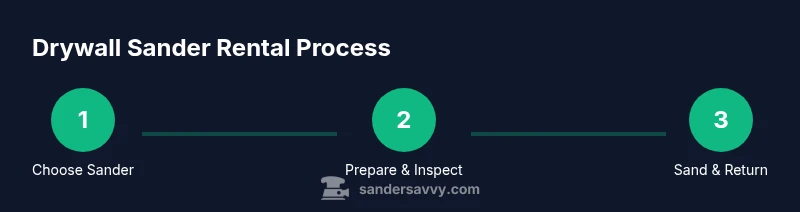
Before you walk into a rental counter, map out the rooms to be sanded, identify ceiling vs wall work, and estimate surface irregularities. Check if you’ll need an extended reach pole for ceilings, a corner pad for edges, and dust-control accessories that fit the model you’re considering. Gather PPE such as a respirator, safety glasses, and hearing protection. Prepare the workspace by laying down drop cloths or heavy-duty plastic and sealing off adjacent areas to contain dust. Gather a shop vacuum with a suitable filter and ensure you have a stable surface to place the sander during test runs. When you’re ready to rent, ask for a turnkey package that includes discs (60–220 grit range), replacement pads, and an appropriately rated extension cord. This preparation helps you avoid mid-project delays and ensures you get the right tool for your drywall finish.
How to inspect a rental drywall sander before taking it home
Always inspect the tool at the counter before leaving the shop. Check the plug, cord insulation, switch, and dust port for secure attachment. Inspect the sanding pad or disk mounting to ensure there are no loose parts. Run the sander for a short test on a scrap piece of drywall to verify even rotation, noise level, and vibration. Verify that the owner’s manual or guide is available, and confirm the recommended grit sequence for your job. If you notice any wobble, missing screws, or damaged discs, request a different unit or repair/replacement from the shop. A quick, thorough inspection saves time and prevents setbacks on the job site.
Safe setup: dust control, PPE, and workspace
Dust control starts with a well-sealed workspace and a suitable dust extraction setup. Attach the dust collection hose securely to the sander and connect it to a compatible vacuum or dust extractor. Wear a proper respirator rated for fine dust and eye protection, and avoid loose clothing that could catch on moving parts. Place drop cloths to protect floors and furniture, and close doors or use plastic sheeting to contain debris. Ensure you have clear pathways to minimize trip hazards, and keep pets and children away from the work area. A tidy, dust-controlled environment reduces cleanup time and keeps air quality safer during sanding tasks.
Operation basics: attach discs and start sanding
Discs come in a range of grits from coarse to fine. Start with a coarse grit to flatten ridges, then move to mid-grits and finishing grits for smoothness. Attach the disc securely to the sander, align the holes with the dust port, and ensure the vacuum hose seats firmly. Set the sander to a low or moderate speed, and apply light, even pressure—let the tool do the work rather than forcing it. Keep the sander moving in overlapping passes to avoid gouges or flat spots. Periodically pause to vacuum the area and inspect the surface for uniformity. If you’re working near corners or edges, use a smaller pad or edge attachment to maintain control and avoid over-sanding.
Common mistakes and how to avoid them
Avoid pressing the sander too hard, which can gouge the surface or create swirl marks. Don’t skip dust collection—fine drywall dust is hazardous and difficult to clean. Resist the urge to rush the finish; slow, even passes yield a better, more uniform surface. Never sand over patching compounds before they cure, as this can undermine adhesion and create inconsistencies. Finally, don’t neglect returning the tool on time or neglecting to report any damage—check the rental agreement for terms and notifications. Following these practices helps protect your walls and reduces rework.
What to do after you finish sanding and returning the tool
After sanding, wipe down surfaces to remove loose dust and clean the workspace thoroughly. Use a HEPA vacuum for final cleanup, then dispose of collected debris according to local regulations. Return discs and accessories in good condition, and report any damage or missing items to the rental shop to avoid extra charges. Keep your receipt and confirmation of return for your records and for future rentals. Finally, reflect on what went well and what could be improved for your next project, using that feedback to optimize your sanding workflow.