Edge Sander Rental Guide for DIY Edge Sanding and Safety
Discover how edge sander rental works, what to look for in rental models, safety tips, and how to compare options for precise, dust-controlled edging in DIY projects.


Edge sander rental is a practical option for DIY floor edges and corners when refinishing hardwood. It lets you access professional-grade equipment for a limited time without committing to ownership or maintenance. When choosing rental, prioritize dust collection, vacuum compatibility, and the sander's profile for flush edges. SanderSavvy analysis suggests checking machine size, dust bag capacity, and safety features.
Understanding Why You Might Rent an Edge Sander
For most homeowners tackling edge work around doorframes, baseboards, and cabinet junctions, renting an edge sander is a smart compromise between speed and cost. The device is designed to reach tight corners and flush against walls, something a standard floor sander cannot do without significant repositioning. Renting lets you access professional-grade equipment for a limited time without committing to ownership or maintenance. According to SanderSavvy, edge sander rental is particularly advantageous when you have a single room or a couple of wall transitions to refinish, or when your project priorities are accuracy and dust control rather than long-term ownership. Before you book, map out your scope: the size of the area to be sanded, the existing finish, the wood type, and whether you’ll need a vacuum connection or a built-in dust bag. By understanding these factors, you can pick a model that minimizes waste and maximizes flush edges, especially where wall meets floor. This planning step sets the stage for a smooth rental experience and a substantially better final result.
Edge Sander Types You Can Rent
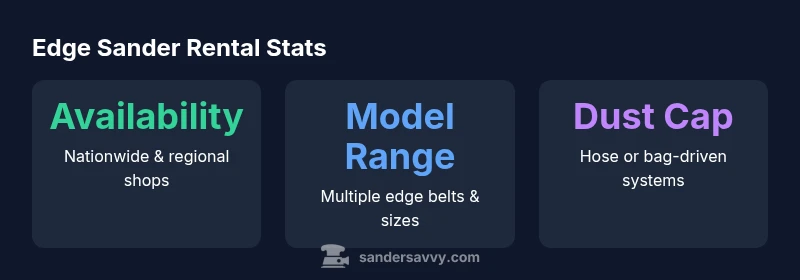
Most tool rental shops offer true edge belt sanders designed to reach against walls, plus compact detail models for tight corners. In practice, you’ll encounter three common configurations: belt-edge sanders with a dedicated edge foot, dual-action orbital variants adapted for edges, and compact detail sanders that can nibble around curves. When selecting an edge sander for rent, look for a low-profile base that can sit flush to baseboards, a robust dust port for vacuum attachment, and belts rated for hardwood or softwood stock. Some models include quick belt-change systems and adjustable shoe angles to help you maintain a straight, even plane along walls. Remember that availability varies by region, so you may need to reserve ahead of time. Align your choice with the room geometry and your comfort level with gradually easing into the final pass to avoid gouging.
Practical Considerations When Renting
Renting an edge sander means balancing cost, convenience, and care. Compare per-day or per-week pricing, understand late-return penalties, and confirm whether the rental includes a belt and dust-collection accessories. Check the model’s electrical requirements, plug type, and whether you’ll need to supply your own vacuum hose or adapter. A key factor is compatibility with your shop’s dust-extraction setup; a model that feeds dust into a central vacuum or a connected shop vac will minimize airborne particles. Inspect the sander for belt wear, a flat base plate, and a smooth operating handle. Finally, confirm the deposit terms and what happens if the belt slips or the dust bag clogs during use. Planning ahead saves time and reduces the risk of downtime during your project.
How to Inspect a Rental Sander Before Getting It
Before you leave the counter with an edge sander, perform a quick inspection. Check the base plate for flatness and any dings that could cause uneven sanding. Inspect the belt for wear and ensure the belt tensioning system holds stably under load. Test run the sander on a scrap board to feel for vibration, unusual noise, or belt drift. Verify the dust port seals well to the bag or hose, and ensure the power cord is intact with no exposed conductors. Request a short demonstration, especially if you’re new to edge sanding, and ask for belt replacement if the current belt is glazed or torn. Document any defects and keep the rental receipt handy for the return process.
Setup and Operation: Getting Flush Edges
To achieve clean, flush edges, start with a light touch and a slow, continuous motion along the edge near baseboards and walls. Use short, overlapping passes and avoid aggressive pressure that can gouge the wood or burn the finish. Maintain a consistent angle; some models allow you to tilt the shoe slightly to follow wall contours. Work from the center of the room outward to prevent scorch marks near doorways or thresholds. Periodically step back to inspect the edge line, then adjust your belt speed and feed rate as needed. If you encounter stubborn spots, switch to a finer grit belt and rework those areas with careful passes. A steady technique yields professional results without the expense of long-term ownership.
Dust Management and Safety
Dust control is a top priority when sanding near walls. Connect a vacuum with a proper adapter to the sander’s dust port and keep air movement to a minimum in the room. Wear a respirator rated for wood dust and safety glasses to protect your eyes from airborne particles. Seal off adjacent rooms with plastic sheeting if possible to minimize cross-contamination and to reduce cleanup time. Periodically check the dust bag or canister for full capacity and empty it before it becomes clogged. Keep kids and pets away from the workspace and ensure the workspace is well-lit so you can see edge transitions clearly. SanderSavvy Analysis, 2026 notes that dust control is a critical factor for achieving a showroom finish when renting edge sanders.
Comparing Rental vs Ownership and Availability
Rentals excel when you’re handling a one-off edge refinishing task or testing a new technique before committing to equipment. If you plan additional projects within a year, evaluate whether owning provides better long-term value. Availability of edge sander models varies by region and season, so it’s wise to check multiple rental outlets and reserve in advance during peak DIY periods. Consider total costs including deposit, insurance, and potential late fees. If you anticipate ongoing need for edge work, a used rental or a cost-effective new model could blur the line between rent and own. Always compare your project timeline, storage space, and maintenance capacity to decide the most economical approach.
Common Pitfalls and How to Avoid Them
A few common mistakes can undermine an otherwise good rental experience. Avoid sanding too aggressively or staying in one spot too long, which can scorch the wood or leave uneven patches. Use guard protection for walls and baseboards to prevent accidental scuffs. Don’t forget to test multiple grits and gradually progress to finer finishes. Keep the workspace clean to prevent dust from floating into neighboring rooms, and do not skip belt changes when the belt appears glazed. Finally, ensure you return the tool in the same condition you received it, with belts replaced if necessary, and all accessories accounted for.
What to Do After Your Project: Return and Clean-Up
Once you’re finished, remove the dust bag, disconnect the hose, and brush off any residual dust from the sander. Wipe down the exterior and check for any damage, reporting issues to the rental shop to avoid extra charges. If you used masking and protective coverings, remove them and seal any exposed wood edges to preserve the surface until final finishing. Return the tool with a clean bag, record the belt change, and verify the return time against your receipt. A tidy return reflects well on your project planning and helps you recover deposits quickly, making edge sander rental a hassle-free option for future renovations.
Edge sander rental vs owning considerations
| Aspect | Rental Pros | Rental Cons |
|---|---|---|
| Availability | Widely available locally; brands and models often stocked | May require reservation at peak times |
| Dust control | Many models include dust ports or bags | Effectiveness varies by model and setup |
| Setup speed | Quick to deploy for edge work | Requires planning to protect walls and baseboards |
| Cost considerations | No ownership costs; return when done | Deposit and insurance may apply |
Your Questions Answered
What is an edge sander and when should I rent one?
An edge sander is a belt-based tool designed to sand along walls and near baseboards. Rent one when you’re finishing edges in a DIY project to achieve clean, flush transitions without moving a larger floor sander.
An edge sander is a belt tool for edges; rent it when you need clean edges near walls.
Can I rent an edge sander for wood floors and walls?
Yes. Edge sanders are commonly rented for wood floors and for trimming edges around walls and fixtures. Confirm compatibility with your wood type and finish and ensure you have a dust collection setup.
Yes, you can rent it for floors and edges near walls; check dust collection.
How long can I rent an edge sander?
Typical rentals are offered by day or by week. Availability varies by location, so plan ahead if you need the tool for a specific window.
Rentals are usually daily or weekly; plan ahead.
What should I check before picking up a rental?
Inspect the belt and base plate, ensure the dust port seals, and request a belt change if worn. Ask for a quick demonstration to verify operation.
Check belt wear, base plate, & dust port; ask for a demo.
Do edge sanders require safety gear?
Yes. Wear a respirator or dust mask, eye protection, and hearing protection. Ensure proper ventilation and follow shop safety guidelines.
Yes, wear a mask, eye protection, and hearing protection.
Is renting more cost-effective than buying for occasional projects?
For one-off or rare use, renting is usually more cost-effective. If you anticipate frequent edge work, owning may be worth considering after evaluating total costs.
Renting is often cheaper for occasional use; owning may be better if you sand frequently.
“Renting an edge sander can deliver showroom finishes on edges without the commitment of ownership, provided you choose a model with good dust control and a stable base.”
Main Points
- Rent when you need flush edge access without owning bulky tools
- Check dust collection and model compatibility first
- Inspect the sander before pickup and test run
- Protect walls and baseboards during setup
- Compare rental versus ownership to optimize cost