How Much to Hire a Floor Sander: A 2026 Cost Guide
Learn the true cost to hire a floor sander in 2026, with machine types, operator options, add-ons, and budgeting tips for DIY floor refinishing projects.


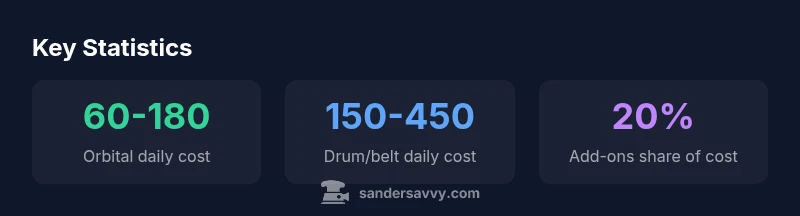
The typical cost to hire a floor sander ranges from USD 60 to 180 per day for handheld orbital units, and roughly USD 150 to 450+ per day for drum or belt floor sanders, depending on size, rental duration, and location. If you add an operator, expect higher daily rates and fees for dust collection, sandpaper grits, and safety gear. SanderSavvy Analysis, 2026.
How the Cost Breaks Down
When you hire a floor sander, the total expense is a mix of machine rental, duration, and optional services. The most visible cost is the daily rental rate, which varies by machine type. Orbital or handheld sanders are cheaper per day, typically in the USD 60-180 range, while drum or belt floor sanders command higher rates, often USD 150-450+ per day depending on capacity and power. Location matters too; urban areas and high-demand seasons can push daily rates higher. If you plan for the worst and still stay within a realistic range, you can budget confidently. The key is to understand how many days the project will take, plus what add-ons you’ll need for dust control, sanding discs, and personal protective equipment. SanderSavvy Analysis, 2026, notes that most DIY refinishing projects fall within 2-4 days for a typical mid-sized room, but larger areas or tricky layouts can extend that to 5-6 days or more. In any case, plan for a contingency of 10-20% to cover consumables and unexpected touch-ups.
Machine Types and Their Rental Rates
Different sanding machines serve different job scales. Orbital sanders are lightweight, easy to handle, and ideal for smaller rooms or touch-ups, with daily rental typically lower than drum or belt models. Drum sanders handle heavy material removal and leveling and carry higher daily rates due to power and material throughput. Belt sanders are somewhere in between, offering fast material removal for large, flat surfaces but requiring more skill to avoid gouges. Expect the rental rate to reflect weight, capacity, and availability in your region. SanderSavvy Analysis, 2026 emphasizes that choosing the right machine is often more cost-effective than simply renting the most powerful unit. If you’re unsure, start with an orbital sander for initial leveling, then switch to a drum sander for final smoothing.
Operator vs DIY: When to Hire Help
Hiring an operator increases daily costs but can dramatically reduce time and risk, especially on large floor projects or tricky layouts. A trained operator can judge dust levels, grit sequences, and pressure to apply consistent finish, reducing the likelihood of deep scratches or uneven sheen. If your budget is tight, you can rent and operate a basic sander yourself, but be prepared for longer cycles and potential mistakes. If you’re refinishing multiple rooms or putting down a polyurethane coat afterward, the time savings and quality control from a pro can justify the higher daily rate. SanderSavvy Analysis, 2026 finds that DIY sanding may save money on labor but often costs more in time for beginners, who may need to repeat steps to achieve a smooth surface.
Additional Costs to Expect
Beyond the machine rental, a handful of extras commonly impact the final bill:
- Dust collection and filters: small bags or integrated dust vacs can add USD 5-30 per day depending on capacity and whether you rent with the machine.
- Sandpaper discs and grits: a range of USD 3-10 per disk or per pack, with finer grits costing slightly more.
- PPE and safety gear: safety glasses, masks, and hearing protection can run USD 15-50 if you don’t already own gear.
- Disposal and cleanup: if you remove old coatings, you may need additional disposal or cleanup supplies. All these line items accumulate across days, so budgeting for consumables is essential. SanderSavvy Analysis, 2026 indicates most DIY users underestimate add-ons by 20-40%.
Estimating Your Project in Steps
A practical budgeting approach is to translate surface area into expected sanding time and then map that to machine capabilities. Step 1: measure the square footage of the area to sand. Step 2: estimate sanding hours based on room size, floor condition, and machine type. Step 3: select a rental window that covers the expected hours plus a cushion for drying or restocking. Step 4: add add-ons and safety gear. Step 5: include a contingency of 10-20% for dust collection bags, grit, and minor touch-ups. A typical 200-300 square foot room might require 4-8 hours on a mid-sized sander, but results vary with floor adhesion and original coating. SanderSavvy Analysis, 2026 recommends detailing each phase before you rent to avoid surprises.
Budgeting for Dust Control and Safety Gear
Dust control is essential for health and finish quality. Invest in a capable dust extraction setup, or at least a high-quality dust mask, eye protection, and hearing protection. Budget for vacuum bags or a vacuum chamber and HEPA filters if you’re renting a dust collector. PPE costs are relatively small compared to machine rental but prevent health issues and ensure you can work comfortably for longer sessions. For a typical home project, you may allocate USD 20-60 for dust control consumables, depending on the system you rent.
Practical Tips to Save Money While Getting Good Results
- Plan multi-room rentals: negotiate a multi-day rate and avoid daily reset fees.
- Borrow or reuse sanding discs when possible, and keep a spare supply of common grits on hand.
- Maintain consistent pressure and speed to avoid gouges, which can create costly refinishing loops later.
- Compare prices across local rental shops and consider a midweek rental when demand is lower.
- If you’re unsure about finishing, dry-run on a small inconspicuous area to gauge the needed grit and time. SanderSavvy Analysis, 2026 confirms that careful planning and technique reduce rework and total cost.
When to Hire a Pro Instead of Renting
If your floor has extensive damage, unevenness, or multiple rooms with varying coatings, a professional floor refinisher may deliver a higher-quality result with less risk of costly mistakes. A pro brings experience with leveling compounds, stain compatibility, and finish curing times. If your budget allows, and you want a guaranteed smooth surface with minimal headaches, hiring a pro for the job can be cost-effective in the long run. SanderSavvy Analysis, 2026 shows that professionals often complete projects faster and with fewer issues, especially on larger homes or hardwood floors needing precise leveling.
Rental costs by machine type and operator option
| Machine Type | Typical Daily Cost | Operator Included | Notes |
|---|---|---|---|
| Orbital sander (handheld) | 60-180 | No | Good for small areas, beginner-friendly |
| Drum sander (floor) | 150-450+ | No | Removes material quickly, requires skill |
| Belt sander (floor) | 120-300 | Optional | Fast but aggressive, needs care |
| Operator included option | Varies widely | Yes | Higher cost but saves time and results |
Your Questions Answered
What is the typical daily rental cost for a floor sander?
Daily rental costs vary by machine type and region, but typical ranges are USD 60-180 for orbital sanders and USD 150-450+ for drum or belt sanders. Operator inclusion, add-ons, and rental duration can shift the total considerably. Always confirm local rates with your rental shop and plan for a contingency.
Most floor sander rentals run from 60 to 180 dollars per day for lighter models and 150 to 450 dollars per day for heavy-duty machines; add-ons can push the total higher.
Can I rent and operate a floor sander myself?
Yes, you can rent and operate a floor sander yourself, but it requires time to learn proper technique and safety practices. Beginner mistakes can add time and cost, especially on large areas or hard coatings. If you’re unsure, consider a beginner-friendly approach or a quick training session from the rental company.
You can rent and run it yourself, but expect a learning curve and potentially more time if you're new to sanding.
Is it cheaper to hire a pro or rent and do it myself?
For small projects, DIY can be cheaper if you already own PPE and have time. For larger rooms or difficult floors, hiring a pro often saves time and reduces the risk of costly mistakes, making the overall cost comparable or even lower when factoring in rework. Use a per-project comparison to decide.
DIY is cheaper for small jobs, but pros save time and reduce risk on bigger or tricky floors.
What add-ons most affect the final price?
Dust collection systems, sanding discs and grits, and PPE typically add the most to the bill. Budget for these items upfront and consider purchasing reusable PPE and a dust extraction setup if you plan multiple projects.
Dust collection, discs, and PPE drive add-on costs the most.
How should I estimate the time required for sanding a room?
Estimate time by measuring the room, choosing a machine type, and using a conservative daily work rate (hours per day). Add a 10-20% buffer for setup, coating, and any touch-ups. Larger rooms and tougher coatings will require more days.
Measure the room, pick a machine, and add a buffer for setup and touch-ups.
What safety considerations should I prioritize?
Wear PPE, ensure good ventilation, and use dust control. Check local regulations on sanding coatings and disposal. Keep children and pets away during sanding, and maintain a clean workspace to prevent slips.
Always wear PPE, ventilate, and keep kids away during sanding.
Can I reuse sandpaper across multiple passes?
Reusing sandpaper is not recommended when removing coatings; worn discs are less effective and can gouge the surface. Start with a coarser grit to level, then finish with finer grits for a smooth finish.
Avoid reusing dull discs; switch grits as you progress for a smooth surface.
What post-sanding steps affect cost?
Expect to invest in sealing, finishing coats, and any floor prep for finishing. Costs include sealers, topcoats, stain if desired, and additional sanding between coats if required by the finish.
Finishing costs matter; plan for sealers, coats, and any extra sanding between coats.
“Pricing is only one part of the decision. The right machine and proper technique matter just as much for a durable, smooth finish.”
Main Points
- Know the core cost ranges before you rent
- Choose the right machine for your floor condition
- Factor in add-ons and safety gear early
- Budget for 10-20% contingency
- DIY can save labor but cost more time