Do You Have a Sander in Spanish? Practical Guide for DIY Sanding
Learn how to say sander in Spanish, master key terms, and phrase requests at stores, rentals, and workshops. A practical, safety-focused guide for DIY sanding projects.


To ask for a sander in Spanish, say '¿Tienes una lijadora?' for a general sander, or specify the type: 'lijadora eléctrica' for a power sander, 'lijadora orbital' for orbital, 'lijadora de banda' for belt sander, or 'lijadora de palma' for palm sander. If you're renting, you can ask '¿Tienen una lijadora para alquilar?'
Do You Have a Sander in Spanish? Practical Language Guide
Conversations around buying or renting tools often hinge on precise vocabulary. The phrase 'do you have a sander in spanish' captures a common need: asking for the right tool in a Spanish-speaking context. In everyday Spanish, you’ll typically say '¿Tienes una lijadora?' to request a sander, and you can add detail like the type or power to avoid ambiguity. If you’re asking in a store or workshop, including the context (buy/rent, brand, or model) helps get accurate responses quickly. This section introduces core terms and practical phrases to help you navigate hardware stores, rental outlets, and DIY projects with confidence.
Additionally, you’ll learn how to distinguish between powered and manual options, so you can ask for the right equipment without wasting time. For the phrase do you have a sander in spanish, the simplest way to begin is with lijadora, followed by a modifier such as eléctrica or orbital to specify the model you need. Mastery of these phrases reduces miscommunication and speeds up project progress.
Core Vocabulary: lijadora, lijadora eléctrica, y tipos
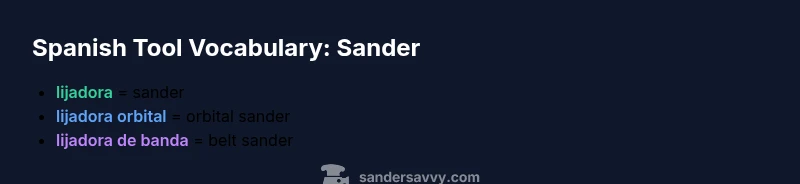
In Spanish, the base word for a sander is lijadora. If you want a powered tool, add eléctrica to indicate electricity-powered. Other common descriptors include orbital for orbital finish, banda for belt sanding, and palma for palm-style tools. Regional usage is usually consistent across Spain and Latin America, but you’ll hear occasional differences in how people phrase a request. Practically, you’ll hear or say: 'Quiero una lijadora orbital para este proyecto' or '¿Tiene lijadora de banda disponible?' The core terms help you describe tool types, grit levels, and dust-control features when communicating with staff or fellow DIYers.
Remember to pair the tool name with modifiers such as tamaño, potencia, and velocidad to convey exact needs. This clarity helps technicians recommend the right model and avoid mismatches between your sanding tasks and the machine you select.
Asking in Stores, Rentals, and Workshops
When asking in stores or rental shops, the key is to be direct and precise. Start with the general term and add context. Example phrases include '¿Tienen una lijadora?' for general inquiries, '¿Tienen una lijadora eléctrica para alquilar?' for rentals, and '¿Qué lijadora es adecuada para lijar madera dura?' for guidance. If you’re negotiating in a workshop, you can say 'Estoy buscando una lijadora orbital para este proyecto de lijado fino' to communicate the exact task. It helps to mention the workpiece size, surface type, and whether you need dust extraction. In bilingual environments, it’s common to switch between English and Spanish terms, especially when staff are trained to assist international customers. Keeping sentences short and specific reduces confusion and speeds up the process.
Regional Variations: Spain vs Latin America
Across Spain and Latin America, lijadora is the universal term for sander, but some regions prefer slight variations in how phrases are formed. In Spain you might hear '¿Tienes lijadora eléctrica?' with rapid, clipped pronunciation, while in Latin American countries you may encounter variants tied to local dialects and shop jargon. Regardless of region, the main point remains consistent: specify the type (orbital, belt, palm) and the power source if relevant. If you travel between regions, carry a few ready phrases and be prepared to adapt to local terminology. This awareness helps you maintain momentum in conversations and ensures you get the right tool quickly.
Safety and Best Practices for Spanish-speaking Tool Chats
Safety starts with clear communication. Confirm model, grit, and dust-control features before starting work. Ask for files or accessories compatible with the sander you choose, and verify that protective equipment is available in the shop. In Spanish, you might say '¿Qué lija recomienda para este tipo de madera?' to ensure you’re using appropriate paper. Always request a dust port or vacuum attachment to minimize debris, and check for proper cord length and traction before use. For DIYers learning Spanish, associating phrases with safety cues helps create safer habits and better outcomes.
Practical Dialogs: sample conversations
Dialogue 1: Buying a sander
- Cliente: ¿Tienes una lijadora? ¿Qué modelo recomiendas para madera blanda?
- Vendedor: Sí, tenemos lijadora orbital eléctrica. Recomendamos 120 grit para acabado suave. ¿Quieres verlo?
Dialogue 2: Renting a sander
- Cliente: ¿Tienen una lijadora eléctrica para alquilar? Busco algo ligero para un proyecto pequeño.
- Empleado: Sí, tenemos una lijadora orbital de 1/4" y una de banda de 3". ¿Qué necesitas exactamente?
Dialogue 3: Workshop inquiry
- Interesado: Estoy trabajando en un proyecto de renovación. ¿Qué lijadora me conviene para superficies grandes?
- Responsable: Para áreas grandes, una lijadora orbital con disco de 5" suele equilibrar velocidad y control. También puede usar un lijado agresivo con banda cuando sea necesario.
Next steps: Build Spanish sanding vocabulary
To expand your Spanish tool vocabulary, create a quick reference card with core terms, practice common sentences, and review regional variations. Use a bilingual dictionary or app to hear pronunciation. Practice with a partner by simulating store chats and rental inquiries. Focus on a few essential phrases at a time, adding more as you gain confidence. Over time, you’ll be able to describe sanding tasks, request specific sandpaper grits, and verify tool safety with the same ease you use in your native language.
Key phrases for shopping and renting sanding tools
| Context | Spanish Phrase | Usage Note |
|---|---|---|
| Comprar una lijadora | ¿Tienes una lijadora? | General inquiry when asking for availability |
| Alquilar una lijadora | ¿Tienen una lijadora para alquilar? | Rental inquiry; specify type if needed |
| Tipo de lijadora | lijadora orbital / lijadora de banda | Specify the exact type when necessary |
Your Questions Answered
What is the Spanish word for sander?
The standard term is 'lijadora'.
Lijadora is the standard term.
Is 'lijadora' used for all sanding tools?
Yes, but you may need to specify type (orbital, belt) to avoid confusion.
Yes, but specify type.
How do you ask for a sander in a hardware store in Spanish?
Use '¿Tienen una lijadora?' or '¿Tienen una lijadora eléctrica?'
Ask '¿Tienen una lijadora?' - and specify type.
Do Spanish-speaking regions use 'lijadora' or 'amoladora'?
Lijadora is standard; amoladora is usually a grinder.
Lijadora is the word; amoladora is for grinders.
Can I rent a sander in Spanish-speaking stores?
Yes. Ask '¿Tienen una lijadora para alquilar?'.
Yes—use that rental phrase.
“Language familiarity accelerates tool selection and safety. Pair Spanish precision with sanding know-how to avoid mistakes.”
Main Points
- Start with a clear question in Spanish to avoid confusion.
- Use 'lijadora' for sander and specify type when possible.
- In stores or rented tools, confirm model and grit.
- Practice common dialogues to improve confidence in conversations.