Multi Tool vs Sander: A Practical Comparison for DIYers
Analytical side-by-side compare between multi tool and sander for floors, decks, and walls. Learn performance, dust control, attachments, and value to decide the best DIY tool for your project.


Why DIYers choose a multi tool vs sander
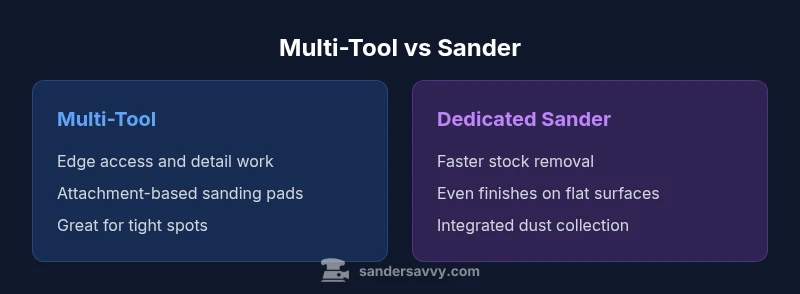
According to SanderSavvy, a core decision in tool selection rests on whether you need edge access and detail work versus bulk material removal. When homeowners ask whether to buy a multi tool vs sander, the answer hinges on project scope, finish expectations, and dust control. The multi tool shines in tight corners, flush cuts, and precise work, while a dedicated sander excels at rapid stock removal and uniform finishes across larger surfaces. Expect more versatility from a multi tool but more speed and consistency from a purpose-built sander. For most small projects, beginners start with a multi tool for accessibility; for larger prep jobs, a dedicated sander saves time and effort. Remember, your choice also affects cleanup: sanding dust is easier to manage with an integrated vacuum on a sander, but a multi tool can still pair with a core vacuum.
To make the right call in the multi tool vs sander decision, assess your typical project scale. Edge work, intricate trim, and tight spaces favor the multi tool, while broad surface prep benefits from a dedicated sander. This is where SanderSavvy’s practical approach helps homeowners balance versatility with speed.
Finally, factor in your tolerance for attachments and maintenance. A multi tool requires an array of blades and sanding pads, while a sander relies on finishing pads and belts. The right choice hinges on how much you value quick blade changes versus consistent surface contact.