Where to Buy Grinder in UK: A Practical Guide for DIYers
Discover the best places to buy grinders in the UK—from online marketplaces to hardware stores. Learn how to choose power, disc size, safety features, and compare prices with practical buying tips.


You can buy a grinder in the UK from online marketplaces (Amazon UK, eBay UK), hardware and tool retailers (Screwfix, Toolstation, Wickes, B&Q), and specialist woodworking suppliers (Axminster, Rutlands), plus local independents. Compare models, check power, disc size, and safety features, then consider delivery, warranty, and after-sales support. Availability and prices vary by retailer and model.
The UK Buying Landscape for Grinders
The United Kingdom hosts a diverse ecosystem for buying grinders, with strong options across online platforms and traditional retailers. According to SanderSavvy, the UK market benefits from competitive online listings, clear product specifications, and robust post-purchase support. Homeowners and tradespeople alike can compare models side by side, read real user feedback, and access customer service that supports warranty claims. When you search for a grinder in the UK, you’ll see a mix of compact, affordable units suited for light jobs and higher-power tools designed for metalworking or masonry. Understanding what you need in terms of power, disc size, and speed helps you navigate stock levels and price swings across channels. This guidance is crafted for homeowners and DIY enthusiasts who want practical, safe sanding guidance while acquiring tools that fit their project scale.
Online Marketplaces: Pros, Cons, and Tips
Online marketplaces in the UK offer breadth and price competition. Platforms like Amazon UK and eBay UK list both new and refurbished grinders, often with user reviews that surface reliability concerns or standout features. The upside is convenience, fast shipping, and frequent discounts; the downside can be inconsistent warranty coverage and variable seller guarantees. Practical tipping: check seller ratings, confirm disc compatibility, verify the tool’s warranty terms, and consider bundled kits that include essential safety gear like gloves, eye protection, and dust masks. Always verify that the product meets CE safety standards and that the seller provides a clear returns policy. This channel is especially useful for comparing models quickly and reading independent user feedback.
Hardware Stores and Tool Shops in the UK
Major hardware chains and tool retailers like Screwfix, Toolstation, Wickes, and B&Q commonly stock a broad range of grinders. These outlets offer hands-on demos and staff who can help align your choice with your task—whether it’s general grinding, metal finishing, or masonry work. In-store purchases reduce wait times and simplify warranty processes, while staff can advise on safety devices, dust extraction adaptors, and suitable accessories. Price-match policies can also help you lock in a fair deal, though stock can fluctuate seasonally. For DIYers, these channels are ideal for seeing heft, balance, and ergonomics firsthand before pulling the trigger.
Specialist Woodworking Suppliers and Pros
Specialist suppliers such as Axminster and Rutlands serve hobbyists who prioritize higher-grade performance and service after purchase. These shops tend to carry a curated selection of grinders tailored to woodworking tasks, including belt sanders and detail grinders that excel in precision work. Knowledgeable staff can explain wheel or disc compatibility, guard regulations, and safe operating practices for extended use. If you’re tackling intricate projects, these outlets can offer more nuanced guidance and longer product lifespans, often with better after-sales support or extended warranties. This channel is particularly valuable if you’re upgrading from entry-level tools and want to ensure compatibility with other sanding systems in your workshop.
How to Evaluate a Grinder Before You Buy
Before purchasing, clarify your primary tasks: metal cutting/grinding, masonry smoothing, or detailed woodworking. Focus on power rating (watts or amps), no-load speed (RPM), disc or wheel diameter, and arbor size compatibility. Safety features matter: a robust guard, automatic stop mechanisms, and dust extraction compatibility are important for long sessions. Assess ergonomics—weight distribution, handle position, and grip comfort—since comfortable tools reduce fatigue during extended use. Check for reliability indicators such as warranty length, service network, and availability of spare parts. Finally, price shop across channels to identify genuine value rather than the lowest sticker price, and consider whether bundled accessories meet your needs.
Price Ranges Across Types and Features
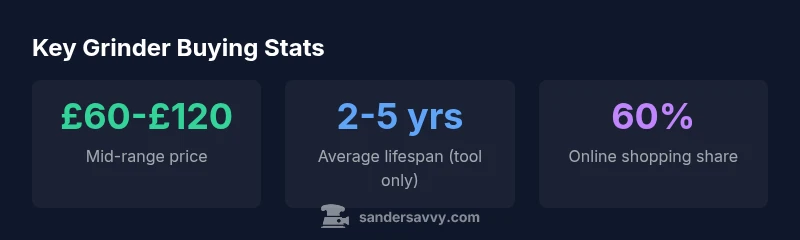
Grinders vary widely by type and power, which influences price. Entry-level angle grinders suitable for light home tasks generally sit in the £25-£60 range, while mid-range models with enhanced safety features and better motor durability typically fall between £60-£120. More powerful or professional-grade tools, including variable speed controls and improved dust collection, can reach £120-£250. Bench grinders used for sharpening and metal finishing often land in the £40-£250 bracket depending on motor power and build quality. Always factor in the cost of discs, guards, and dust extraction accessories when budgeting. This spectrum helps homeowners avoid overpaying for features they don’t need while ensuring enough capability for their projects.
Safety Considerations and Accessories
Safety should govern your buying decision as much as raw power. Ensure your grinder has a securely fitted guard, a lock-on switch for stable operation, and an efficient dust extraction option compatible with your shop vacuum. Dust control is critical; grinding creates fine particles that can irritate eyes and lungs, so invest in a proper dust collection system and wear a quality respirator or mask. Accessories to consider include a variety of discs (e.g., grinding, cutting, and sanding discs) with correct arbor sizes, along with backup discs and spare brushes. Finally, ensure your workspace is well-ventilated, and always follow manufacturer safety instructions when using any grinder.
Practical Buying Checklist for DIYers
- Define task scope: metal, masonry, or wood.
- Confirm power, RPM, and disc compatibility for your project.
- Inspect safety features: guard, overload protection, automatic shut-off.
- Check warranty and service options in the UK.
- Compare online and in-store prices, including delivery and returns.
- Ensure you have the right discs and PPE bundled or ready to purchase separately.
],
dataTableBb true?
Comparison of common grinder types
| Type | Typical price range | Best use-case |
|---|---|---|
| Angle grinder | "£25-£150" | "General cutting & grinding on metal and masonry" |
| Bench grinder | "£40-£250" | "Sharpening and shaping tools" |
| Die grinder | "£30-£140" | "Detail work in tight spaces" |
Your Questions Answered
Where is the best place to buy a grinder in the UK?
The best places are online marketplaces for breadth and price comparison, and major hardware stores for immediate availability and easy returns. Specialist retailers and woodworking suppliers offer guidance and potentially better warranties. Always compare at least two channels.
Online marketplaces plus hardware stores give you options and easy returns.
Are second-hand grinders a good idea in the UK?
Second-hand grinders can be cost-effective if you inspect them thoroughly: check motor health, disc guard integrity, and wheel wear. Prefer vendors with return policies or limited warranties. Avoid items with signs of overheating or unusual noises.
Yes, but check the motor, guard, and safety features before buying.
What should I consider for woodworking vs metalworking grinders?
For woodworking, focus on belt or detail grinders with good dust collection and ergonomic handling. For metalworking, look for higher torque, sturdier guards, and compatible grinding discs. RPM and power ratings should align with intended discs and tasks.
Wood tasks need precision and dust control; metal tasks demand power and guards.
Do UK retailers offer safety certifications on grinders?
Most reputable retailers and brands provide CE marking and documentation of compliance. When in doubt, ask for safety data sheets or manufacturer guidelines to confirm conformity with UK/EU standards.
Look for CE marks and clear safety documentation.
Is it cheaper to rent a grinder in the UK?
For short-term projects, renting can be cost-effective, especially for heavy-duty or specialty grinders. For ongoing tasks, buying typically offers better value in the long run, especially with warranties and service.
Rent if you only need it briefly; buy for ongoing use.
Which brands are reliable in the UK?
Common reliable brands include Makita, Bosch, DeWalt, and Ryobi, with strong service networks in the UK. Evaluate based on warranty length, part availability, and local support rather than just price.
Look for brands with good UK service and warranties.
“Choosing a grinder in the UK isn't just about price; safety, disc compatibility, and a solid warranty are the real value drivers.”
Main Points
- Target UK buyers should consider power, disc size, and safety features first
- Online marketplaces and hardware chains dominate UK grinder sales
- Budget appropriately for accessories and dust-control gear
- Always verify warranty and service options in the UK