Will a Sander Remove Paint? A Practical DIY Guide
Discover how sanding can remove paint from wood and other surfaces, with expert guidance on choosing the right sander, grits, safety, and finishing for lasting results.


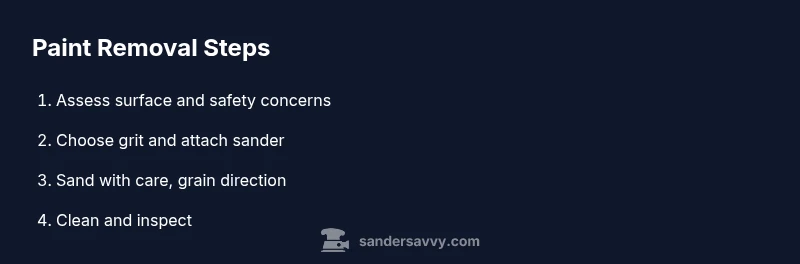
Yes. A sander can remove paint from many substrates, especially wood, but success depends on the paint type, coating thickness, surface condition, and your grit and technique. For best results, start with a coarse grit, keep the sander moving, and avoid staying in one spot too long to prevent gouging. Proper dust control will also improve finish quality.
Will a sander remove paint? Will it work on wood and walls? The short answer is that a sander can remove paint in many situations, but effectiveness depends on the paint type (latex vs oil-based), the number of coats, surface texture, and how patiently you approach the project. If you’re asking will a sander remove paint, plan for a staged approach: assess the surface, select the right grit, and maintain even pressure to avoid gouges. Safety and dust control are essential, especially on interior walls or decks where finish quality matters for the next coat.
Choosing the right sander for paint removal. For large flat wooden areas, a random-orbital sander (or a palm sander for tight spots) with a dust-collection system is usually the best starting point. A belt sander can remove paint quickly on very flat, thick coatings but risks gouging if not used with care. Avoid aggressive belt sanding on edges and raised detailing. Start with coarse grits (60–80) to strip the paint and then move to finer grits (120–180, then 220) to smooth and prepare the surface for finishing.
Prep work: safety, ventilation, and surface prep. Before you pick up the sander, remove hardware, protect floors and adjacent surfaces, and ensure adequate ventilation. If you suspect lead-based paint, pause and follow local regulations; lead paint requires specialized containment and disposal. Wear proper PPE: a respirator or dust mask rated for fine dust, eye protection, and gloves. Clean the surface with a tack cloth or vacuum to remove loose dust, and repair any deep gouges or cracks so the finish is uniform after sanding.
How to approach sanding paint: grit progression and technique. Begin with a coarse grit to lift the top layers, then progressively switch to finer grits for a smooth finish. Keep the sander moving in even, overlapping passes and follow the grain on wood. Do not press hard; let the abrasive do the work. Vacuum between passes to monitor progress and reduce dust buildup. For stubborn edges, switch to a detail sander or hand-sand with a sanding block to avoid gouging.
Sanding different surfaces: wood, drywall, and deck coatings. On wood floors or trim, focus on removing raised grain and paint seams while preserving profile details. For drywall or plaster, test a small patch first; these surfaces can burn easily and generate lots of dust. Deck coatings often require heavier sanding; use slower speed and monitor for heat buildup. In all cases, protect surrounding areas and plan for a clean finish after removing paint.
Troubleshooting common issues during paint removal. If the sander gums up with residue, switch to a cleaner grit or change discs. If you notice gouges or burnout, back off and step down a grit. For multi-layer coatings, consider alternating sanding with a scraper on stubborn spots. If dust control is inadequate, pause and add a shield or seal around the work area. For stubborn spots, using a light power wash or solvent-based cleaner can help pre-soften the coating, but test compatibility first.
Finishing after paint removal: sealing and refinishing options. After paint is removed, inspect for smoothness and uniformity. Lightly damp-wipe to check fiber raised and then re-sand with a fine grit (220). Apply a stain, sealant, or polyurethane as desired, following manufacturer directions. If you plan to stain, test a small area to verify color absorption and ensure even appearance across the surface.
Safety, dust control, and maintenance. Consistent dust control—whether via a vacuum port or a dedicated extractor—improves air quality and finish quality. Empty bags or canisters regularly and inspect sanding discs for wear. Maintain proper PPE throughout the project, and ventilate the area. After painting removal, store tools properly to prevent damage and ensure readiness for the next project.
Tools & Materials
- Random-orbital sander or palm sander(Prefer variable speed with dust collection)
- Belt sander (optional)(Use only on flat surfaces to avoid gouges)
- Sanding discs (grits: 60, 80, 120, 180, 220)(Have multiple discs on hand)
- Dust collection system / Shop vacuum(Connector for sander if possible)
- Safety PPE (respirator or dust mask, safety goggles, gloves)(N95 or P100 recommended for fine dust)
- Drop cloths or plastic sheeting(Protect adjacent surfaces and floors)
- Putty knife or scraper(For stubborn edges and flaking paint)
- Tack cloth or damp rag(Remove fine dust after sanding)
- Lead paint test kit (if lead paint is suspected)(Follow local regulations if positive)
- Wood filler and putty knife(Fill gouges before finishing)
Steps
Estimated time: 2-6 hours
- 1
Put on PPE and prep the area
Wear a respirator, eye protection, and gloves. Cover floors and nearby surfaces with plastic sheeting. Remove hardware and clear the workspace to prevent damage or interference during sanding.
Tip: Check respirator cartridge and replace if clogged; ensure enough ventilation. - 2
Test a small patch to gauge paint hardness
Choose a inconspicuous area to test how easily the paint sands off with your initial grit. If the paint clings or gums the paper, switch grit to a coarser one or use a softer approach.
Tip: A test patch prevents gouging large areas. - 3
Attach coarse grit and prepare the sander
Install 60-80 grit abrasive discs and attach to the sander with a secure fit. Connect the dust collection and check for proper operation before starting.
Tip: Ensure the sander pad is clean for better grinding. - 4
Begin sanding with gentle, overlapping passes
Move the sander steadily along the grain, not in one spot. Apply light pressure; let the abrasive do the work to avoid gouges.
Tip: Keep the sander flat to the surface and maintain even speed. - 5
Vacuum and inspect after passes
Vacuum the dust and inspect the surface for remaining paint. Identify areas needing more attention and switch to the next grit accordingly.
Tip: Dust in the eyes is common; gloves help prevent blisters. - 6
Progress to finer grits and refine
Switch to 120–180 grit and continue, using lighter passes. Move to 220 grit for a smooth finish ready for finishing coats.
Tip: When sanding, always follow the wood grain for best results. - 7
Edge and detail work
Use a detail sander or manual sanding for corners and along trim where the primary sander cannot reach.
Tip: Edge work often reveals hidden paint layers—check edges closely. - 8
Final cleaning and surface check
Wipe with a tack cloth, inspect for uniformity, and address any remaining coatings with spot-sanding. Prepare surface for primer or finish according to your project.
Tip: Look for shiny spots indicating incomplete sanding. - 9
Deal with safety concerns and cleanup
If lead paint is suspected, stop and follow local regulations. Dispose of waste properly and seal the work area to minimize dust exposure.
Tip: Lead paint requires specialized handling; do not DIY if uncertain.
Your Questions Answered
Can a sander remove paint from any surface?
A sander can remove paint from many surfaces, especially wood, but effectiveness varies with surface texture, paint type, and coatings. For walls and delicate surfaces, extra care is required to avoid damage.
A sander can remove paint from many surfaces, but results depend on the wood or wall texture and the kind of paint. Be careful on delicate surfaces.
What grit should I start with for paint removal?
Start with a coarse grit such as 60 or 80 to lift the paint. Move to 120–180 for smoothing, then finish with 220 grit for a ready-to-finish surface.
Begin with a coarse grit like 60 or 80, then progress to finer grits for a smooth finish.
Is sanding safe if lead paint is present?
Sanding lead-painted surfaces poses health risks. If lead is suspected, stop work and consult local regulations. Use appropriate containment and professional remediation if required.
If you suspect lead paint, stop sanding and follow local safety rules. Lead requires special handling.
What should I do if paint is stubborn or peels slowly?
Apply light pressure and use a scraper for stubborn edges after initial sanding. Consider switching to a coarser grit on the affected areas and repeat as needed.
If paint is stubborn, gently scrape edges after initial sanding and re-sand with a slightly coarser grit.
Do I need to prime or seal after sanding?
Yes. After sanding, clean the surface thoroughly and apply primer if painting or a sealer if staining. Proper prep improves adhesion and finish quality.
After sanding, clean and prime or seal the surface for better adhesion and finish.
Watch Video
Main Points
- Assess paint and surface conditions before sanding.
- Use a progressive grit approach from coarse to fine.
- Maintain steady motion and avoid excessive pressure.
- Prioritize dust control and PPE for safety.
- Finish with appropriate sealing or finishing coats.