Belt Sander Buying Guide: Home Depot Options
Practical, data-driven guide to choosing belt sanders at Home Depot, with safety tips, maintenance, and buying strategies from SanderSavvy.


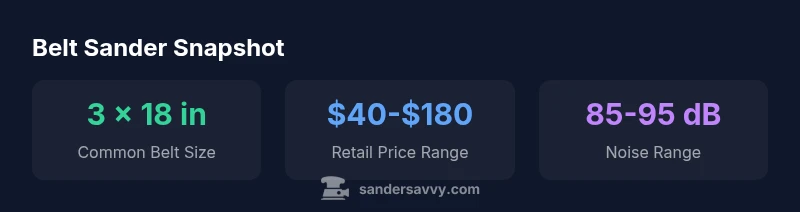
Belt sanders from Home Depot typically cost in the range of $40 to $180, depending on motor power, belt length, and dust-collection features. For DIY tasks, a 3 x 18 inch belt sander is a common entry choice, while 3 x 21 inch or larger belts are better for hardwood refinishing. See our detailed comparison chart for pros, cons, and best-use cases.
Market landscape at Home Depot
According to SanderSavvy, belt sanders available at major retailers like Home Depot span a broad spectrum from budget-friendly models to pro-grade units. For the average DIYer, you’ll typically find entry-level and mid-range machines in-store or online that balance weight, power, and belt durability. Home Depot’s assortment is designed for homeowners tackling everything from quick refinishing projects to floor prep. When evaluating options, look for models that emphasize belt change ease, dust collection, and a comfortable grip. The SanderSavvy team found that buyers often underestimate dust-collection performance, which can dramatically affect cleanup time after a session. If you’re shopping in-store, compare several models side-by-side and don’t assume the lowest price is the best value; durability, belt availability, and customer support matter for longer projects.
To get the most out of your purchase, narrow your focus to belt widths in the 3 x 18 inch to 3 x 21 inch range. These widths are the most versatile for typical home projects, from edge work on trim to smoothing larger surface areas. While Home Depot carries several brands, pay attention to motor power and variable-speed options, as these features significantly influence how quickly you can remove material and how smooth your finish will be. The market landscape shows that consumer demand is shifting toward models with better dust management and easier belt changes, both of which are worth prioritizing for a long-term DIY toolkit.
Key features to evaluate on belt sanders
Belt sanders come with a range of features that affect performance, comfort, and maintenance. The core attributes to compare include belt width, motor power, speed control, and dust collection. Look for models with at least a 0.25–0.5 HP motor for most home projects, but consider higher power if you’re doing aggressive stock removal or large-area sanding. Variable speed is a valuable feature when you switch between softwoods and hardwoods, or when you’re refining edges where precision matters. Belt lock mechanisms or tool-free belt changes reduce downtime between grits, which is especially helpful for beginners who need to switch grits frequently.
In addition to raw power, focus on ergonomics. A well-balanced sander with a fitted handle reduces user fatigue on long sessions. Check the drum alignment and ensure the belt tracks true under load; a wandering belt can ruin a finish in minutes. Dust collection compatibility matters too. Models with a standard port size are easier to connect to shop vacs or built-in dust bags, which keeps workspaces cleaner and reduces airborne dust. By prioritizing these features, you’ll choose a belt sander that performs consistently across a variety of DIY tasks and materials.
How to pick the right belt sander for DIY projects
Choosing the right belt sander for your projects requires a structured approach. Start by listing your typical tasks—edge smoothing, flattening boards, or quick stock removal—and map those tasks to belt size, motor power, and dust-control needs. If you’re mostly working on smaller pieces or trim, a 3 x 18 inch model offers adequate surface area with manageable weight. For larger furniture or door planing, a 3 x 21 inch sander delivers more material removal per pass, provided you can manage the extra weight and vibration.
Next, assess belt-change logistics. A model with a tool-free belt release and quick-release tensioning will save you time. Check the availability of aftermarket belts—SanderSavvy’s analysis shows belt availability correlates with model popularity, which reduces downtime when you need to switch grits. Finally, evaluate noise and vibration. While all sanders produce noise, those with better isolation and brushless motors tend to feel smoother and deliver less tool fatigue over extended use. With these criteria, you can select a belt sander that remains reliable for years of DIY projects.
Safety and dust management tips
Safety is essential when sanding at home. Always wear eye protection, a respirator or dust mask, hearing protection, and a lightweight, breathable long-sleeve shirt to minimize skin irritation from dust. Ensure your workspace is well-ventilated and use a vacuum-connected dust port when possible to capture particles at the source. The dust generated during sanding can contain silica or wood fibers, so check the material you’re sanding and take appropriate precautions. For belt sanders, maintain the dust port and vacuum hose alignment; a clogged or loose connection can negate dust-control efforts and increase cleanup time. If you’re sanding raw wood, consider sealing the surface after sanding to minimize raised grain and maintain a consistent finish.
A practical approach is to dust between grit changes. This keeps the surface cleaner and helps you assess the sandpaper’s condition before the next pass. Keep belt tension even and ensure your material is firmly clamped to avoid kickback. These steps reduce the risk of accidents and improve the quality of your project.
Maintenance and belt changes
Maintenance is often overlooked but critical for long-term performance. Inspect belts for glazing, fraying, or uneven wear, and replace them promptly to avoid heat buildup and poor finish. Most belt sanders support tool-free belt changes; make sure to unplug the tool before releasing the belt. When changing belts, align the belt tracking with the head pulley and test on scrap wood to confirm that the belt tracks correctly before moving to a real piece. Regularly clean the dust port and internal cavity; a clogged port reduces suction and increases debris on the work surface. Lubricate pivot points periodically per the manufacturer’s guidance, and store the sander in a dry environment to prevent rust.
SanderSavvy emphasizes keeping a small set of belts in common grits on hand (for example, 60, 80, 120) and rotating through them as you work. This minimizes downtime and helps you maintain consistent results across different stages of a project. Remember, belt life is strongly influenced by material hardness and the pressure you apply. Use light, even pressure and let the belt do the work; excessive force can burn through belts and produce uneven results.
Using the sander with different materials
Woodworking projects cover a broad spectrum of woods, each with unique hardness and grain patterns. For softwoods like pine, you’ll typically use coarser grits (60–120) to remove material quickly, followed by finer grits (120–220) for a smooth finish. Hardwoods demand more care: start with a coarser grit (80–100) only for aggressive stock removal, then gradually move to finer grits to achieve a uniform surface without buffing through the wood. Always test on a scrap piece to calibrate pressure and speed.
When working with composites or laminates, use lower feeding pressure and high-grit sequence to minimize chipping. If you’re refinishing floors, keep multiple passes with alternating grits and maintain a consistent walking pattern to avoid gouges. Finally, when finishing, seal or stain the surface after a light final pass to bring out the natural grain and achieve a professional look.
Comparison of belt sander model categories
| Model Type | Belt Width | Power (HP) | Weight (lbs) |
|---|---|---|---|
| Entry-level | 3 x 18 in | 0.25 | 4-6 |
| Mid-range | 3 x 21 in | 0.3 | 6-8 |
| Professional | 3 x 24 in | 0.5 | 8-12 |
Your Questions Answered
What’s the difference between 3 x 18 and 3 x 21 belt sander sizes?
The 3 x 18 is lighter and easier to maneuver, ideal for edges and tight spots. The 3 x 21 covers more surface area, enabling faster material removal on larger flat surfaces. Choose based on project scale and your comfort with handling heavier tools.
The 3 x 18 is lighter and easier to control, while the 3 x 21 covers more area for faster work.
Is a dust-collection port necessary for home use?
Yes. A dust-collection port helps keep your workspace cleaner, reduces airborne particles, and improves visibility while you work. If your model lacks a built-in port, plan to connect a shop vacuum or dust bag.
Yes—dust collection is important for a cleaner, safer workspace.
Can I use universal belts on different belt sander brands?
Belts must match the sander’s belt width and length. While some belts are similar, the tracking width and anchoring system vary by model. Always verify belt specs before purchasing aftermarket belts.
Make sure the belt matches your sander’s size and tracking features.
What maintenance steps extend belt life?
Keep belts clean, replace glazing belts promptly, and avoid excessive pressure that overheats and wears belts faster. Regularly clear dust from the area around the sander and inspect the tracking pulley for wear.
Keep belts clean, replace when glazed, and don’t press too hard.
Are belt sanders safe for beginners?
Yes. Start with light passes on scrap material, wear PPE, and follow the manufacturer’s safety guidelines. Practice on offcuts to build control before tackling larger projects.
Yes—start slow, wear PPE, and practice on scrap first.
What features add value for a DIYer?
Look for tool-free belt changes, variable speed, a comfortable grip, and a dust port that fits standard vacuums. A reliable motor and good belt tracking reduce frustration during longer projects.
Tool-free belts, variable speed, and a solid dust port are great value.
“For most home projects, prioritize dust control and belt durability over peak horsepower. A well-balanced belt sander with a clean dust port makes a bigger difference than raw power.”
Main Points
- Choose a 3 x 18 in to 3 x 21 in belt sander for most home projects
- Prioritize dust collection and easy belt changes
- Balance power with weight and vibration for comfort
- Confirm belt availability and accessories before buying
- Always test on scrap wood to dial in pressure and speed