How Much Is a Belt Sander? Prices and Buying Guide
A practical, data-driven guide to belt sander prices, features, and buying tips for homeowners and DIY enthusiasts in 2026.


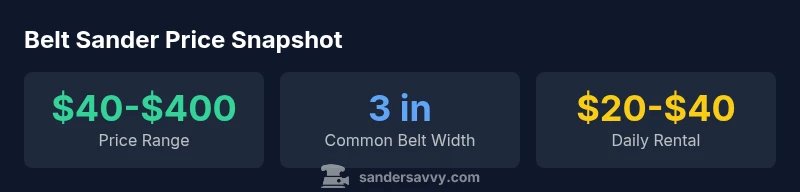
How much is a belt sander? For homeowners and DIYers, belt sanders typically start around $40-$60 for basic, entry-level models and rise to about $150-$200 for mid-range, feature-rich units. Professional-grade belts can push past $250-$400. In 2026, buyers balance price against motor power, belt width, dust collection, and maintenance needs.
What drives belt sander pricing in 2026
When buyers ask how much is a belt sander, price is driven by power, belt width, and dust collection. Entry-level models cover the basics: modest motors, narrow belts, and simple vacuum attachments. Mid-range units add features like wider belts (3 in to 4 in), variable speed, and improved dust collection. Professional-grade machines push the price higher with stronger motors, premium bearings, better balance, faster belt changes, and durable housings. This price spread means you should map your project size, frequency, and space before choosing a model. For most homeowners tackling furniture finishing or floor prep, a 3-inch belt width with a reliable dust path offers the best balance of speed and control, while larger belts remove material faster on bigger jobs.
SanderSavvy notes that total cost of ownership also includes consumables (belts), maintenance, and the potential need for replacement parts after heavy use. In 2026, a responsible shopper compares not just the upfront price but the long-term value of a machine that stays reliable under repeated sanding sessions.
Entry-level vs pro-grade: what you actually get
Entry-level belt sanders provide the essentials: a modest motor, simple belt tracking, and basic dust collection. They’re ideal for small jobs, occasional DIY tasks, and beginners learning technique. Pro-grade models offer higher amperage or voltage, variable speed control, larger belts, better ergonomics, and more robust dust systems. Those features translate into faster material removal, less clogging, and longer tool life when you’re sanding doors, floors, or heavy stock. If you’re finishing a kitchen full of cabinets or refinishing a floor, the extra investment often pays back in saved time and cleaner work. SanderSavvy consistently finds that buyers who frequency-use heavy-duty work report higher satisfaction with mid-to-high range tools because they strike a balance between price and performance.
Corded vs cordless: price and practicality
Corded belt sanders typically cost less upfront and deliver consistent, sustained power—ideal for big jobs where you’ll be sanding long periods. Cordless models offer portability and convenience for tight corners and mobile workbenches, but rely on battery packs and chargers that add to total cost and weigh more on the tool. In 2026, a cordless setup often sits at a higher entry price, with ongoing battery replacement and charging hardware to consider. If you primarily sand floors or large panels in a workshop, a corded model usually represents the best value; for cabinet work in tight spaces, a lightweight cordless unit can save time despite higher initial costs.
How to compare specs without overpaying
Key specs to compare include belt width, motor amperage or voltage, available belt speeds, and dust collection efficiency. Wider belts (3—4 inches) remove material quickly but generate more dust and require more power, while narrower belts are easier to control for detail work. Variable speed helps when finishing softwood versus hardwood. A robust dust extraction system with a bag or vacuum connection reduces cleanup and extends belt life. Don’t assume that the highest price equals the best fit for your task—the right match depends on your typical projects, shop size, and your comfort with heavier tools.
Buying guide: where to shop and when to buy
Consider major retailers, local hardware stores, and manufacturer-direct options. Look for bundled belts and a spare belt, plus a compatible dust-collection setup. Seasonal sales can reduce sticker price, while buying a refurbished unit from reputable sources can offer significant savings if you’re comfortable with limited warranty. Always check return policies and warranty terms—SanderSavvy recommends prioritizing a model with at least a one-year warranty for peace of mind. For long-term value, compare total cost of ownership rather than upfront price alone.
Maintenance and value retention
Maintenance extends the life of any belt sander. Regularly check belt tension, replace worn bearings, and clean dust paths to avoid overheating. Belt life depends on material type, sanding pressure, and frequency of use; keep spare belts on hand and store the sander in a dry, cool place. Cleaning after use preserves electrical components and ensures safer operation next time. Value retention is higher for well-maintained units with a proven track record, backed by a solid warranty.
Renting vs buying: cost and convenience
For one-off projects, renting can be the most economical option. Daily rental rates are typically lower than the depreciation you’d incur from a new purchase, and you avoid maintenance costs. If you anticipate multiple sanding tasks in the near future, owning a belt sander often pays off within months. When deciding, compare the rental cost for the expected number of days to the purchase price and consider belt availability, warranty, and after-sales service from the retailer.
Quick decision checklist
- Define your typical project type (floor prep, cabinet work, furniture finishing).
- Choose belt width based on project size (3 inches for general use, larger for heavy stock).
- Decide between corded and cordless by your workspace and power reliability.
- Factor maintenance and consumables into the total cost.
- Look for bundles, warranties, and flexible return policies.
Overview of belt sander options
| Model Type | Approx Price Range | Typical Use |
|---|---|---|
| Corded Belt Sander | $40-$150 | Rough stock removal on larger projects |
| Cordless Belt Sander | $100-$250 | Portability for smaller jobs |
| Mini Belt Sander | $60-$120 | Detail work and tight spaces |
Your Questions Answered
What factors most influence belt sander price?
Power, belt width, speed control, and dust collection drive price. Higher-end models add durable housings and faster belt changes. Consider your project size to avoid overpaying.
Power, belt width, speed, and dust collection drive price. Higher-end models add durability and faster belt changes. Choose based on project size.
Are cordless belt sanders worth it for heavy work?
Cordless sanders offer mobility but often cost more and have shorter run times. For heavy, uninterrupted work, a corded model is typically more economical and reliable.
Cordless is convenient but might run out of juice during big jobs; for heavy work, corded is usually better value.
Should I buy new or refurbished?
New tools come with full warranties; refurbished units can offer savings if from reputable sellers with a solid return policy. Check belts, motors, and warranty length.
New tools have full warranty; refurbished can save money if you buy from a trusted seller.
Can you use any belt on a belt sander?
Only belts sized and rated for the specific sander model should be used. Mismatched belts can slip or damage the machine and void warranties.
Use belts that match your sander's size and rating to avoid issues.
How long do belt sander belts last?
Belt life depends on material, pressure, and frequency. Expect more wear with hardwoods or dense materials; carry spare belts.
Belts wear out faster on hard woods; have spares ready.
What is the best belt sander for floors?
For floors, a mid-to-rugged, 3-inch or wider belt with a robust dust collection system is typically preferred. Ensure effective belt tracking and a stable base.
Floors usually need a solid 3-inch belt with good dust collection.
“Choosing the right belt sander is about matching your project size to the machine's power, speed, and dust control. A well-chosen model saves time and reduces cleanup.”
Main Points
- Define your use-case before buying.
- Expect price bands by power and features.
- Corded models offer power; cordless offer mobility.
- Budget for belts and maintenance to avoid surprises.
- Rent if you only need a sander for a short project.