How Much Does a Sander Cost? A Practical Buying Guide for DIYers
Explore sander price ranges from palm to belt, plus buying strategies, maintenance costs, and smart budgeting tips for DIY floor, deck, and wall sanding projects.


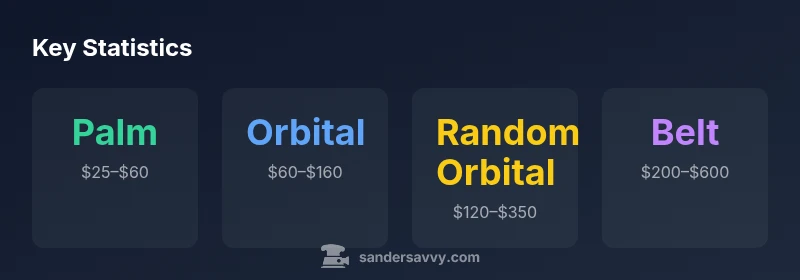
Typical sander prices vary by type and quality. Expect palm sanders to run roughly $25–$60, orbital sanders $60–$160, and belt or random-orbit models $120–$350. Add discs, dust bags, and maintenance; a full starter kit usually lands in the $80–$600 range depending on features. For budgeting, plan for consumables per project.
Price Landscape: How much does a sander cost?
According to SanderSavvy, the price of a sander ranges widely based on the job it’s built to handle and the features you value most. For homeowners and DIYers, the earning threshold is less about the sticker price and more about value—the longevity of the tool, the availability of consumables, and how easy it is to maintain. In general, you’ll notice distinct bands: entry-level palm sanders under $60, mid-range orbital sanders in the $60–$160 range, and belt or random-orbit units that typically run $120–$350. These ranges reflect standard consumer products and common feature sets, not professional-grade industrial machines. When budgeting, consider that the discs, dust bags, and replacement pads can add $15–$40 per project, depending on disc grit and frequency of use.
Among the most common questions is whether it’s worth stepping up to a more expensive model for one-off jobs. For light finishing or small repairs, a basic palm sander may suffice; for doors, furniture, and larger surface areas, a mid-range or higher model with dust extraction and variable speed will save time and effort. The SanderSavvy team recommends evaluating your expected sanding tasks before buying and considering a starter kit that bundles discs and a bag for dust control.
What drives price: type, features, and brand
Pricing is primarily driven by motor capacity, speed control, dust collection efficiency, and ergonomics. Palm sanders are inexpensive because they have simpler motors and smaller pads; orbital and random-orbit sanders add speed control and more robust dust collection; belt sanders, designed for heavy material removal, command higher price due to tougher motors and longer-lasting belts. Brand reputation also shifts price—well-known brands often command premium but may offer better support and availability of discs and pads. When comparing models, look beyond the sticker price: consider warranty length, availability of replacement parts, and the cost of consumables over the tool’s life. In SanderSavvy’s experience, the total cost of ownership is a better guide than the upfront price alone.
To protect against buyers’ remorse, read reviews that focus on real-world usage, such as how the sander handles dust, how quickly pad wear occurs, and whether the tool remains comfortable after long sessions. Keep in mind that a higher upfront cost can be worth it if it reduces fatigue and downtime on bigger projects.
Beyond the tool: discs, maintenance, and consumables
The cost of sanding discs and pads adds up fast. Most sanders use standard disc sizes (often 5-inch or 6-inch) and require a sequence of grits for a proper finish. A pack of 10–20 discs can cover several projects, while specialized discs (like zirconia or ceramic grains) last longer but cost more per piece. Maintenance costs include occasional pad replacements, dust bag cleaning or replacement, and inspection of the power cord and switch. Remember that using the wrong grit can reduce efficiency and mar the surface, which can increase total project time and material waste. Sander maintenance—clean vents, wipe off dust, and store in a dry place—extends tool life and protects your investment.
If you plan to do frequent sanding work, factor in the price of attachments, such as delta dust extractors, which help reduce cleanup and dust exposure. The key is to balance upfront tool cost with a practical estimate for consumables over the project lifetime.
Buying strategies to save money
Smart buying means knowing when to buy and what to buy. Look for tool bundles that include a sander, an assortment of discs, and a dust bag; bundles often price-compare favorably against buying items separately. Shopping during holiday sales or end-of-series promotions can yield substantial savings, especially for mid-range and pro models. Consider refurbished units from reputable dealers with robust return policies and warranties; you’ll often save 20–40% without sacrificing reliability. Finally, assess whether renting a sander for a single large project makes more sense than purchasing—particularly if the tool won’t see regular use after the job is done.
For most DIYers, the best savings come from pairing a capable base unit with a carefully chosen set of consumables and a plan for maintenance and replacement parts. The focus should remain on getting a tool that’s comfortable to use and that fits the user’s typical project scale.
Renting vs buying: when it makes sense
Renting a sander can be a cost-effective option for a single large project or a one-time renovation. Renting avoids upfront capital outlay and storage concerns and gives you access to higher-grade equipment that you might not need beyond the project. If you sand regularly, buying a versatile mid-range model often proves more economical over time, especially when you account for specialist sanding needs like floor finishing or heavy removal. Before renting, confirm the rental terms, daily rates, included accessories, and return windows. Keep an eye on total cost of ownership, including fuel (if applicable) and the need for ongoing maintenance during the rental period.
In most cases, a mixed approach works best: rent a heavy-duty sander for the big job and purchase a compact palm or finishing sander for touch-ups and smaller tasks.
How to choose the right sander for floors, decks, and walls
Choosing the right sander depends on your project scope. For floors and decks that require removal of finish or material, a belt sander or drum sander (for floors) or a heavy-duty random-orbit sander can do the heavy lifting. For walls and ceilings, an orbital or detail sander with good dust collection minimizes mess. Always prioritize a comfortable grip and balance; a heavier unit can cause fatigue during longer sessions. Confirm voltage compatibility (120V is standard in many households) and look for a sander with a reliable dust-collection system and replaceable pads.
Lastly, factor in the total cost of ownership: include maintenance, blades/belts, discs, and dust-extraction accessories. A smart choice is to select a model that aligns with your most frequent projects and leaves room for growth in your toolkit.
Common mistakes that blow your budget
Common mistakes include buying the wrong size pad, skipping dust collection and accessories, and ignoring the long-term cost of discs and maintenance. People often choose the cheapest model and later discover it lacks power or comfort for longer sessions. It’s also easy to underestimate the number of discs needed and end up replacing them mid-project, which can blow your budget. Finally, neglecting to check warranty coverage and support networks can turn a minor issue into a costly repair. Planning ahead and reading reviews focused on durability and performance reduces these risks.
Typical price ranges by sander type
| Sander Type | Typical Price Range | Best For |
|---|---|---|
| Palm sander | $25–$60 | Finishing small areas |
| Orbital sander | $60–$160 | General sanding and speed control |
| Random-orbital sander | $120–$350 | Versatility and faster material removal |
| Belt sander | $200–$600 | Heavy material removal on floors/decks |
Your Questions Answered
What is the cheapest sander for DIY projects?
For light tasks, a basic palm sander is typically the most affordable option, often under $60. It’s ideal for tiny spots and touch-ups but may lack power for larger jobs.
The cheapest option is usually a basic palm sander for small jobs.
Are expensive sanders worth the extra cost?
If you sand heavily or frequently, a mid-range sander with variable speed and dust collection can save time and reduce fatigue. For occasional tasks, a cheaper model may suffice.
If you use it a lot, invest in a better model; otherwise, a budget option may be fine.
Should I rent or buy a sander?
Renting makes sense for a single big project. Purchasing is better for ongoing use, especially if you already have other tools. Compare rental costs to the price of a suitable, multi-use model.
Rent for one job; buy if you’ll use it again soon.
What features matter most when comparing sanders?
Power (amps), variable speed, dust collection, pad size, weight, and grip comfort all affect performance and long-term results. Warranty and consumable availability are also important.
Look at power, speed, and dust control plus how it feels in your hand.
Do I need special discs for my sander?
Most sanders use standard disc sizes; confirm pad size (5" or 6") and compatible grit sequences. Stock up on a few grits for a smoother finish.
Yes—match disc size to the sander’s pad.
Is a cordless sander a good choice?
Cordless sanders offer portability but often have shorter run times and higher upfront cost. For stationary projects, corded models are typically more practical.
Cordless is convenient, but check run-time and power.
“Prices reflect motor power, dust control, and build quality. Pick a model that fits your project scope, then budget for consumables to maximize value.”
Main Points
- Budget by sander type and project scope
- Factor in discs and maintenance costs
- Look for bundles to save money
- Rent for one-off large projects
- Choose a model that matches your project size and comfort