How Big Is a Belt Sander? A Practical Size Guide
Discover belt sander sizes, dimensions, and weight ranges to match your project. Learn how size affects performance, reach, vibration, and handling with practical sanding guidance for floors, decks, and walls.


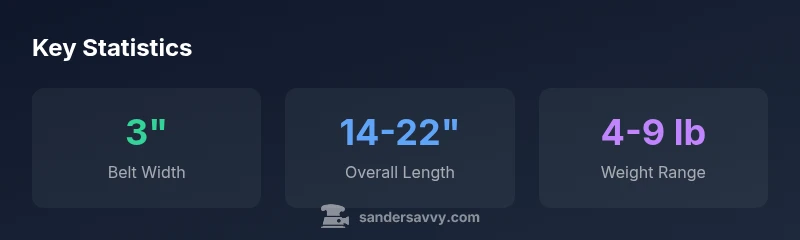
A belt sander is typically 3 inches wide with body lengths around 14 to 22 inches and weights from 4 to 9 pounds. The most common configuration is 3x18 or 3x21 inches, which balances reach, control, and material removal. When you measure size, consider belt width, overall length, and weight to match your project.
Size at a Glance: Belt Sander Footprint
Understanding belt sander size is fundamental for choosing a tool that fits your workspace and your project. Most belt sanders used by homeowners and pros share a few core dimensions: a 3-inch belt width, an overall body length typically ranging from about 14 to 22 inches, and a weight spectrum roughly between 4 and 9 pounds. These figures aren’t a single specification for every model, but they capture the common footprint you’ll encounter in retail and workshops. Within that footprint, the belt width often drives aggressive material removal and stability, while the overall length influences reach and maneuverability in corners and along edges. For someone working on floors, decks, or walls, this size range generally provides a practical balance between control and productivity.
Industry guidance and field testing indicate that the 3x18 and 3x21 inch formats are the most versatile for a wide range of tasks. A belt sander with a 3-inch belt is easy to manage with one hand for detail work, yet long enough to cover substantial surface areas on flat planes. Heavier models tend to feel more stable on continuous runs, but they also demand more grip strength and balanced stance. The SanderSavvy team emphasizes trying a couple of sizes on scrap material to feel how the belt tracks, how the dust collection performs, and how comfortable the weight feels during extended sessions.
Width, Weight, and Handling: How Size Influences Control
Belt width is the primary driver of dirt-cheap removal versus delicacy. A 3-inch belt gives a good blend of rapid material removal and predictable tracking, which matters when you’re trying to avoid gouges on a delicate finish or uneven flooring. In contrast, some 4-inch or wider belts exist for heavier production work, and they excel at smoothing large surfaces quickly but may require higher arm strength and more careful guiding to prevent vertical ridges. Weight also affects control: heavier sanders stay stable on a surface and resist twisting, but they fatigue your arm sooner, especially during long sessions. When selecting by size, consider your typical project length, your body posture during use, and whether you’ll be sanding vertical surfaces or ceilings where weight distribution becomes critical. The goal is to find a model that minimizes user fatigue while maximizing surface consistency.
Length and Reach: Why the Overall Body Length Matters
The overall length of a belt sander correlates with its ability to reach into long, flat stretches and to maintain a straight track across wide boards. Shorter bodies are nimble and excellent for tight spots, edges, and trim work where precision matters. Longer bodies cover more ground and keep the belt aligned over larger surfaces, which reduces pass repetitions and can improve overall finish uniformity on large floors or decks. For professionals working on expansive projects, a longer, well-balanced machine may reduce the number of repositionings and help maintain consistent pressure. Sander ergonomics matter here: longer tools should balance well in the hand to prevent wrist fatigue, while shorter tools should feel lighter without sacrificing grip security.
Weight and Fatigue: Planning for Comfort During Long Sessions
Weight is not just a number on the spec sheet—it translates to real-world comfort. Lighter models (closer to 4–6 pounds) are easier to maneuver in tight spaces and reduce forearm strain when you’re edging against walls or furniture. Heavier models (approaching 8–9 pounds) dampen vibration more effectively and stay planted during aggressive passes, which can improve material removal per stroke but requires stronger arm engagement and a stable stance. If you’re often sanding overhead or on vertical surfaces, test how weight distribution feels in your wrist and shoulder after 10–15 minutes of continuous use. A well-chosen belt sander minimizes fatigue and helps you sustain consistent pressure to avoid chatter and burn marks.
Standard Configurations: 3x18, 3x21, and Specialty Belts
The most common belt sizes found in consumer and professional kits are 3x18 and 3x21 inches. The choice between them comes down to project size and the domain of use: 3x18 is highly maneuverable for trim and detail work, while 3x21 covers more surface area and can reduce the number of strokes on larger floor or deck sections. Specialty belts, including longer or narrower variants, exist for niche tasks such as precise rounding or edge finishing along irregular shapes. When evaluating sizes, compare belt width, the belt-to-track alignment quality, and the availability of compatible replacement belts. The belt speed and the machine’s power output influence how aggressively a given belt size performs on different materials. For most DIY and remodeling tasks, starting with a 3x18 or 3x21 configuration provides reliable performance without overcommitting to a model that’s heavy or awkward to handle.
Measuring, Testing, and Choosing: A Practical Approach
To make an informed choice, begin by listing your typical projects: floor refinishing, deck smoothing, or wall preparation. Measure the space you’ll most often sand and check for edge cases like tight corners or standing furniture. Next, physically handle one or two sanders in a store or workshop; pay attention to the grip, balance, and how the weight distributes across your forearm. Try a sample pass on scrap wood to observe belt tracking and vibration. If possible, map out a quick comparison chart that lists width, length, weight, and price for the top three models you’re considering. Finally, assess dust collection: a well-specified sandpaper grit range plus a robust dust port can significantly improve cleanup time, especially on larger projects. The goal is to align size with your comfort, work surface, and finish quality expectations.
Practical Examples and Scenario-Based Size Recommendations
If you’re refinishing a small kitchen cabinet, a lighter, compact belt sander with a 3x18 belt often delivers the best balance of control and finish. For larger, open-floor refinishing projects, a 3x21 belt sander offers greater surface coverage and steadier movement, reducing the total number of passes. When working on decks or exterior surfaces with uneven planks, a longer body helps navigate across gaps while keeping the belt aligned. In both cases, pair size with an appropriate grit range and a reliable dust collection system to minimize airborne dust. Your best approach is to test a couple of models on scrap material to see how each size feels in real-world conditions, then select the one that provides consistent results with the least fatigue.
Common belt sander size ranges
| Aspect | Typical Range | Notes |
|---|---|---|
| Belt width | 3 inches | Most common for general use |
| Overall length | 14-22 inches | Affects reach and maneuverability |
| Weight | 4-9 pounds | Balance between control and fatigue |
| Common formats | 3x18, 3x21 inches | Standard configurations for versatility |
Your Questions Answered
What is the standard belt width for most belt sanders?
The standard width for most belt sanders is 3 inches. This size balances material removal with control, making it suitable for a wide range of woodworking tasks.
Most belt sanders use a 3-inch belt width for everyday projects.
Can I use a belt sander for drywall or plaster?
Drywall sanding is typically done with specialized tools designed for fine dust control and finer grits. A belt sander can be used for rougher joints, but it’s not ideal for finishing or fine sanding.
Drywall sanding usually needs a dedicated sander with fine grit; belts can be used for rough tasks.
How does weight affect results?
Heavier sanders stay steadier and remove material quickly, but they can cause fatigue. Lighter models are easier to maneuver but may require more passes to achieve the same finish.
More weight can help finish faster, but you’ll tire sooner.
What other factors should I consider besides size?
Power, belt speed, dust collection, spare belts availability, and the tool’s balance all affect performance as much as size. Consider your project type and workspace when evaluating these factors.
Look at power, dust collection, and belt speed along with size.
Do 3x18 and 3x21 belts perform differently on rough surfaces?
Yes. A 3x21 belt covers more surface and can remove material faster on larger areas, while a 3x18 belt is easier to control for edges and detailed work.
3x21 handles large flat areas; 3x18 is better for edges and detail.
How do I measure size for my project before buying?
Identify the largest flat area, check edge and corner access, and estimate the number of passes needed. Use this to pick a belt width and body length that balance coverage with control.
Measure the space and test on scrap material to pick the right size.
“Choosing the right belt sander size improves control, reduces fatigue, and enhances finish quality across floors, decks, and walls.”
Main Points
- Assess belt width first for balance of speed and control
- Larger belts cover more area but add weight
- Try 3x18 and 3x21 for most projects
- Weight affects fatigue—test before buying
- Pair size with dust collection for better cleanup