How Big Is a Floor Sander: A Practical Size Guide
Learn how wide floor sanders are, from edge sanders to drum sanders, and how width affects access, maneuverability, and results. SanderSavvy explains typical sizes, how to measure, and which sander fits your space.


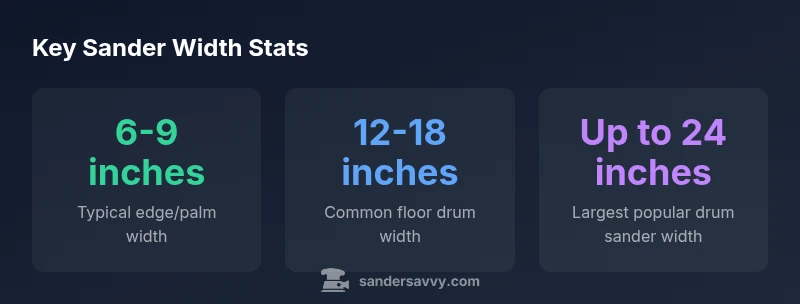
How big a floor sander is depends on its type. Edge or palm sanders are typically 6–9 inches wide, while common floor drum sanders run about 12–18 inches wide. Some professional models reach 24 inches. Belt sanders for floors are usually smaller, around 3–6 inches. Always measure doorway and hall clearance to ensure you can maneuver the machine safely.
How big is a floor sander? Size impacts project scope and maneuverability
The width of the sander you choose directly affects how quickly you cover floor area, how easily you reach corners, and how you move around obstacles. When someone asks how big a floor sander is, it's really about the operational footprint: wider machines finish faster on open sections, but narrower tools fit through doors and tight hallways. In practice, the sizing decision also depends on your room geometry, the amount of edging work required, and your ability to move the machine in confined spaces. For DIYers, this means balancing coverage speed with access constraints to avoid rework and uneven edges. The SanderSavvy team emphasizes that understanding typical width ranges helps you plan a safer, more efficient project cadence.
In addition to width, consider weight, balance, and wheel configuration, which influence how easy it is to reposition a sander between passes and around furniture. Heavier, wider drums may remove material faster, but you’ll need strong legs and a clear path. Lighter edge sanders excel in tight spots but take longer to cover large expanses. By thinking through both space and finish goals, you can choose a size that minimizes back-and-forth while delivering a smooth, even surface.
Typical size ranges you’ll encounter by sander type
Edge sanders and palm-style tools are usually compact, with widths in the 6–9 inch range. They’re designed to run along walls, into corners, and around baseboards, where a larger machine would be impractical. Floor drum sanders are the workhorses for big jobs; most residential models fall in the 12–18 inch width range, providing rapid material removal across wide planks. Some professional, heavy-duty drum sanders reach up to 24 inches, enabling faster coverage on large rooms. Belt floor sanders, while not as common for entire-floor tasks, keep belt widths in the 3–6 inch range and are handy for localized spot work or edge clearing. Orbital floor sanders tend to sit around 5–8 inches, offering versatility and better dust control for mixed stock and varying grain directions. Understanding these widths helps you map your floor plan, calculate total passes, and estimate project time more accurately.
Measuring space and choosing the right size for your room
Begin with a door-width audit: measure the narrowest doorway the sander must pass through, add a small clearance for handles and hoses, and note any turns or stair access. Next, assess the room length and width to estimate how many passes a given sander width would require for a uniform finish. For open-plan spaces with few edges, a wider drum sander can dramatically cut total sanding time. In contrast, rooms with many alcoves or tight corridors benefit from narrower edge tools that can reach along walls without reconfiguring the room layout. Finally, balance speed against safety: faster, wider machines generate more dust and require more space for safe operation and dust containment.
Practical considerations: weight, mobility, and storage
Wider sanders tend to be heavier and less nimble, which matters in multi-room projects where you must carry the machine up stairs or between levels. Edge sanders are generally lighter and easier to lift, but you’ll do more passes to achieve a uniform finish. When planning storage, consider the machine’s footprint and whether you can tilt or store it in a closet or garage corner. If you rent, verify access in and out of the vehicle and through doorways at the rental site. Finally, check the dust collection setup; larger machines often produce more dust and require a robust capture system to keep workspaces clean and safe.
How width affects maneuvering and edge finishing
Width directly influences edge performance. Narrow tools excel at aligning flush to walls and in tight corners, while wider drums finish floors faster in open areas but can struggle near baseboards or behind fixtures. A common strategy is to use a narrow sander for edges and transitions, then switch to a wider drum for bulk stock removal. If your space includes door jambs, floor vents, or unusually shaped rooms, plan your passes to minimize backtracking and avoid gouges. The goal is a consistent plane across the surface with even sanding, free of ridges or dips that require additional passes.
Safety considerations: dust control and protective practices
Size also interacts with safety. Larger, wider machines can generate more airborne dust and require more robust dust extraction. Always connect a dust collector, wear appropriate PPE (respirator or dust mask, eye protection, hearing protection), and keep the workspace well-ventilated. Check that electrical cords and hoses won’t snag during passes, and make sure the surface is free of obstacles. For edge work in tight spaces, lower speed settings can improve control and reduce kickback. Finally, inspect the equipment for any loose parts or worn belts before starting a long sanding session.
Rental versus ownership: deciding based on space and frequency
If you only sand floors occasionally, rental may be the smarter option. Rental stores offer varying widths and weights, and your choice should reflect your project scope and storage capacity. For frequent floor refinishing, investing in a mid-range sander with a 12–18 inch drum can pay off in time saved and consistent results. Be mindful of maintenance needs and belt or drum wear, and factor dust collection compatibility into your decision.
Common mistakes and how to avoid them
Avoid assuming bigger is always better; size should match the job. Don’t buy a sander without confirming it can fit through doorways and into closets at the job site. Don’t neglect edge-access tools for corners and radii, as missing those can extend the project and degrade the finish. Finally, ignore dust control after selecting a wide sander; a poor dust setup slows you down and creates health risks.
Quick pre-project checklist
- Measure doorway widths and hallway turns.
- List rooms by size and edge-work needs.
- Match sander width to room type (edges vs open floor).
- Confirm dust collection and vacuum compatibility.
- Inspect weight, port locations, and maneuverability.
- Plane a test patch to verify finish before tackling the entire floor.
Comparison of sander widths and typical uses
| Sander Type | Typical Width Range | Pros | Cons | Ideal For |
|---|---|---|---|---|
| Edge/Palm Sander | 6-9 inches | Good for corners and edges; portable | Limited surface area; slower on large rooms | Edges and tight spaces |
| Floor Drum Sander | 12-18 inches | Fast material removal on large areas; even finish | Heavy; requires setup | Open areas and large rooms |
| Belt Floor Sander | 3-6 inches belt width | Lightweight; easy to maneuver along edges | Belts wear; not ideal for large areas | Detail work and small patches |
| Orbital Floor Sander | 5-8 inches | Versatile; dust control | Slower on heavy stock | General-purpose sanding |
Your Questions Answered
Do floor sanders come in different widths?
Yes. Edge sanders are typically 6-9 inches, drum sanders commonly range from 12-18 inches, with some professional models up to 24 inches.
Yes. Edge sanders usually run 6-9 inches, drum sanders commonly 12-18 inches, and some pro models reach 24 inches.
How do I know what size sander I need for my space?
Measure doorway widths and corridor turns, assess room layout, and consider edge-work requirements. Choose a width that minimizes rework and fits through access points.
Measure doorways and corridors, then pick a width that fits through access points and handles edge work smoothly.
Can I use a handheld belt sander for a whole floor?
Belts are great for small patches and edges; using a belt sander for whole-floor sanding is impractical due to slower pace and belt changes.
Belt sanders are best for small patches or edges, not entire floor jobs.
What safety considerations relate to sander width?
Always wear PPE, use dust collection, and ensure the machine fits through doorways. Wider machines require more space and ventilation.
Wear PPE and use dust collection; wider machines need more room to operate safely.
Are there rental options for wide floor sanders?
Yes, rental stores offer a range of widths; check availability and space requirements before booking.
Yes—rentals exist; check dimensions and space needs before booking.
“Size choices should align with room geometry and edge-work needs; the right sander improves efficiency and finish quality.”
Main Points
- Match sander width to room access and edge work.
- Plan doorway clearance before renting or buying.
- Use a narrow sander for edges and cabinets.
- Reserve wider drums for bulk floor removal when space allows.