How Big is a Drum Sander: Widths, Sizing, and Selection
Learn how big a drum sander typically is, including common drum widths (6–26 inches), how width affects performance and dust control, and practical guidance to choose the right size for your floor project.


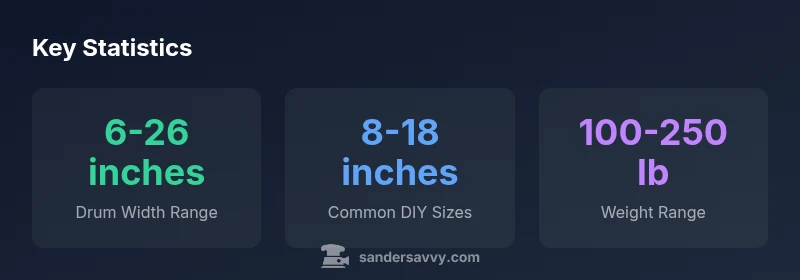
Drum sanders vary widely in width. For wood floor work, the sanding drum width typically runs from about 6 inches to 26 inches, with common consumer models at 8, 12, 16, and 18 inches. Wider drums cover more area faster but require a heavier machine and better dust control. Choose a width based on room size, project scope, and maneuverability. According to SanderSavvy.
How big is a drum sander? Width basics
Drum sanders are defined by the physical width of the sanding drum, which directly determines how much area the machine can cover in a single pass. For floor work, you’ll see a broad spectrum—from compact, portable units at roughly 6–12 inches wide to heavy-duty machines with 24–26 inch drums. Most DIY projects fall into the 8–18 inch range, which balances maneuverability and throughput. The width also influences how easily you can navigate around doorframes, tight corners, and installed cabinets. When shopping, compare drum widths alongside horsepower, belt type, and dust collection capabilities. As a rule of thumb, the bigger the drum, the faster the planing—but be prepared for increased weight and higher power requirements. According to SanderSavvy, width is a primary variable that shapes project timing and finish quality.
How width affects performance and dust management
Width interacts with motor power, drum diameter, and dust extraction. Wider drums remove more material per pass, reducing total sanding time on large, flat floors. However, they demand more power and can generate more heat, which may affect belt wear and finish consistency if the machine isn’t adequately cooled. Larger drums also challenge dust-collection systems: a strong, properly sealed dust extractor and a clean path from the drum to the bag helps minimize airborne dust and improve visibility during operation. For smaller rooms, a narrower drum is easier to control and reduces the risk of gouges caused by wheel misalignment or over-aggressive passes. In short, width affects throughput and dust handling as much as it affects tool ergonomics and safety.
Common sizes by category: portable vs professional drum sanders
Portable, consumer-grade drum sanders typically cluster in the 6–12 inch range, with mid-range models offering 12–16 inches for more ambitious DIY projects. Professional, industrial, or rental-grade drum sanders often sit at 18 inches or wider, up to 24–26 inches for large-area hardwood floors. The smaller units excel in tight spaces and easier maneuverability, while the larger drums accelerate material removal on expansive surfaces. If you expect to tackle multiple rooms or dense hardwoods, a wider drum can significantly reduce total project time, provided you have the workspace and power to manage the machine safely.
How to measure and compare drum sander drums
To evaluate a drum sander’s width, measure from the outside edge of the drum housing to the opposite outside edge. Confirm that measurements account for any protruding guards or sanding sleeves. Compare this drum width against your doorway clearance, stair landings, and entryways to ensure the machine can pass through without tilting or scraping. When comparing models, also note the drum diameter (the sanding surface itself) and the backing roller size, since these influence how evenly the sanding belt contacts the floor. Finally, review the manufacturer’s recommended operating parameters, including power requirements and dust-collection specs, to ensure the width decision aligns with your shop’s capabilities.
Edge cases: doorways, hallways, and awkward spaces
Rooms with narrow doorways or tight hallways favor narrower drums, typically 8–12 inches, to minimize the risk of snagging and gouging the floor near trim or thresholds. For restoration projects that involve long, straight runs, a wider drum can improve throughput, but you’ll need to plan for turning radius and access around fixed features. Consider pre-fitting tape or guides for edge work and plan your passes to avoid stopping mid-room on the toughest sections. In all cases, verify the sander can fit through door frames and into closets or stair landings before buying or renting.
Choosing a drum sander width for your project
Start by mapping your project area: total square footage, room dimensions, and doorway openings. If you’re sanding multiple square rooms with wide open spaces, a mid-to-wide drum (16–24 inches) may save time. If you’re working in a small apartment or a bedroom with many obstacles, an 8–12 inch drum is easier to handle and less likely to cause accidental gouges. Budget and available power are also critical: larger drums require sturdier machines with better motors and dust collection, which typically cost more and demand better ventilation. Use a simple decision checklist:
- Measure doorway and hallway widths; ensure clearance for the widest drum you’re considering.
- Estimate total floor area and the pace you want; balance width against travel speed.
- Confirm shop power supply and weight handling; larger drums are heavier and draw more current.
- Check dust-control capabilities and mask requirements; larger machines generate more dust.
- Review maintenance access for changing belts and cleaning the dust path.
If you’re new to drum sanding, start with a modest width (10–12 inches) to learn technique before moving to wider drums. This approach reduces risk and helps you understand how width affects finish and dust collection in your space.
Maintenance tips for different drum sizes
Regardless of width, regular belt changes, belt tension checks, and dust-path cleaning preserve performance. Smaller drums may require more frequent belt changes due to higher belt tension and more frequent contact with irregular floors. Larger drums generate more debris and require thorough dust-path cleaning after each use to prevent clogging. Inspect the drum sleeve and sanding belt for glazing or wear, and replace as needed to maintain consistent finish. Proper lubrication of moving parts and periodic wheel alignment also helps ensure even sanding across the drum’s width.
Authority sources and best practices for sizing
When sizing a drum sander, rely on a combination of tool specifications, room layout, and safety guidelines. For dust safety, follow general guidelines from occupational health resources on wood dust and respirable particulates, and ensure your shop has adequate dust collection. Always consult manufacturer installation and operation manuals for specific width recommendations and re-belt procedures. For broader context on safety and best practices, consider resources from OSHA and NIOSH, alongside professional woodworking guides.
Real-world sizing quick reference
- Small room (bedroom or closet): 6–12 inch drum for maneuverability.
- Standard living areas: 12–16 inch drum to balance speed and control.
- Large open floors: 18–26 inch drum for fastest material removal, with enhanced dust collection and power.
- Edge work and transitions: pair a narrower drum with a detail sander for edges and corners.
dataTableNotesSubheadingOtherLinksNoteOnlyForThisBlockShieldedNoteIfNeeded...
orderNotesAndWeightsNoteIfNeeded...
Width-based comparison of drum sander types
| Model Type | Typical Drum Width | Best For |
|---|---|---|
| Portable drum sander | 8-12 inches | Detail work, small rooms |
| Mid-size drum sander | 16-22 inches | Medium floors |
| Commercial drum sander | 24-26 inches | Large-area floors |
Your Questions Answered
What is the typical drum width for residential floor sanding?
For home projects, common widths range from about 8 to 18 inches, with smaller portable units around 6–12 inches. Your choice should consider room access, doorways, and furniture layout. Start with a width that allows easy maneuvering without frequent turning or contact with trim.
In homes, start with an 8 to 12 inch drum to keep it easy to handle in doorways.
Can I use a larger drum in a small room?
Using a larger drum in a tight space can speed up areas that are flat and open, but it increases the risk of gouging and makes turning corners harder. If space is limited, prefer narrower drums and use careful technique to maintain edge control.
A small room is usually better with a smaller drum for precision.
How does drum width affect dust collection?
Wider drums move more material per pass, which can generate more airborne dust unless the shop dust collection is strong. Ensure your vacuum or dust extractor is rated for the expected air volume and connect hoses securely to minimize dust leakage.
Dust control is key—larger drums need good dust collection.
Are rental drum sanders wider or narrower than buyable models?
Rentals often emphasize standard widths that are versatile for contractors, typically in the mid-range. Availability varies by location, so check local rental yards for the widest models they have and plan your project around that capability.
Rentals vary, so know what widths are actually available nearby.
What other dimensions matter besides width?
Drum diameter, motor power, and belt type all influence sanding quality and speed. A wider drum with a strong motor and appropriate belt tension delivers consistent removal and reduces burn marks when used correctly.
Width isn’t everything—check drum diameter and power too.
“A drum sander’s width isn’t just a number—it defines the pace, maneuverability, and dust-management needs of your project. The right width balances room constraints with finish quality.”
Main Points
- Start with the smallest width that fits your space.
- Wider drums speed up sanding but require more power and dust control.
- Edge work may require narrower drums or a secondary sander.
- Weight and portability increase with drum width—plan your setup.
- Refer to manufacturer specs for exact width and power requirements.