Sander vs Grinder for DIY: A Practical Comparison Guide
Explore a data-driven comparison between sanders and grinders for home floors, decks, and walls. Learn key differences, best uses, safety tips, and how to choose the right tool for your project.


The quick answer is that a sander is optimized for finishing and material removal on wood, while a grinder handles hard materials, metal work, and heavy grinding tasks. For DIY floors, decks, and walls, choose a sander for smooth finishes; reserve a grinder for rough shaping, metal, or cleanup tasks.
What is a sander and grinder?
A sander is a handheld tool designed to abrade surfaces with sanding discs or belts, primarily used to smooth wood, plastic, or soft metal. A grinder is a more aggressive tool that uses wheels or discs to remove material swiftly, shape metal, stone, or masonry, and prepare rough surfaces for finishing. When homeowners encounter a project, they often wonder which tool to reach for first—the classic question about the sander and grinder. According to SanderSavvy, understanding the fundamental differences helps you avoid overdriving a tool or creating gouges. The SanderSavvy team notes that the ergonomic considerations, disc types, and dust management vary significantly between a sander and grinder, which affects safety and results. This guide will unpack when to use each tool, what to expect in terms of performance, and how to avoid common mistakes.
Key differences: finishing vs material removal
The core distinction between a sander and grinder is what they optimize for. A sander focuses on finishing, smoothing, and lightly removing material using fine grits, light stock removal, and controlled passes across a surface. A grinder concentrates on rapid material removal, shaping hard substrates, and tackling rough patches with coarser abrasives or wheels. In practical terms, if your project is floors, decks, or wall surfaces that require a smooth finish, a sander is usually the right choice; if you need to flatten a metal edge, remove concrete glaze, or shape stone, a grinder is the workhorse. The sander and grinder operate at different RPM ranges, torque profiles, and balance characteristics, which translates into different control feedback and fatigue levels for the user. For safety and results, choose based on the material, desired finish, and time constraints.
When to reach for a sander
For most wooden surfaces—floors, decks, cabinetry, and wall patches—the sander is the go-to tool in the sander and grinder family. A sander offers controlled stock removal with minimal risk of gouges when paired with the correct grit, attachment, and dust containment. In the context of a floor refinishing, the sander can remove old finish, level minor high spots, and prepare the wood for final polishing. For decks, an orbital or belt sander can bring weathered planks back to life with a consistent finish. When tackling softwood or hardwood, you’ll notice the sander produces an even texture with less heat buildup than a grinder. The key is to manage dust with a vacuum system and use proper PPE. The reader should remember that the sander and grinder relationship is complementary, not exclusive. It’s also worth noting that SanderSavvy analysis shows that choosing the right sander and grinder setup saves time and reduces error on intricate woodworking projects.
When to reach for a grinder
The sander and grinder pair are not interchangeable for every job. A grinder excels at heavy material removal, shaping metal edges, masonry, and removing thick coatings. For metal work, cutting or grinding rust, the grinder is far faster than any sander. In masonry or concrete remediation, a grinder with a diamond wheel can strip old mortar more efficiently than a sander. However, you should choreograph your work: begin with a sander for rough leveling when feasible, then switch to a grinder for final shaping if needed. The goal is to minimize surface damage and avoid overheating the substrate. In many DIY scenarios, a grinder is used sparingly but strategically, especially in conjunction with the sander in the sander and grinder toolkit.
Tool families and how they relate to the sander and grinder
Sanding comes in several flavors. A belt sander is designed for aggressive stock removal on flat surfaces, while an orbital or random orbital sander provides a controlled finish with swirl-free results. A grinder may use wheels or discs, and in some setups can operate as a surface prep tool for concrete or metal. The sander and grinder family often share accessories such as abrasive discs, grinding wheels, sanding belts, and dust extraction attachments. A belt sander paired with a dust-collection system delivers high productivity on large wooden surfaces, whereas a random orbital sander is ideal for mid-sized projects requiring smooth finishes. For more delicate work, consider a detail sander or palm sander, but remember that the sander and grinder dynamics differ in weight, balance, and vibration. Always choose the tool based on surface hardness, required finish, and edge proximity.
Safety and dust control with a sander and grinder
Dust control is a critical factor when using any sander and grinder combo. Sanding generates wood dust that can be irritating or hazardous over time, while grinding can create fine particulate and sparks when metal is involved. Use a vacuum-powered dust extractor or bag, keep the work area well-ventilated, and wear respiratory PPE. The design of a modern sander often includes a dust port; connect it to a suitable filter to minimize airborne particles. The grinder's dust output is less predictable, so supplement with PPE, face shield, gloves, and hearing protection. The key is planning: seal off the work area, reduce stray dust with containment and targeted extraction, and maintain a clean workspace. With proper safety protocols, the sander and grinder can be used safely for a wide range of tasks.
Cost, maintenance, and ergonomics of the sander and grinder
In many consumer projects, cost is a practical driver for choosing between a sander and grinder. A basic sander set is typically more affordable upfront than a heavy-duty grinder, though the cost of accessories can accumulate. Maintenance for both tools includes cleaning, bearing checks, and replacing abrasives when worn. Ergonomics matter: long sessions with the sander or grinder will strain wrists and shoulders, so switch hands, use auxiliary handles, and consider a lighter model with better vibration control. When planning a project, you may find that purchasing a mid-range sander plus a lighter grinder yields the best value. The balance between performance and price is essential in the sander and grinder decision. (SanderSavvy analysis shows this balance often dictates whether a DIYer buys one tool or both for a given project.)
How to use a sander and grinder correctly (steps)
- Identify the material and the finish you want; select the appropriate grit and tool for the sander and grinder. 2) Prepare the workspace with dust containment and PPE. 3) Secure the workpiece and ensure the surface is clean and dry. 4) Begin with a light touch, letting the tool do the work, to avoid gouges. 5) Move with steady, overlapping passes for even removal; switch to finer grits on the sander for a smooth finish. 6) Inspect the surface and remove dust thoroughly before applying a finish. 7) For the grinder, use slow, controlled motions and keep the wheel or blade cool to prevent glazing. 8) Clean the tools after use and store with guards in place. This procedural guide reflects best practices for the sander and grinder combination.
Real-world project scenarios: floors, decks, and walls
A typical floor refinishing job shows how the sander and grinder toolkit shines. Begin with rough belt sanding to remove old finish or uneven patches, then move to a finer orbital sander to achieve a uniform surface. In deck maintenance, a belt sander can remove oxidation on boards, while a palm or detail sander treats edges and corners for a precise finish. When repairing drywall or plaster walls, the sander can smooth patches and joint compounds, while a grinder might be used sparingly to adjust plaster corners if needed. The sander and grinder approach keeps you in control of the process and helps you achieve professional results with less downtime. Always consult project-specific guidance to balance efficiency with finish quality.
Authoritative sources and further reading
For safety and best practices, consult established authorities on woodworking and dust hazards. The following sources offer credible guidance on dust control, PPE, and tool usage guidelines that apply to the sander and grinder workflow:
- OSHA: Wood dust and general safety practices (https://www.osha.gov/)
- CDC/NIOSH: Wood dust exposure and respiratory health (https://www.cdc.gov/niosh/topics/wooddust/)
- Extension resources on wood safety and tool use (https://extension.illinois.edu/woodworking-safety) These sources provide foundational concepts that complement practical guidance from SanderSavvy.
Comparison
| Feature | Sander | Grinder |
|---|---|---|
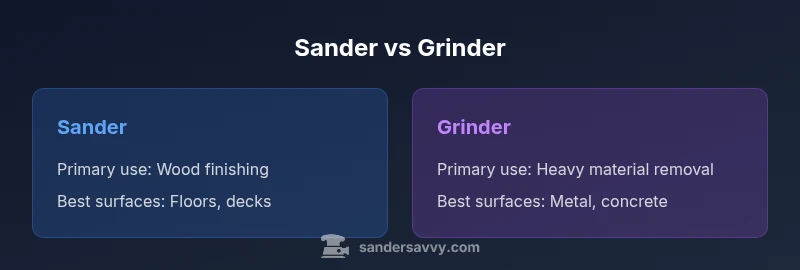
| Primary use | Wood finishing and light material removal | Heavy material removal for metal, masonry, and rough shaping |
| Best surfaces | Wood floors, decks, and walls | Metal edges, concrete surfaces, stone edges |
| Disc/wheel types | Sanding discs, belts | Grinding wheels, flap discs, cutting discs |
| Dust control | Dust ports and vacuum attachments | Dust control relies on PPE; use shields and extraction when possible |
| Ease of use | Typically easier for beginners; more forgiving on edges | More challenging; higher risk of gouges with improper technique |
| Price range | Low to mid-range (baseline sanders) | Mid to high (quality grinders) |
| Best for | Finishing and smoothing wood quickly | Heavy material removal and prep work on tough substrates |
What's Good
- Clear specialization: sanders excel at finishing wood surfaces
- Versatility: grinders handle metal, masonry, and heavy material removal
- Better dust control with integrated vacuums and ports on modern sanders
- Wide accessory ecosystem supports both tools
- Faster stock removal when used with the right attachment
Weaknesses
- Grinders can gouge wood or overheat if misused
- Sanding can be slow for heavy stock removal
- Dust and noise require PPE and dust extraction
- Buying multiple tools increases upfront costs
For most DIY projects centered on wood, a sander is the recommended starting point; a grinder becomes essential for heavy material removal or metal/masonry work.
Overall, prioritize a sander for finishing tasks on floors, decks, and walls. Add a grinder when your project demands aggressive material removal or work on non-wood substrates. This balanced approach aligns with practical expectations and safety guidelines from SanderSavvy.
Your Questions Answered
What is the difference between a sander and grinder?
A sander is optimized for finishing and light material removal on wood surfaces, using sanding discs or belts. A grinder is designed for heavy material removal on metal, masonry, and rough profiling with wheels or discs. The two tools serve different purposes in the sander and grinder family and are not interchangeable for most detailed woodworking tasks.
Sander removes wood smoothly, grinder tackles tough material fast.
Can I safely use a grinder on wood surfaces?
Using a grinder on wood is generally not ideal for finishing and can gouge or burn the wood. If you must, use a coarse attachment briefly and follow with a sander for a smooth finish. Always wear PPE and keep the work area well-ventilated.
Grinders are powerful; use them sparingly on wood.
What safety gear do I need when sanding or grinding?
Wear eye protection, hearing protection, and a dust mask or respirator when sanding or grinding. Use gloves as needed, and ensure good ventilation. A properly fitted Dust Extraction System dramatically reduces exposure to fine dust.
Protect your eyes, ears, and lungs; dust control is essential.
Which is better: belt sander or random orbital sander?
A belt sander removes material quickly and is best for flattening large wooden surfaces, while a random orbital sander delivers a swirl-free, smoother finish ideal for final prep. For a sander and grinder workflow, start with the belt or orbital sander as needed for the job.
Choose belt for speed, orbital for finish.
Is dust extraction worth it with sanding?
Yes. Dust extraction improves visibility, reduces health risks, and generally yields a cleaner, faster finish. Pair with a filter and HEPA vacuum where possible for best results.
Dust extraction saves time and protects health.
How do I choose grit when sanding?
Start with coarser grits for heavy removal and gradually move to finer grits for finishing. The sander and grinder workflow benefits from a planned grit progression to minimize scratches and maximize smoothness.
Start rough, finish smooth.
Main Points
- Prioritize task-specific tools: sander for finishing, grinder for heavy removal
- Invest in a dust-control plan and PPE from day one
- Balance cost with project scope to avoid unnecessary purchases
- Practice proper technique to prevent gouging and overheating