Sander vs Angle Grinder: A Practical DIY Guide
A practical, analytical comparison of sanders and angle grinders for DIY floor, deck, and wall projects. Learn when to use each tool, safety tips, and performance insights from SanderSavvy.


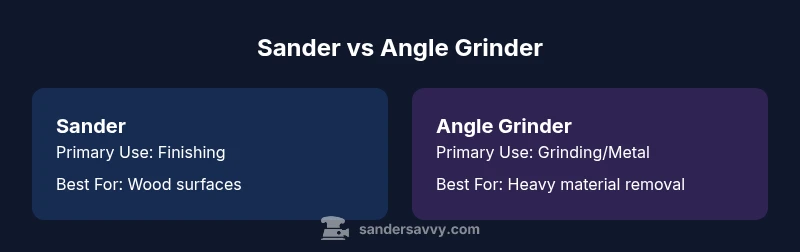
In the sander vs angle grinder comparison, the sander (especially orbital or finishing models) is the go-to for wood finishing, flattening surfaces, and dust-conscious work. The angle grinder excels at aggressive material removal, metalwork, and heavy grinding. For most DIY floor and wood projects, start with a sander and reserve the grinder for rough shaping or metal tasks.
Defining the Tools: Sander and Angle Grinder
In the sander vs angle grinder decision, understanding what each tool is designed to do is the first step. A sander is built to smooth surfaces with controlled, repetitive abrasion, typically using interchangeable sanding pads or discs. An angle grinder uses a rotating abrasive wheel or disc capable of rapid material removal, cutting, grinding, and shaping across a wider range of materials, including metal and masonry. For homeowners and DIY enthusiasts focused on floors, walls, and wood surfaces, the sander is usually the safer, more precise option for finishing. The SanderSavvy team found that choosing the right tool begins with the material, the desired finish, and the tolerance you can accept on the surface. This baseline will guide whether you reach for a finishing sander, a random-orbit model, or a heavy-duty grinder with grinding wheels and flap discs.
wordCountInBlock":null}
Core Differences at a Glance
When you compare a sander to an angle grinder, several core differences stand out:
- Purpose: Sanders are for smoothing and finishing; grinders are for aggressive material removal.
- Finish quality: Sanders deliver finer, uniform textures; grinders can leave gouges if not controlled.
- Surface range: Sanders excel on wood and soft materials; grinders handle metal, concrete, and thick coatings.
- Attachments: Sanders use sanding pads/plates; grinders use discs for grinding, cut-off, or flap-wheel applications.
- Safety and dust: Sanding is generally safer and easier to control with dust collection; grinders produce more noise, sparks, and fly-off debris.
According to SanderSavvy, the choice hinges on the surface and the finish you require, not only on what the tool can do. This section helps you map your project needs to the right tool.
wordCountInBlock":null}
Material Removal vs Finishing: When to Pick Each Tool
For DIY projects, plan your work in stages. Start with the sander when you need to prepare a wooden surface, level high spots, or remove old coatings with minimal risk of gouging through thin wood. A random-orbit or finishing sander can smooth uneven areas and create a ready-to-finish surface with consistent texture. Reserve the angle grinder for tasks that demand rapid material removal, reshaping, or breaking through tough layers such as thick paint, epoxy, or metal welds. If you are building or refinishing a floor, begin with the sander for flattening and levelling; switch to more aggressive grinding only if you encounter stubborn sections. The emphasis is on control and finish quality rather than speed.
wordCountInBlock":null}
Surface Compatibility and Grit Strategy
Wood surfaces respond best to progressive grit plans: start coarse to level uneven areas, then move to finer grits to achieve a flawless finish. Sanding with the right cadence minimizes swirl marks and leaves a uniform texture. Metal or masonry tasks, when necessary, are better served by an angle grinder with appropriate discs, followed by lighter sanding to achieve a smooth final surface. Grit selection is key: begin with coarse grits on the sander only where needed, then step down through middle to fine grits for paint removal and finish prep. The SanderSavvy analysis highlights that proper grit progression dramatically reduces rework and enhances final results.
wordCountInBlock":null}
Disc, Pad, and Attachment Dynamics
A fundamental difference between the two tools is how abrasives attach and are used. Sanders rely on hook-and-loop pads or clamping plates that accept interchangeable sanding discs and pads in a range of grits. Orbital sanders minimize gouging due to their random patterns, delivering a more even finish. Angle grinders use abrasive discs or flap discs fixed to a spindle, capable of aggressive material removal and shaping; however, they demand careful control to avoid gouges or accidental damage to surrounding areas. The right attachment decision—pad size, grit, bonding type—drives the efficiency and finish quality for the task at hand.
wordCountInBlock":null}
Dust Control, PPE, and Safety Considerations
Dust control is a major factor in tool selection. Modern sanders often work best with integrated dust collection or a compatible vacuum system, dramatically reducing airborne particles and cleanup time. When grinding or cutting with an angle grinder, sparks and debris are more likely; you should wear eye protection, gloves, hearing protection, and a suitable respirator for dusty environments. Always check guards, clamps, and disc quality before use. Sander-based projects on floors and walls can be accomplished with less PPE burden than heavy-grinding tasks, but dust is still a concern, especially when working indoors near living spaces.
wordCountInBlock":null}
Ergonomics, Vibration, and User Fatigue
Ergonomics matter more than raw speed in long sanding sessions. Orbital sanders tend to vibrate less and present a more comfortable grip for extended periods, reducing fatigue. Angle grinders, while versatile, transmit more vibration and require stronger stance and better body control. If you have a larger area to cover, a lighter square- or palm-sander can keep fatigue low, while more intense grinding should be approached in shorter bursts with frequent breaks. Proper stance and hand positioning reduce kickback risk, particularly with grinders.
wordCountInBlock":null}
Cost of Ownership and Value for DIYers
Purchase costs for sanders and grinders vary with size, feature set, and brands. Sanders—particularly orbital or finishing models—toster to mid-range price points but offer long-term value through less waste and better finishes. Angle grinders can be affordable for basic tasks but may increase total cost if you require multiple discs for different materials and safety gear. The total ownership cost should include accessories, replacement pads or discs, and dust management equipment. Focus on getting a model with durable guards, comfortable handles, and reliable dust extraction compatibility.
wordCountInBlock":null}
Practical How-To: Wood Finishing Project Walkthrough
A practical way to compare the tools is to walk through a wood finishing project, such as refinishing a wooden floor. Start with a coarse sander to flatten and remove old coatings, then progressively work your way to finer grits to achieve a smooth finish. Check for swirl marks and flatness, then sand with a dust-collection setup to minimize cleanup. If you encounter a stubborn patch that won’t respond to sanding, switch to an angle grinder equipped with a flap disc for strategic material removal, then return to the sander to refine the surface. The key is controlling pressure and speed to avoid gouging and overheating the wood.
wordCountInBlock":null}
Common Mistakes and How to Avoid Them
Common mistakes include using the wrong grit, applying excessive pressure, and moving too slowly or too quickly. A grinder can gouge if not carefully guided, while a sander can leave swirl marks if grit progression is not adhered to. Avoid using a grinder on soft wood or fragile surfaces without adequate protection and backing material. Always test on scrap sections first and monitor dust levels closely to ensure a safe, clean workspace.
wordCountInBlock":null}
Quick-Start Decision Framework
Use this mini-framework to decide quickly: if you need a smooth, finished wood surface with minimal risk of gouging, start with a sander. If you need to remove material rapidly or shape metal, masonry, or thick coatings, reach for an angle grinder. Always begin with the least aggressive option and escalate only when necessary, keeping safety and dust control as top priorities. This approach aligns with practical DIY workflows for floors, decks, and walls.
wordCountInBlock":null}
Comparison
| Feature | Sander (orbital/finishing) | Angle Grinder (disc/grinding) |
|---|---|---|
| Primary Use | Finishing and smoothing wood; dust control | Aggressive material removal; metal/stone |
| Best For | Wood finishing, cabinets, floors, priming prep | Heavy grinding, shaping, metalwork, masonry prep |
| Disc/Pad System | Pad-based sanding discs; interchangeable pads | Abrasive discs attached to a wheel; flap discs possible |
| Surface Finish Quality | Very smooth, swirl-free finishes with controlled texture | Rougher finish; risk of gouges if misused |
| Dust & Safety | Dust control compatible with vacuums; lower risk | Higher dust and sparks; requires PPE and guards |
| Typical Price Range | Mid-range to higher for feature-rich models | Mid-range to higher depending on wheel size and attachments |
What's Good
- Gives fine, uniform finishes suitable for wood floors and walls
- Orbital action reduces gouging and is forgiving for beginners
- Large selection of grits and pads enables precise finishing
- Dust collection compatibility improves safety and cleanup
- Generally safer and easier to control for DIY projects
Weaknesses
- Slower material removal on tough coatings or thick paint
- Angle grinders require more skill and PPE due to potential kickback
- Shifts between grits and pads add steps in the workflow
- Grinders spill more dust and sparks without proper guards and shields
Sander wins for finishing; angle grinder wins for heavy material removal and shaping.
For most DIY projects around floors and wood surfaces, a sander provides better control and a smoother finish. An angle grinder is the tool of choice when you need rapid material removal or metal/masonry work. The right answer depends on the task, but the typical workflow favors starting with a sander and reserving the grinder for aggressive steps.
Your Questions Answered
What is the main difference between a sander and an angle grinder?
A sander is designed for smoothing and finishing wood or soft surfaces, using pads or discs to remove minimal material with control. An angle grinder uses a spinning abrasive wheel to aggressively remove material, grind, or cut hard materials like metal and masonry. The key distinction is finish quality versus removal speed.
A sander finishes surfaces smoothly, while an angle grinder removes material quickly and aggressively.
Can I use an angle grinder for wood finishing?
It’s generally not recommended for finishing wood because it can gouge the surface and leave uneven textures. If you must use it, apply with extreme care and follow up with a high-grit sander to even out the surface.
Avoid using an angle grinder for wood finishing whenever possible.
Which tool is safer for DIY beginners?
A sander is typically safer for beginners due to its lighter weight, lower risk of kickback, and better control for fine finishes. Grinders can be used safely with proper guards, PPE, and training, but they carry higher risks for new users.
Sander is usually the safer starting point for beginners.
What accessories do I need to start?
You’ll need sanding discs or pads in multiple grits, a compatible backing pad, a dust-collection solution, and PPE (eye protection, hearing protection, mask). For grinders, you’ll require appropriate discs, guards, and possibly flap discs along with PPE.
Grab extra sanding pads, guards, and a reliable dust system to start.
How do I avoid gouging with a sander?
Use a light touch, keep the sander flat on the surface, and follow a consistent parabolic movement. Start with a coarser grit only where needed and finish with finer grits to minimize marks.
Keep the tool moving smoothly and don’t press hard.
Is it ever necessary to switch between tools mid-project?
Yes. Start with a sander for broad leveling and finishing; switch to a grinder only for stubborn coatings or hard materials, then return to the sander for final smoothing and uniform texture.
Switch tools as the task demands for efficiency and finish quality.
Main Points
- Start with a sander for finishing and flatness
- Use an angle grinder for heavy material removal or metalwork
- Pair with a dust-collection system for safety
- Match grit and disc size to task to avoid gouges
- Prioritize guards, PPE, and controlled technique