How to Sand Drywall Without Dust: A Practical Guide
Discover a practical, safety-focused method to sand drywall without dust. Learn containment, dampening, dust-control tools, and cleanup for a cleaner, faster finish.


Learn how to sand drywall without dust using containment, dampening, and a HEPA vacuum for clean, safe results. This guide outlines a practical, step-by-step approach that minimizes airborne particles, protects nearby surfaces, and speeds cleanup. You’ll need a HEPA vacuum, a dust-control sander, water spray for dust suppression, and proper PPE. SanderSavvy's proven methods balance safety with effective results.
Understanding drywall dust and why control matters
Drywall sanding creates a fine, lightweight residue that can linger in air and settle on every surface. Without proper control, you’ll face messy cleanup, itchy eyes, and potential respiratory irritation. According to SanderSavvy, the key to a safe, efficient project is combining containment, dampening, and selective sanding to minimize dust generation from the outset. By understanding how dust behaves and where it originates, you can design a workflow that keeps particles contained within the workspace.
Airborne drywall dust is primarily created when the paper and gypsum cores are broken by sanding. The smaller the particles, the more easily they become suspended in air. In typical home environments, normal room ventilation can carry particles into adjacent rooms, settle on furniture, and infiltrate HVAC systems. The goal is to create localized control in the sanding zone and prevent dust from escaping to other areas of the home.
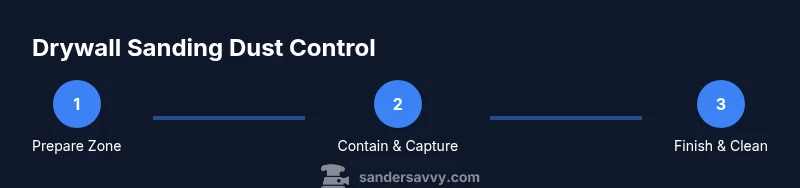
The first step is to plan a dust-control strategy before you touch the sander. This means sealing doorways with plastic sheeting, turning off central air vents in the sanding area, and preparing a HEPA-filtered vacuum to capture dust at the source. It's not just about keeping the air clean; it’s also about reducing mud-like coats on walls and floors that make subsequent finishing steps harder. The SanderSavvy approach emphasizes a two-pronged method: contain the dust and capture it as soon as it’s produced.
In addition to containment, you should consider surface protection. Cover floors, furniture, and nearby trim with drop cloths or plastic. Use painter’s tape to seal around work edges where dust can escape. If you’re working in a multi-room setting, build a temporary dust-free “zone” by creating a negative-pressure environment using a dedicated exhaust or a portable fan that blows away from open doors, not into other living spaces. This planning phase often determines how quickly you’ll complete the project with minimal cleanup.
Finally, set expectations about dust. Even with best practices, some dust will occur—so plan for cleanup time. With the right setup, most of the dust is captured at the source, which means less residual dust on walls and floors and a faster, safer finish.
A practical, dust-control setup
Creating a dust-free sanding zone is about containment, airflow management, and source capture. Start by sealing the work area: close doors, seal any gaps with plastic sheeting, and cover vents if possible. Set up a dedicated dust-collection zone using a HEPA-filter vacuum connected to your sander’s dust port. If you don’t have a built-in shroud, use masking tape and plastic to create a makeshift enclosure around the sander that hugs the wall during use. A portable air scrubber with a HEPA filter is a strong optional upgrade for larger rooms, but a high-quality shop vac can be enough in smaller spaces.
Dampening is your friend. Lightly mist the drywall surface with water using a spray bottle before sanding. The moisture dramatically reduces airborne dust by keeping the gypsum particles from becoming airborne. Don’t over-wet the wall—just a fine mist is enough to suppress dust without saturating the paper or mud layer. Sand with smooth, controlled motions rather than heavy passes that knock dust loose. Use consistent, shallow strokes to create an even finish and minimize gouges that require extra sanding.
To protect yourself and others, wear a proper respirator (NIOSH-approved with P100 filters), safety goggles, and disposable coveralls if you’re sanding large sections. Knee pads or a stable platform can help maintain balance and control. Set a stop rule: if you can’t maintain dust control without reopening doors or vents, pause and adjust containment before continuing. Finally, perform a quick test area first to calibrate pressure, motion, and dust capture before scaling up.
Essential tools, PPE, and materials
Investing in the right tools makes a big difference in dust control. Core items include a dust-control sander (orbital or drywall sander) with a built-in shroud, a high-quality HEPA vacuum, and protective gear. Here’s a practical shopping guide:
- HEPA vacuum: essential for at-source dust capture; ensure it has a long hose and a brush attachment for detailed areas.
- Dust-control sander: choose an orbital or drywall sander with a dust-collection shroud and replaceable sanding screens.
- Sanding screens/sheets: start with a light grit (120-150) for smoothing and follow with finer grits (180-220) for a clean finish.
- Dampening supplies: a spray bottle or mister for light moisture on the wall surface.
- PPE: NIOSH-approved respirator with P100 filters, safety goggles, disposable coveralls, and gloves.
- Protective coverings: drop cloths or plastic sheeting, painter’s tape to seal edges, and tack cloths for final wipe-down.
- Surface prep: dust masks for non-sanding tasks, knee pads or a stable ladder/step stool for working at height.
If you’re working on a large drywall project, consider renting a dedicated drywall sander with integrated dust collection to reduce setup time. Always ensure you have enough replacement sanding screens and a spare filter for the vacuum to avoid interruptions during the job.
Safety and storage notes: store all PPE within easy reach, and keep liquids away from electrical equipment. Clean up any spills promptly to prevent slip hazards and keep the workspace tidy for safer operation.
Step-by-step method to minimize dust
This section provides a practical, field-tested approach to dust-minimized drywall sanding. Use the steps below in sequence, keeping containment, dampening, and efficient capture at the forefront of your technique. Each step builds on the previous to create a workflow that keeps dust under control while delivering a smooth finish.
- Prepare the workspace: Remove obstacles, seal doors, and cover floors. Early containment saves cleanup later.
- Set up dust containment: Attach the sander’s dust port to the HEPA vacuum; drape plastic around the work area to minimize dust leakage.
- Put on PPE: Don your respirator, goggles, and protective clothing before you begin.
- Dampen the surface: Lightly mist the wall to reduce dust release during sanding.
- Start with the right grit: Begin with a coarser grit (120-150) for initial smoothing, then move to a finer grit (180-220) for a clean finish.
- Sand with controlled strokes: Maintain shallow pressure, keep the sander moving steadily, and avoid lingering in one spot to prevent gouges.
- Vacuum often: Pause every few minutes to empty the vacuum dust canister and check the tool for proper suction.
- Final touches: Use a tack cloth to remove fine remaining dust and inspect for uneven areas that require a light pass.
- Clean the area: Once sanding is complete, do a thorough wipe-down of nearby surfaces and remove protective coverings carefully to prevent re-dust.
Time estimate: 1.5-2.5 hours depending on room size and joint repairs. Tips: schedule breaks to reset containment and avoid overheating the sander or clogging the vacuum filter.
Finishing and cleanup after sanding
Dust-free sanding is as much about finishing and cleanup as it is about the actual sanding. Start with a final inspection of the surface: check for ridges, divots, and dust clinging to the wall. If you find any imperfections, a light pass with a fine grit (220) should be enough to address them without creating new dust hotspots. Use a tack cloth to pick up the finest dust and ensure the surface is uniformly clean before applying primer or paint.
For cleanup, revert to a methodical approach: run the HEPA vacuum along the baseboards and corners to capture any settled dust, then seal plastic sheeting and wipe down the entire area. If you used a portable air purifier or fan, turn it off only after all surfaces have been wiped and the area is clean to prevent recirculating dust. Finally, store tools properly in a dry, dust-free space and properly dispose of used sanding screens and PPE according to local guidelines.
Common mistakes and how to avoid them
Even experienced DIYers slip into dust-generating habits when the urge to finish quickly kicks in. The most common mistakes include skipping containment, over-wetting joints, using overly aggressive sanding pressure, neglecting to vacuum at the source, and re-opening doors mid-project. To avoid these pitfalls, follow the containment plan from the start, dampen lightly and test a small area, use light passes with the right grit, vacuum frequently, and keep a dedicated clean area for finishing work.
Quick-start checklist
- Seal the room and cover nearby surfaces.
- Attach sander to a HEPA vacuum and confirm suction.
- Wear proper PPE (P100 respirator, goggles, gloves).
- Damp-sand with light mist and begin with 120-150 grit.
- Vacuum often and finish with 220 grit for a smooth surface.
- Wipe with tack cloth and inspect for imperfections.
- Clean and store equipment properly for next use.
Tools & Materials
- HEPA vacuum(High-efficiency filter; ensure attachments match sander dust port)
- Dust-control sander(Orbital or drywall sander with integrated dust shroud)
- NIOSH-approved respirator (P100)(Replace filters as recommended; never rely on disposable masks)
- Safety goggles(Impact-resistant; provide side protection)
- Drop cloths or plastic sheeting(Cover floors and nearby furniture; use painter’s tape to seal edges)
- Painter's tape(Seal edges around protected zones)
- Spray bottle / dampening sprayer(Light mist to suppress dust; avoid over-wetting joints)
- Drywall sanding screens / sandpaper (grits 120-220)(Start with 120-150 for initial smoothing, finish with 180-220)
- Tack cloth(Final dust removal before priming/painting)
- Extension cords / power strip(If outlets are not near the work zone)
Steps
Estimated time: 1.5-2.5 hours
- 1
Prepare the workspace
Clear the area and remove obstacles. Seal doors and vents with plastic sheeting to limit dust migration. Set up your HEPA vacuum nearby for immediate dust capture and ensure lighting is adequate for precise work.
Tip: Use painter's tape to seal the edges where plastic meets walls for a tighter seal. - 2
Attach containment
Connect the sander to the HEPA vacuum and verify all hoses are secure. Add a secondary plastic barrier if doors lead to other rooms to maintain a controlled environment.
Tip: Test the suction by holding a tissue near the nozzle; if it sticks, you have good suction. - 3
Protect yourself
Put on the respirator, safety goggles, and protective clothing. Ensure you have a clear path to remove dust without stepping in freshly sanded areas.
Tip: Keep a spare disposable coverall handy for long sessions. - 4
Dampen the surface
Lightly mist the drywall surface with water to suppress dust creation. Avoid soaking the mud or paper; too much moisture can compromise joints.
Tip: Work in small sections to maintain consistent dampness. - 5
Begin sanding with light passes
Start with 120-150 grit. Apply gentle pressure and keep the sander moving in smooth, overlapping strokes to avoid gouging.
Tip: Let the sander do the work; avoid pressing hard to reduce dust and heat. - 6
Vacuum frequently
Pause every few minutes to vacuum captured dust and check that the vacuum is maintaining suction. Move the nozzle across corners and edges to catch dust that collects in joints.
Tip: Empty the vacuum container before it becomes full to preserve suction. - 7
Refine with finer grit
Switch to 180-220 grit for a smoother finish. Use light, even strokes to eliminate imperfections and leave a ready-to-prime surface.
Tip: Don’t skip this step; it significantly reduces prep time before painting. - 8
Final wipe and inspection
Run a tack cloth over walls to remove the finest dust. Inspect for ridges and touch up any spots with a light pass if needed.
Tip: If you see shiny spots, re-sand lightly with the finest grit.
Your Questions Answered
Can I sand drywall without a mask?
While a mask can reduce exposure, a respirator with P100 filtration is strongly recommended to protect against fine drywall dust. Do not rely on a fabric or surgical mask alone.
Yes, you should wear a respirator with P100 filters for drywall sanding to protect your lungs.
What grit should I start with when sanding drywall?
Begin with a coarser grit such as 120 or 150 for initial smoothing, then step down to 180-220 for the final pass to achieve a smooth, paint-ready surface.
Start with 120 or 150 grit and finish with 180 to 220 grit for a smooth surface.
Do I need to vacuum between passes?
Yes. Vacuum frequently to keep dust under control and to maintain clear visibility of the surface while you work.
Yes—vacuum often to keep dust down and see your surface clearly.
Is dampening drywall dust safe for mudded joints?
Light dampening is generally safe for painted or properly set mud joints. Avoid saturating mud-coated areas to prevent weakening joints.
Light dampening is usually fine, but don’t soak mudded joints.
How do I finish after dust-free sanding?
After sanding, wipe with a tack cloth, inspect for imperfections, and proceed with priming and painting. A smooth, dust-free surface reduces prep time.
Wipe with a tack cloth, check for flaws, then prime and paint.
Can I use a regular shop vac for drywall dust?
A regular shop vac can work, but a model with a true HEPA filter provides better filtration and keeps fine dust from being blown back into the room.
A HEPA-filtered vacuum is best for drywall dust.
Main Points
- Seal the work area before sanding to contain dust.
- Use dampening and a dust-control sander for best results.
- Vacuum at the source and frequently during the job.
- Finish with a tack cloth for a clean surface ready to prime.
- Inspect and touch up with fine grit for a smooth final surface.