Do You Need a Mask for Sanding Wood? A Practical Guide
Learn when to wear a mask while sanding wood, how to choose and fit a respirator, and practical dust-control tips. SanderSavvy guides safe DIY sanding.


Do you need a mask for sanding wood? Yes. Sanding produces fine wood dust that can irritate eyes, skin, and lungs, even in short sessions. Always wear a respirator with P100 filters or an NIOSH-approved dust mask, ensure a proper seal, and use dust extraction or ventilation to minimize exposure. Change filters as recommended.
Why dust matters when sanding wood
Dust from sanding wood is more than a nuisance; it can irritate the nose, throat, eyes, and skin, and prolonged exposure may lead to respiratory discomfort for some users. Different wood species release different irritants, and finishes can add VOCs or solvents to the mix. According to SanderSavvy, understanding the hazards helps you tailor PPE and ventilation to your project. Even small, quick sessions add up if you work in poorly ventilated spaces. Establishing a safe baseline before you begin saves you from a lot of post-sanding irritation and potential long-term exposure. Proper dust control also reduces cleanup time and keeps your workspace safer for others sharing the area.
In practice, plan your sanding around weather conditions if you’re indoors, and always check the air for dust concentration using simple visual cues such as a visible cloud when you apply the sander. If you notice sneezing, coughing, or throat irritation during a session, pause and reassess your PPE and ventilation. A well-ventilated space with a source capture system dramatically lowers exposure risks and makes the job more comfortable and faster in the long run.
Do you really need a mask for sanding wood?
The short answer is yes for most indoor projects and many outdoor jobs as well. Wood dust is an irritant and, for some species, may cause allergic reactions or sensitization over time. When you’re sanding, you’re generating a fine mist that can linger in the air and settle on surfaces. A mask or respirator is your first line of defense, even for brief tasks. If you’re working in a space with poor airflow, the need for PPE becomes even more critical. For most residential projects, a properly fitted respirator with filters rated for fine dust provides better protection than a basic disposable mask. Always choose a respirator that fits your face securely to maximize filtration effectiveness while you work.
Masks vs respirators: what's the difference
A basic disposable mask may shield you from large particles, but it is not designed to seal around your nose and mouth for fine wood dust. Respirators, especially those with P100 filters, provide a higher level of filtration and are designed to seal to your face, reducing inhalation of tiny particles. Elastomeric half-face and full-face respirators offer a secure seal and replaceable filters, which makes them ideal for ongoing projects or long sessions. For sanding, a fitted respirator with P100 filters is often the most practical balance of protection, comfort, and cost. Remember that a poor seal defeats filtration, so testing fit and performing user seal checks every time you don a respirator is essential.
Choosing the right mask: P100 vs N95
P100-rated filters capture at least 99.97% of airborne particles and provide the strongest protection in most woodworking scenarios. N95 masks offer less filtration and may be adequate for coarse dust in well-ventilated spaces, but they don’t seal as reliably as a respirator. For sanding, especially with hardwoods, finishes, or when indoors, a P100 respirator is the safer bet. Some projects benefit from dual protection: wear safety glasses or goggles with a respirator, and consider a fresh cartridge if you notice any odor or irritation during sanding.
How to ensure a proper fit
A good fit is as important as the mask itself. Start by choosing a model sized to your face and adjust headbands so the mask sits snugly without causing pressure points. Perform a user seal check by placing your hands over the filters and exhaling gently; you should feel air leaking around the edges when the seal is not tight. If you wear facial hair, a tight seal may be impossible; in those cases, you might need a full-face respirator. Always replace damaged or degraded straps and seals, and store PPE in a clean, dry place to preserve fit and effectiveness.
Ventilation and dust collection strategies
Ventilation reduces the concentration of airborne dust, especially in enclosed spaces. Use a combination of source capture (dust collectors or shop vacs attached to the sander) and mechanical ventilation (fans pulling air away from you or pushing it outside) to improve air quality. When possible, sand near an exterior opening or use a portable air purifier with a HEPA filter to remove fine particles from the room. These strategies not only protect your lungs but also improve visibility and reduce cleanup time after sanding.
Testing your setup before you start
Before you begin, perform a quick check of your PPE and dust-collection setup. Inspect the respirator fit, confirm the filters are properly seated, and run the dust extractor while you simulate sanding to see whether you can visually spot a plume of dust escaping. If you can see or feel dust escaping, pause to adjust the filter, mask seal, or dust-collection hose. This pre-check saves time and protects your lungs, especially when you’re working with dense woods or old finishes.
Finishes, woods, and hazard awareness
Some woods and finishes pose higher risks than others. For instance, sanding old finishes can release solvents and additives that require additional PPE or safer ventilation. If you’re unsure about the materials you’re working with, treat them as potentially hazardous and err on the side of caution. When in doubt, use a respirator with appropriate filters and work in a space with good airflow. SanderSavvy recommends keeping a small, dedicated PPE kit at each project site to reduce delays and ensure you always have protective gear on hand.
In addition to PPE, keep the workspace clean and free of clutter to minimize dust resuspension. A tidy area improves breathing quality and makes the sanding process more predictable and safe.
Practical sanding setup for safety
A safe sanding setup includes a secure work surface, a dust-collection hookup, and well-fitted PPE. Position the sander to minimize kickback and noise, connect the dust collection hose as close to the sanding surface as possible, and use a HEPA-equipped vacuum for cleanup. Store solvents and finish materials away from the sanding zone to prevent accidental ignition or contamination of mask filters. With a careful setup, you can maintain better control over dust and achieve a cleaner finish.
Maintenance and care for your respirator
Maintenance is essential for continued protection. Clean reusable respirators according to the manufacturer’s instructions after each use, replace disposable masks when soiled, and inspect filters regularly for signs of degradation. Store breathing apparatus away from sunlight and heat, which can degrade elastomeric components. Keep spare filters on hand and never reuse disposable filters beyond their recommended life. Proper maintenance ensures consistent performance and safety over time.
Common mistakes and how to avoid them
Common mistakes include wearing an ill-fitting mask, neglecting dust collection, sanding in closed spaces without ventilation, and skipping maintenance on PPE. Another frequent error is attempting to sand without P100 filters when dealing with hardwoods or old finishes. To avoid these pitfalls, perform a fit test every time, use a source-capture system, and schedule regular PPE inspections as part of your project plan.
Start-to-finish checklist before sanding
Before you start, verify you have the right PPE, a functioning dust extractor, and adequate ventilation. Check the sander and replace worn papers. Clear the work area, lay down drop cloths, and confirm exit routes in case you need to leave quickly. Finally, do a quick test pass on scrap material to verify dust capture and mask seal. Following this checklist ensures a safer, more controlled sanding session.
Start-to-finish checklist before sanding (continued)
The checklist continues with: ensuring fuel sources are away, testing for odors (which may indicate solvents), and confirming you have a plan for cleanup and storage. This careful approach minimizes exposure, protects your health, and helps you finish with a quality result. The SanderSavvy team recommends building a rolling PPE kit and a dust-control toolkit for every project to keep safety consistent across tasks.
Tools & Materials
- P100 respirator or NIOSH-approved dust mask(Choose P100 filters for fine wood dust; ensure a proper seal.)
- Safety glasses or goggles(Eye protection to prevent dust injury.)
- Hearing protection (earmuffs or plugs)(Sanding can be loud; protect hearing.)
- Dust collection system or shop vacuum with HEPA filter(Capture dust at the source to improve air quality.)
- Drop cloths or plastic sheeting(Contain debris and protect floors.)
- Sander(s) with appropriate sandpaper or discs(Have a range of grits (60-80; 120-220 for finish).)
- Ventilation options (box fan or exhaust fan)(Enhances air movement when a dedicated system isn’t available.)
- Sanding discs and paper (60-80, 120-220 grits)(Use coarse grits for rapid material removal; finer grits for finishing.)
- Drop cloths for cleanup and disposal bags(Simplifies cleanup and keeps debris contained.)
Steps
Estimated time: 60-120 minutes
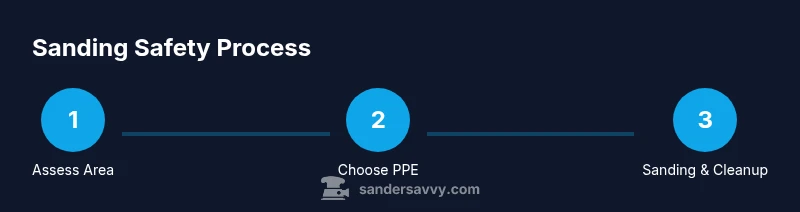
- 1
Assess the sanding area
Survey the workspace for ventilation, lighting, and nearby bystanders. Identify exits in case you need to pause for safety. Check the surface to determine dust generation and select the appropriate sander and grits.
Tip: Note any sharp protrusions or obstacles to avoid kickback and accidents. - 2
Gather PPE and tools
Pull together your respirator, goggles, hearing protection, and dust collection gear. Lay out sandpaper grits and ensure the sander is in good working order. This keeps you from scrambling mid-task.
Tip: Do a quick fit test on your mask before starting. - 3
Set up dust collection
Attach the dust-collection hose to the sander and position the vacuum close to the work surface. If you don’t have a dedicated system, set up a HEPA-filtered vacuum and a shop vac to create a makeshift capture point.
Tip: Keep the hose as close to the sanding surface as possible to capture dust at the source. - 4
Prepare the workspace
Lay down drop cloths, cover nearby surfaces, and ensure there is good airflow. Remove flammables and store finishes away from the sanding zone to reduce fire risk.
Tip: Keep a trash bag nearby for quick disposal of dust and paper wrappers. - 5
Set up the sander and test dust pickup
Install appropriate grit sandpaper; run a dry test on scrap material to confirm dust pickup and balance. Check the sander’s speed setting and noise level to avoid surprises once you start on the actual surface.
Tip: Choose a grit that matches the wood type and hardness to minimize clogging. - 6
Begin sanding with safe technique
Use steady, overlapping strokes and keep the sander flat to the surface. Avoid pressing hard; let the sander do the work. Periodically stop to check dust levels and PPE fit.
Tip: Move with the grain when possible to avoid scratches and heat buildup. - 7
Pause to check exposure and adjust
If you notice irritation, adjust mask fit or upgrade filters. Increase ventilation if you see visible dust or experience throat irritation. Take short breaks to ventilate and recheck PPE.
Tip: Never sand for long continuous periods without a break if breathing feels strained. - 8
Finish and clean up
Once sanding is complete, carefully remove the dust, seal surfaces as needed, and dispose of waste according to local guidelines. Store PPE and tools properly for next use.
Tip: Vacuum the floor with HEPA and wipe down surfaces to remove residual dust.
Your Questions Answered
Do disposable masks work for sanding wood?
Disposable masks may provide basic protection for coarse dust but often don’t seal as well as respirators. For fine wood dust and long sessions, use a respirator with replaceable filters (preferably P100).
Disposable masks are better for rough dust, but for fine wood dust, a respirator with P100 filters is safer.
What kind of respirator should I use for fine sanding?
A NIOSH-approved respirator with P100 filters is typically recommended for fine wood dust, especially in enclosed spaces. Ensure a snug fit and replace filters as needed.
A P100 respirator is usually best for fine wood dust; make sure it fits well and replace filters as needed.
Can I sand without a mask if it’s a small area?
Even small sanding tasks generate airborne dust. Wearing a mask or respirator minimizes exposure, and using local ventilation reduces risk.
Even small areas can produce dangerous dust, so wear a mask and improve ventilation.
How often should I replace respirator filters?
Follow the manufacturer’s guidance and inspect filters for damage or clogging. Replace filters when breathing becomes harder or you detect reduced airflow.
Replace filters when breathing resistance increases or airflow drops.
Is sanding outside safer than indoors?
Outdoor sanding generally reduces buildup, but it still releases dust into the environment. Use PPE and ensure wind direction helps carry dust away from you.
Yes, but still wear PPE and manage wind to avoid breathing dust.
Can finishes affect mask choice?
Yes. Finishes may release solvents; in that case, choose a respirator with appropriate filters and ensure good ventilation when sanding old finish layers.
Solvents in finishes may require better PPE and ventilation.
Watch Video
Main Points
- Wear a properly fitted respirator with P100 filters when sanding wood.
- Use effective dust collection to minimize airborne particles.
- Ensure proper ventilation and spacing to protect your lungs.
- Regularly maintain PPE and replace filters as recommended.