Can You Prime Without Sanding? A Complete DIY Guide
Explore when you can skip sanding and still get durable primer adhesion. Practical steps, primer choices, safety tips, and real-world examples for homeowners and DIYers.


Can you prime without sanding? In many cases, yes—especially on clean, wax-free, glossy, or previously primed surfaces where a bonding primer can do the job. This quick guide outlines when skipping sanding is appropriate, how to prep safely, and which primers ensure durable adhesion. By following these steps, you’ll avoid excess dust and save time while still getting a long-lasting finish.
Can you prime without sanding? A practical check
Can you prime without sanding? In many cases, yes—especially on clean, wax-free, glossy, or previously primed surfaces where a bonding primer can do the job. This quick check will help you decide when skipping sanding is feasible and when you should do a light abrasive touch instead. According to SanderSavvy, the decision hinges on surface condition, adhesion potential, and the type of primer you plan to use. If you’re working on a wooden deck, painted walls, or a glossy kitchen cabinet, the right primer and surface prep can deliver durable adhesion without dust-heavy sanding. The key is honest surface appraisal: are there peeling spots, heavy wax residues, or raised grain? If yes, sanding or mechanical abrasion may still be necessary; if no, a careful cleaning and a bonding primer may suffice for a strong base coat. This section will outline those conditions and set you up for a safe, effective priming project.
When skipping sanding makes sense
There are definite scenarios where skipping sanding makes sense. Surfaces that are already smooth, sealed, or previously primed respond well to bonding primers that are designed to adhere to slick finishes. If the surface shows no peeling or deep scratches, you can often skip coarser mechanical abrasion and move directly to cleaning and priming. The SanderSavvy analysis shows that on glossy finishes, a high-adhesion primer combined with proper surface prep can yield durable results without creating extra dust or time. Always test a small patch first to confirm adhesion before committing to a full project. If the surface is porous or raw wood, sanding or at least light abrasion might still be the safer route to ensure a uniform key for the primer.
Prep steps without sanding: cleaning, deglossing, patching
Even when you skip sanding, proper prep is non-negotiable. Begin with a thorough cleaning to remove dust, oils, and contaminants. Deglossing or using a mild solvent helps neutralize waxes that can prevent primer from grabbing. Patch any small gaps or holes with a compatible filler, then wipe away dust with a tack cloth. On wood and drywall, ensure the surface is completely dry before applying primer. These steps reduce the risk of blistering or peeling after paint, especially on slick surfaces where adhesion forces are tight.
Primer types and adhesion boosters for slick surfaces
Choosing the right primer is essential when you’re not sanding. For slick or glossy surfaces, use a bonding primer or an adhesion-promoting primer that is compatible with your topcoat. Water-based bonding primers are common for interior walls, while solvent-based bonding primers may be preferred for high-gloss wood finishes. In some cases, applying a dedicated adhesion promoter before the primer can improve holdout on problematic surfaces. Always follow the primer manufacturer’s data sheet for open time, recoating windows, and ventilation requirements. This section also covers how to pair primers with your finish product to avoid compatibility issues and ensure a uniform color and texture.
Real-world workflow example: wood deck and drywall
Consider a weathered wood deck with a few glossy patches or a painted drywall surface with slight waxy residues. Start with a clean scrub using a mild cleaner, rinse, and let dry completely. Apply a bonding primer designed for exterior wood or interior walls, depending on the surface. If the deck has peeling spots, address those areas with a thin patch of wood filler and feather the edges. For drywall, a drywall-specific primer can help even out porosity before finish coats. The outcome should be a uniform base that accepts paint without sanding away the existing finish. The key is to verify adhesion with a light rub test after the primer has cured and to avoid humidity-driven issues by ensuring a dry working environment.
Common mistakes and how to avoid them
Avoid starting with damp surfaces or skipping surface prep altogether. Do not rely on primer alone on rough textures or peeling finishes; these areas require at least light abrasion or spot repairs. Overly thick primer coats can crack or fail to cure properly, so apply thin, even coats and allow ample drying time between layers. Don’t mix primers from different families—always follow compatibility guidelines in the product data sheet. Finally, never skip ventilation and safety measures when working with solvents or strong degreasers. By sticking to manufacturer recommendations and performing patch tests, you reduce the risk of later failures.
Testing readiness and patching minor flaws
After priming, perform a small adhesion test in a hidden area: apply light pressure with a fingernail or putty knife to see if the coat resists delamination. If it sticks firmly, you can proceed with painting; if it reveals slight peeling, spot-prime or consider a light sanding of just those areas. Patching minor flaws with a compatible filler followed by a taped-off edge can help maintain a clean finish. Ensure the primer has cured fully and that the surface is dust-free before applying topcoat.
What to expect in terms of finish and durability
When priming without sanding is appropriate, you can still achieve a durable finish, provided the surface was properly prepared and the right primer was selected. Expect good paint adhesion, reduced dust, and a smoother topcoat compared to skipping prep entirely. However, some surfaces may show enhanced grain or texture if the underlying material is highly porous; in such cases, additional coats or a lighter mechanical prep may be warranted. With the right primer choice and careful surface prep, you can realize a long-lasting finish that resists peeling and wear.
Tools & Materials
- All-purpose cleaner(De-greases and lifts surface contaminants; use as directed)
- Degreaser or deglosser(Removes wax/oil residues that hinder adhesion)
- Tack cloths / lint-free cloths(For wiping dust after cleaning and prepping)
- Nitrile gloves(Protect hands during cleaning and priming)
- Safety goggles(Eye protection during cleanup and priming)
- Respirator or mask (N95 or better)(Ventilation is important; use in dusty or solvent environments)
- Adhesion-promoting primer (bonding primer)(Select for slick or glossy surfaces; compatible with topcoat)
- Primer (water-based acrylic or oil-based as recommended)(Thin, even coats; follow label for recoat timing)
- Paint tray and roller or brush(Choose roller nap and brush size appropriate to surface)
- Drop cloths or plastic sheeting(Protect surrounding areas when indoors)
Steps
Estimated time: 2-3 hours
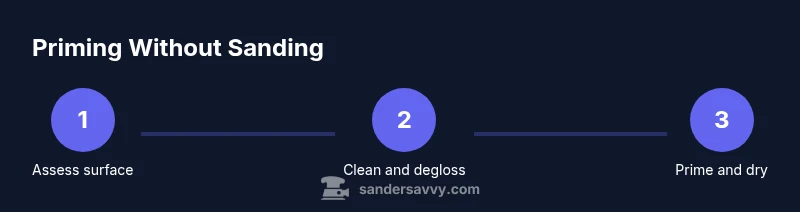
- 1
Assess surface and plan
Inspect the surface to determine if sanding is truly unnecessary. Note glossy areas, wax residues, or loose coatings. Decide on primer type and safety precautions before starting.
Tip: If you’re unsure, start with a small test patch to confirm adhesion before committing to the whole area. - 2
Clean thoroughly
Wipe the surface with an all-purpose cleaner to remove dust, oils, and contaminants. Rinse lightly if using a water-based cleaner, and let the surface dry completely.
Tip: Use a tack cloth after cleaning to pick up fine particles that can cause texture issues. - 3
Degrease and degloss
Apply a degreaser or deglosser to waxy or slick areas. Scrub with a non-abrasive pad if needed, then wipe away residue and allow to dry.
Tip: Always work in a well-ventilated area when using solvents. - 4
Apply adhesion promoter (if needed)
If the surface is very slick or previously coated, apply an adhesion promoter following the product directions. This can improve bonding before primer.
Tip: Don’t skip the promoter on glossy surfaces; it often has the most impact there. - 5
Prime evenly
Apply the bonding primer in thin, even coats. Allow proper drying between coats as per the label. Avoid overworking the primer to prevent lap marks.
Tip: Use long, smooth strokes to reduce visible roller marks on flat surfaces. - 6
Dry, inspect, and patch if needed
Let the primer dry completely, then inspect for even coverage. Patch any thin spots with additional primer, and re-dry if required.
Tip: A quick rub test can reveal insufficient bonding before painting. - 7
Proceed to painting or topcoat
Once the primer is fully cured, apply the topcoat according to manufacturer instructions. Maintain good air flow and avoid high humidity during curing.
Tip: Choose a compatible topcoat to avoid chemical conflicts with the primer.
Your Questions Answered
Can you prime without sanding on wood surfaces?
Yes, you can prime without sanding on clean, dry wood if the surface is smooth and free of wax or peeling finishes. Use a bonding primer designed for wood and follow the manufacturer’s directions for drying times.
Yes, you can prime without sanding on clean wood if it’s smooth and free of wax. Use a bonding primer and follow drying times.
What surfaces are best for skipping sanding?
Best candidates are smooth, sealed, or previously primed surfaces with no peeling areas. Glossy finishes and waxy residues benefit from adhesion-promoting primers rather than aggressive sanding.
Smooth, sealed, or previously primed surfaces can skip sanding with the right primer.
How do I choose the right primer for slick surfaces?
Select a bonding or adhesion-promoting primer compatible with your topcoat. For interiors, water-based bonding primers work well; for challenging exteriors or very slick finishes, solvent-based primers may be more durable.
Choose a bonding primer designed for slick surfaces and match it to your topcoat.
How long should primer dry before painting after skipping sanding?
Dry times vary by product. Check the label, but plan for several hours of curing in typical indoor conditions before applying a topcoat.
Let the primer dry fully, usually several hours, before painting.
What are the risks of skipping sanding?
Risks include poor adhesion and possible peeling if the surface has hidden flaws. Always patch and test adhesion before long-term use.
Skipping sanding can cause adhesion problems if there are hidden flaws—patch and test first.
Watch Video
Main Points
- Assess surface honesty before skipping sanding.
- Choose bonding primer for slick or glossy surfaces.
- Prioritize thorough cleaning and deglossing.
- Patch test adhesion on a small area first.