Can You Paint Without Sanding? Practical Prep Guide
Discover when you can skip sanding before painting, plus safe prep steps, bonding primers, and techniques to achieve durable, great-looking results without heavy sanding. Practical, step-by-step guidance for homeowners and DIYers.


If the surface is clean, sound, and not overly glossy, you can paint without sanding by using deglossers, bonding primers, and careful prep. This approach saves time and dust while still delivering a durable finish. The guide that follows explains when it works, which products to use, and how to apply them effectively.
Why you might skip sanding
If you ask can you paint without sanding, the answer is yes in many cases. A surface that is clean, sound, and not excessively glossy can accept primer and paint with minimal prep. This approach relies on deglossers, bonding primers, and careful cleaning rather than heavy sanding. It’s especially common on smooth wood, sealed drywall, or surfaces previously painted with a similar finish. By understanding these conditions, you can save time and reduce dust while still achieving a durable, attractive finish. In addition, skipping sanding can reduce noise and keep dust out of air vents, which matters for homes with sensitivity to airborne particles. For DIYers tackling kitchens, baths, or living areas, this method can speed up project timelines without sacrificing long-term adhesion if you follow the right steps.
When sanding is still the best choice
There are times when sanding remains the best option for a long-lasting, high-quality finish. If the existing surface is peeling, deeply stained, or very rough, sanding helps expose fresh material and create a mechanical bond for primer and paint. Surfaces with old varnish resistant to deglossers, peeling finishes, or exposed wood fibers require abrading to ensure the new coating grips properly. In such cases, a light scuff with non-woven pads and a compatible primer often yields a more durable result than skipping sanding altogether. Always assess the surface's condition and plan for potential follow-up work if adhesion issues appear.
Surface prep alternatives that replace sanding
When you cannot or prefer not to sand, you can still prep effectively. Start with a thorough clean to remove oils, dust, and contaminants. Use a deglosser or chemical conditioner to dull glossy finishes and improve primer grip. Apply a bonding primer designed for slick surfaces, then seal with a stain-blocking or all-purpose primer if needed. Spot-test on a small, inconspicuous area to verify adhesion before committing to the full project. These steps reduce dust and time while providing a reliable path to a smooth, durable finish.
Bonding primers and deglossers: how they work
Deglossers chemically or physically dull a glossy surface, creating micro-abrasions that improve primer adhesion without traditional sanding. Bonding primers contain resins that can bond to slick finishes and resist peeling. When used together, deglossers and bonding primers build a strong foundation for paint on surfaces that would otherwise resist adhesion. For older furniture, kitchen cabinets, or glossy walls, this combination is particularly effective. Remember to choose primers that are compatible with your topcoat and the surface material to avoid compatibility issues.
Practical workflow: testing a small patch
Before committing to the entire surface, test adhesion on a small area. Clean the patch, apply the deglosser, prime with a bonding primer, and apply a thin coat of paint. Let it dry fully and inspect for peeling, cracking, or lift. If the test area adheres well, you can proceed with confidence; if not, consider light abrasion and a different primer system or revert to sanding for that surface. Patch testing minimizes risk and helps you tailor product choices to the specific finish.
Application techniques for a smooth finish
Apply primer and paint in thin, even coats, allowing sufficient dry time between passes. Use high-quality brushes or rollers suited to the surface texture and choose a compatible topcoat. Avoid heavy coats that can sag or drip, especially on vertical surfaces. When possible, work in consistent lighting to spot rough edges. If you notice brush marks, lightly back-roll or back-brush with minimal pressure to blend evenly. Thin coats dry faster and reduce the likelihood of peeling later on.
Maintenance and long-term durability
A no-sand approach can hold up well if you follow through with proper prep and a durable primer. Protect high-traffic areas with durable enamel or semi-gloss finishes that resist cleaning and moisture. Address chips and wear with touch-up primers to prevent peeling from spreading. Regular cleaning with mild cleaners prevents buildup that can compromise adhesion over time. If you notice peel or dulling after a few years, re-prep the area using the same bonding primer and topcoat cycle to rejuvenate the finish.
Safety and environmental considerations
Work in a well-ventilated area, especially indoors. Use low-VOC primers and paints when possible, and wear a mask to guard against fumes. Keep surfaces protected with drop cloths to minimize cleanup and limit dust exposure. Dispose of rags and waste according to local regulations, and follow manufacturer guidelines for mixing and curing times. Proper ventilation significantly reduces exposure to solvent odors and improves air quality during application.
Tools & Materials
- deglosser or deglossing cleaner(Choose water-based for interiors; follow label directions)
- bonding primer (latex or shellac-based)(Select a primer compatible with your topcoat)
- stain-blocking primer (optional)(Helpful for odor or bleed-through control)
- all-purpose primer(Alternative if bonding primer isn’t ideal)
- non-woven abrasive pad (Scotch-Brite type)(Use lightly for dulling gloss when needed)
- roller frames and short-nap roller covers(Choose 3/16" to 1/4" nap based on surface)
- quality angled brush(For edges and corners)
- painter's tape(Protect adjacent surfaces)
- drop cloths or plastic sheeting(Contain mess and protect floors)
- clean rags and mild cleaner(Grease and grime removal)
- protective gloves and mask(Safety and odor management)
- mild detergent or degreaser(Prepare surfaces without residue)
- water bucket and mixing tray(Prep primers and paint as needed)
Steps
Estimated time: 2-6 hours total for prep and first coat, plus overnight or multi-hour dry times between coats
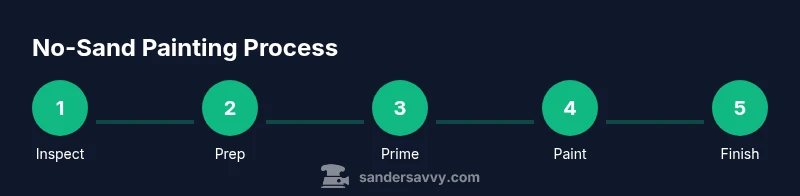
- 1
Assess the surface
Inspect gloss level, peeling, and consistency of the existing finish. Decide if sanding is required or if prep with deglosser and primer will suffice. Document any problem areas for targeted repairs.
Tip: If gloss is high or finish is damaged, consider a light abrasion instead of full sanding. - 2
Clean the area thoroughly
Remove dust, oils, and contaminants using a mild cleaner or degreaser. Rinse with clean water and let dry completely before proceeding. A clean surface improves adhesion dramatically.
Tip: Avoid washing with soapy residue; rinse until you see no suds. - 3
Dull glossy surfaces (deglose step)
Apply a deglosser or chemical conditioner to dull the surface and improve primer bite. Wipe away residue and let dry as directed.
Tip: Test a small area first to confirm it does not alter color or texture. - 4
Spot-test adhesion
Apply bonding primer to a small area, wait for the recommended dry time, then apply a bit of topcoat. Check for peeling or lifting after a few minutes.
Tip: If adhesion fails, consider a light abrasion or alternative primer system. - 5
Prime the surface
Apply a thin coat of bonding primer to the entire area, following manufacturer directions. Allow thorough drying before paint application.
Tip: Don’t over-apply primer; excess primer can raise grain and cause uneven finish. - 6
Apply the first coat of paint
Use thin, even coats rather than a single heavy layer. Work in smooth, overlapping strokes to avoid lap marks.
Tip: Maintain a wet edge and keep coats uniform to prevent drying marks. - 7
Evaluate and finish with a second coat if needed
Assess the finish in good lighting. If needed, apply a second thin coat after the first fully dries. Do not sand aggressively between coats; light touch-up may be enough.
Tip: Allow full cure between coats for best adhesion.
Your Questions Answered
Can I skip sanding on all surfaces?
No. Some surfaces require sanding or abrading to ensure long-term adhesion, especially if the finish is peeling, the surface is rough, or there are deep stains. In many cases, a deglosser plus bonding primer provides good results, but assess each area individually.
Sanding isn’t always required. For some surfaces you can skip it with the right prep, but inspect areas individually.
What surfaces are best for no-sand painting?
Smooth, previously painted or sealed surfaces with minimal gloss and no peeling are good candidates. Kitchens, bathrooms, and walls with uniform finishes often respond well to deglossing and priming.
Smooth, intact finishes are usually best for no-sand painting after proper prep.
How do I know adhesion will hold?
Do a small adhesion test: apply primer and paint to a tiny patch, let cure, and inspect for peeling. If it sticks, you’re likely good to proceed; if not, re-evaluate your prep or consider sanding.
Test a small patch first to confirm the finish will hold.
Which primers work best without sanding?
Bonding primers designed for slick or glossy surfaces are most effective. For certain materials, a stain-blocking primer can prevent bleed-through and ensure color uniformity.
Use a bonding primer made for slick surfaces to get good grip.
What are common mistakes to avoid?
Overlooking surface contaminants, skipping the test patch, or applying too thick a coat can cause adhesion problems. Always use thin coats and follow product directions.
Avoid skipping prep or applying heavy coats; test first and follow directions.
How long does the no-sand method take?
Drying and cure times depend on product and environment. Plan for at least several hours between coats and overnight cure for best results.
Plan for several hours between coats and longer for full cure.
Watch Video
Main Points
- Assess surface conditions before choosing prep.
- Deglosser + bonding primer expands no-sand options.
- Thin coats outperform heavy layers for adhesion.
- Test adhesion on a small patch first.
- Ensure proper drying times between coats for durability.