Can You Use a Sander on Metal? A Practical Guide
Learn when and how to use a sander on metal, choose the right abrasives, follow safety best practices, and achieve a smooth, professional finish with practical steps.


Yes—sanders can be used on metal, but only with the right tools, abrasives, and safety precautions. This guide explains suitable sander types for metal, how to pick grits, and a safe workflow to avoid overheating, warping, or embedded metal dust. Read on to learn the steps, gear, and best practices.
Can You Use a Sander on Metal? A Practical Overview
Sanding metal is a common step in rust removal, weld cleanup, and finishing. The short answer to can you use a sander on metal is yes, but the details matter. According to SanderSavvy, metal sanding is feasible when you choose the right abrasive and maintain control to prevent heat buildup. In this section we explore why metal demands different handling than wood, how different metals behave under abrasion, and what mistakes to avoid. You’ll learn how to assess surfaces, decide if sanding is the right move, and set expectations for results. This is especially relevant for homeowners and DIY enthusiasts who work on decks, floors, and walls where metal patches or fasteners are involved. Understanding the basics helps you protect the substrate, reduce glare, and prevent deep gouges that require filling.
Selecting the Right Sander for Metal Projects
Choosing a sander for metal work hinges on surface area, material thickness, and finish goals. For rust removal or weld cleanup, a random orbital sander or a belt sander with metal-appropriate abrasives can be effective. Smaller detail tasks may benefit from a palm or oscillating tool with metal-compatible attachments. Avoid using wood-specific sanding pads on metal, which wear quickly and can gum up. Always verify that the sander has a variable speed option so you can dial down for heat-sensitive alloys and avoid scorching the metal. Securing the piece with clamps or a vise is essential to maintain control and accuracy during the pass.
Abrasives and Finishing: Grits, Discs, and Flap Discs
Metal sanding relies on grit progression and appropriate abrasive types. Start with a coarse grit (around 60–80) to remove rust or surface imperfections, then move to 120–220 grit for smoothing, and finish with 320–600 grit for a polished look. Flap discs and fiber discs are popular on metal because they cut efficiently and resist loading from metal dust. Aluminum oxide discs work well on ferrous metals, while zirconia alumina is a good choice for heavy material removal. For non-ferrous alloys like aluminum, be mindful of heat and use slower speeds to minimize workpiece warping. Always follow the sander’s manual for disc mounting and check that the disc is rated for metal use.
Safety First: PPE and Safe Practices
Sanding metal generates fine dust and heat, so PPE is non-negotiable. Wear safety glasses or a face shield, a dust mask or respirator rated for metal particulates, and cut-resistant gloves. Hearing protection helps when the machine is loud, and a welding-rated jacket or long sleeves protects your skin from sparks. Work in a well-ventilated area and keep a clean workspace to prevent foreign objects from getting into cuts or welds. If you’re removing paint or coatings, ensure proper containment to avoid inhaling fumes from old finishes.
Practical Step-by-Step Sneak Peek
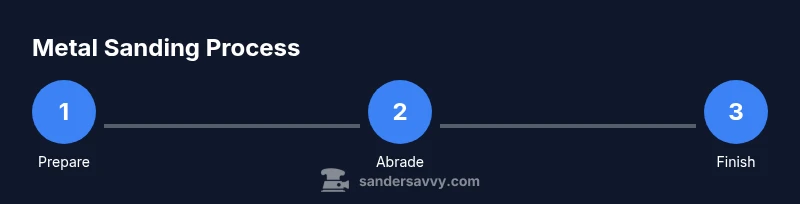
This section gives a high-level sense of how the process fits together, but the detailed, step-by-step instructions are in the dedicated STEP-BY-STEP block. Start by preparing the area, securing the metal piece, and selecting the correct abrasive. Progress through grit changes in incremental steps, monitor heat, and inspect the surface for uniformity. The aim is to create a clean, uniform base for finishing or coating. Always test on a scrap area to gauge heat buildup and disc wear before proceeding.
Troubleshooting Common Metal Sanding Scenarios
Encountering uneven patches, overheating, or disc clogging are common when sanding metal. If the surface gums up, pause and cool the area to avoid discoloration or warping, then switch to a finer grit and a lighter touch. If you see purple or blue heat marks, you’ve overheated the metal—stop, let it cool, and reduce speed or pressure. Rusty edges may need a rust converter before finishing. For final passes, switch to a fine grit to minimize scratches and maintain a consistent finish across the workpiece.
Maintenance, Cleaning, and Final Finish
After sanding metal, wipe the surface with a clean cloth to remove dust and debris. Depending on the project, you may want to apply a primer or rust inhibitor immediately to prevent flash rust. If you’re applying a finish, consider a compatible metal primer and follow with the intended topcoat. Clean abrasive discs promptly to reduce loading and extend their life. Regularly inspect tools for wear, replace worn pads promptly, and store equipment in a dry area to prevent corrosion.
Tools & Materials
- Variable-speed sander (orbital or belt)(Ensure it can run at low RPM for heat-sensitive metals; confirm metal-grade attachments)
- Abrasive discs/discs for metal(60-80 grit for heavy rust/removal; 120-220 for smoothing; 320-600 for finishing)
- Flap discs or fiber discs(Good for fast material removal with reduced loading on metal surfaces)
- Clamps or a vise(Secure the workpiece to prevent movement during sanding)
- Personal protective equipment (PPE)(Safety glasses, respirator or dust mask, gloves, hearing protection)
- Dust collection or shop vacuum(Reduces airborne particles and keeps the work area cleaner)
- Metal cleaner or degreaser(Use before sanding to ensure a clean surface for even results)
- Rust inhibitor or primer(Apply after sanding if you’re planning to coat the metal surface)
Steps
Estimated time: 30-60 minutes
- 1
Prepare and secure your workspace
Move the work to a well-ventilated area, remove flammable materials, and clamp the metal securely to a stable surface. A firm hold prevents kickback and ensures controlled passes.
Tip: Use a non-marring jig or soft clamp pads to avoid denting delicate surfaces. - 2
Choose the sander and attach the abrasive
Select a metal-rated abrasive appropriate for the task and mount it securely. Check that it’s balanced and free of cracks before energizing the tool.
Tip: Start with a coarser grit if you’re removing rust or heavy contamination to avoid clogging. - 3
Set the speed and test on scrap metal
Dial the sander to a low-to-moderate speed for metal. Test on a scrap piece to gauge heat buildup and disc performance before working the actual piece.
Tip: If you see smoke or discoloration, slow down and apply less pressure. - 4
Begin with a coarse grit and uniform strokes
Move the sander with steady, overlapping passes in the direction of the grain (where applicable) or evenly across flat surfaces. Don’t stay in one spot too long to avoid heat concentration.
Tip: Keep the tool moving to prevent gouges and ensure consistent material removal. - 5
Progressively switch to finer grits
After removing major imperfections, step down through grits (e.g., 120 → 180 → 220) to refine the surface. Wipe away dust between grit changes to monitor progress.
Tip: Do not skip grits; gaps can leave visible scratches that are hard to correct later. - 6
Cool and inspect the surface
Pause to cool if the area becomes hot. Inspect for uniformity; rework any high spots with a light pass at a higher angle or using a finer grit.
Tip: Check corners and bends—these often need extra attention to avoid heat buildup. - 7
Finish and protect
Wipe the surface, apply primer or rust inhibitor if coating is planned, and proceed with finishing steps per your project spec.
Tip: Test your finish on a small area first to ensure compatibility with the metal.
Your Questions Answered
Can you use a sander on metal?
Yes, with the right sander, abrasives, and safety precautions. Metal surfaces require appropriate grit progression and heat management to avoid warping or discoloration.
Yes. You can sand metal with the proper sander and grits, plus good safety habits.
What grit should I start with on metal?
Begin with a coarse grit around 60 to 80 for heavy rust or deformations, then move through 120, 180, and finish at 320 to 600 for a smooth surface.
Start with a coarse grit, then progressively move to finer grits.
Is an orbital sander good for metal?
An orbital sander is suitable for light rust removal and surface smoothing on thin metal sheets; for heavy material removal, consider a belt sander or angle grinder with metal discs.
Orbital sanders work for light work; for heavy metal, use other tools.
What PPE should I wear when sanding metal?
Wear safety glasses or a face shield, a respirator or dust mask, gloves, and hearing protection. Ensure gloves fit well to avoid snagging on moving parts.
Wear eye protection, a respirator, gloves, and hearing protection.
How do I prevent rust after sanding?
Wipe the surface clean, apply a rust inhibitor or primer, and plan your finish coat. Clean tools promptly to prevent corrosion.
Wipe, protect, and coat when necessary.
Can I use metal sanding on chrome or stainless steel?
Yes, but use lower heat and finer grits to avoid discoloration and edge rounding. Always test on a small area first.
Yes, with care and testing on a small area.
Watch Video
Main Points
- Start with metal-rated abrasives and coarser grits for initial material removal
- Secure the metal and control heat with slow speeds and overlapping passes
- Progressively refine with finer grits for a smooth finish
- Always wear appropriate PPE and observe fire safety
- Finish with rust prevention or primer if coating is planned