Sander to Remove Rust: Safe, Step-by-Step Guide
Learn how to remove rust with a sander safely on metal surfaces. This guide covers grit selection, technique, safety, finishing, and prevention to keep metal rust-free longer.


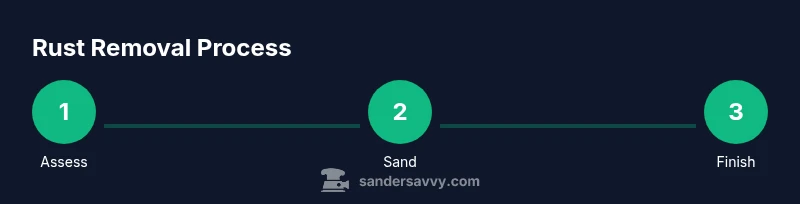
Using a sander to remove rust on metal surfaces combines selecting the right grit, preparing the surface, and controlled sanding with an orbital or similar sander. Start with heavier grit to strip rust, gradually move to finer grits, and finish with a protective coating to prevent re-rust. Follow safety steps and use proper PPE to minimize dust and heat buildup.
Why rust forms on metal surfaces and how a sander helps
Rust forms when iron or steel reacts with moisture and oxygen, creating iron oxide that can corrode the surface. A sander to remove rust helps by mechanically abrading the oxide layer, smoothing the underlying metal and improving the surface profile for coatings. This process works across common metals like steel and cast iron when done with the right grit sequence and technique. The goal is to remove the oxide without creating new scratches that trap moisture, so you can apply a rust-preventive finish afterward. Throughout this guide, you’ll learn how to approach rust removal safely and effectively, with practical steps you can follow in your shop or on a project site. According to SanderSavvy, proper grit choice and technique are essential for consistent results on metal rust.
Choosing the right sander and grits for rust removal
Not all sanders are created equal for rust removal. An orbital sander is forgiving and maintains a flat, even surface, which is ideal for larger flat areas. For tight corners or intricate details, a detail sander or a small angle grinder with a wire brush may be used, but care must be taken to avoid gouging. Start with a coarse grit to remove heavy rust, then step down through medium grits to refine the surface, finishing with a fine grit for a smooth feel. Typical progression might be 60–80 grit to break the rust, 120–180 grit to refine, and 220 grit for finishing. Always test a small area first to confirm the grit choice won’t create deep scratches that could trap moisture later.
Surface preparation and safety steps
Before sanding, prepare the area to catch dust and debris. Remove loose rust with a brush, wipe with a solvent compatible with your metal type, and secure the workpiece with clamps. PPE is essential: safety goggles or a face shield, a dust mask or respirator, and gloves protect against fine particles and heat buildup. Ventilation helps dissipate rust dust, and a clean, dry surface reduces the chance of moisture entrapment. If you’re dealing with an old painted surface, consider testing the paint compatibility first to avoid hazardous fumes. SanderSavvy recommends establishing a well-lit, stable workspace to maintain control throughout the process.
Step-by-step technique overview
When you start, keep the sander moving to avoid gouges and heat spots. Begin with the coarsest grit necessary to remove heavy rust and wipe the surface clean regularly to check progress. Gradually transition to finer grits, maintaining light, even pressure and following the metal grain where possible. For tubular or curved sections, switch to smaller, more maneuverable tools to maintain uniform removal. After rust removal, wipe the surface again to remove dust and inspect for remaining pits or thin spots that may need touch-ups. The aim is a clean, flat surface ready for rust-preventive coating.
Finishing, rust prevention, and coatings
Apply a rust inhibitor, primer, or protective coating after the surface is fully dry. The choice of finish depends on the metal and its environment; rust-resistant primers are generally a good baseline. For exterior metal, use a primer and topcoat designed for outdoor use; interior metal may benefit from a corrosion inhibitor followed by paint or sealant. After painting, cure times and ventilation requirements should be followed according to product guidelines. Regular maintenance—such as reapplying protective coatings when you notice wear—extends the life of metal surfaces.
Common mistakes and how to avoid them
A common mistake is using too much pressure, which can gouge metal and create deep scratches that trap moisture. Another error is skipping surface prep, which leads to poor paint adhesion. Neglecting PPE can expose you to dust and heat, increasing risk. Finally, failing to clean thoroughly between grit changes leaves grit particles behind, dulling the finish. To avoid these issues, practice on a scrap piece first, maintain steady motion, and inspect the surface after each grit change.
Metal-specific tips: cast iron, steel, and aluminum considerations
Different metals respond differently to sanding. Cast iron is prone to rust cavities if not treated promptly; use moderate grit and avoid deep gouges. Steel tends to form a stable oxide layer that responds well to standard rust removal grits. Aluminum oxidizes rapidly; avoid aggressive grinding that can heat-soften the surface and create heat discoloration. For all metals, ensure the surface is dry and neutralized of any residual oils or solvents prior to applying a rust-preventive coating.
Maintenance and cleanup after rust sanding
After finishing, clean the work area and tools to prevent dust and rust from re-depositing. Remove residue from the sander pad and base, and store discs in a dry environment. Inspect the surface for any missed spots before applying finish, and ensure the metal is fully dry. Regularly replacing worn sanding discs preserves abrasive efficiency and reduces heat buildup that can warp thin sections.
Tools & Materials
- Orbital sander (5-inch pad)(Choose a model with dust collection if possible for cleaner work.)
- Coarse to medium grit discs(Start with 60–80 grit for heavy rust; progress to 120–180 grit for refinement.)
- Fine grit discs(Finish with 220 grit for a smooth base before coating.)
- Wire brush attachment (optional)(Useful for initial rust flaking on very rough surfaces but can scratch if used aggressively.)
- Rust inhibitor or rust converter (optional)(Apply after sanding if you cannot immediately coat the surface.)
- Solvent or degreaser(Clean the surface to remove oils before rust treatment or painting.)
- Protective PPE(Safety goggles, respirator or dust mask, and gloves are essential.)
- Clamps or vises(Secure larger pieces to keep hands free during sanding.)
Steps
Estimated time: 45-90 minutes
- 1
Assess rust extent and plan grit
Examine the metal to estimate rust depth and decide on grit progression. Start with heavier grit when rust is deeply embedded, and keep a scrap piece handy to test your technique.
Tip: Test a small patch first to ensure the grit removes rust without excessive scratching. - 2
Prep workspace and safety gear
Clear the area, lay down drop cloths, and put on eye protection, a dust mask, and gloves. Secure the workpiece with clamps to prevent movement during sanding.
Tip: Ventilate the area well to minimize rust dust exposure. - 3
Mount disc and begin with light passes
Attach the appropriate coarse-disc for rust removal and move the sander in smooth, overlapping passes. Avoid pressing hard; let the abrasive do the work.
Tip: Keep the sander flat and maintain consistent speed for an even surface. - 4
Progress through grits
Switch to a finer grit once the heavy rust is cleared. Work systematically, inspecting the surface after each grit change to decide if more refinement is needed.
Tip: Wipe the surface between grits to remove dust and check progress clearly. - 5
Inspect and touch up as needed
Look for remaining pits or uneven areas. Re-sand those spots with the appropriate grit, ensuring a uniform finish.
Tip: Avoid creating hot spots by taking short, controlled passes rather than long continuous runs. - 6
Apply rust prevention
Once clean and dry, apply a rust inhibitor or primer designed for metal. Follow product directions for drying times and coating thickness.
Tip: Apply in a well-ventilated area and let coatings cure fully before exposure.
Your Questions Answered
When is sanding not enough and I should consider other rust removal methods?
If rust has penetrated deeply or caused corrosion that creates holes, sanding alone may not restore the metal. In such cases, patching or replacement could be necessary, or you might combine sanding with rust converters and protective coatings.
If rust has penetrated deeply or created holes, sanding alone might not be enough; consider patching or replacing material and use protective coatings after treating the area.
Can I use a belt sander for rust removal on metal?
A belt sander can remove rust quickly but is less forgiving on flat or curved surfaces and may gouge if not used carefully. It’s best for larger, flat panels with moderate rust, or as a supplemental tool alongside an orbital sander.
A belt sander can remove rust fast but can gouge if you’re not careful; use it on flat panels and pair with an orbital sander for delicate work.
Should I use a rust converter after sanding?
Rust converters are optional if you plan to coat immediately. They chemically convert residual rust into a stable compound, aiding long-term protection, but clean, dry surfaces perform better without converters when coatings are directly applied.
Rust converters are optional if you’re coating soon. They can help stabilize leftover rust, but clean, dry surfaces often perform better with direct coatings.
Is this method safe for aluminum or stainless steel?
Aluminum and stainless steel require gentler or specialized approaches because their oxide layers differ from mild steel. Use media appropriate for those metals and avoid aggressive grinding that can remove protective oxides or cause discoloration.
Aluminum and stainless need gentler methods and specific abrasives; avoid aggressive grinding that can damage protective oxides.
Watch Video
Main Points
- Assess rust depth before selecting grit
- Protect yourself with PPE and a clean workspace
- Progress through grits for a smooth, rust-free surface
- Finish with a rust preventive coating to extend life
- Regular tool maintenance improves results