DA Sander Electric vs Air: A Practical Comparison
Explore the key differences between electric DA sanders and air-powered (pneumatic) DA sanders. Learn how power, weight, maintenance, and dust control impact performance for floors, decks, and walls, with practical buying guidance.


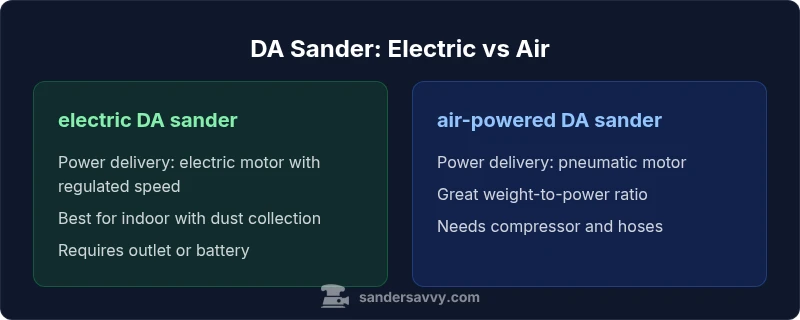
da sander electric vs air presents a clear trade-off between convenience and portability. Electric DA sanders deliver steady speed and dust-collection options in indoor spaces, but depend on electricity and may run hotter. Air-powered (pneumatic) models are lighter and offer excellent power-to-weight, yet require a compressor, hoses, and regular maintenance. Choose based on your workshop setup and project mix.
DA Sander Electric vs Air: Why the Difference Matters
In the world of sanding, the choice between an electric DA sander and an air-powered DA sander — often summarized as the da sander electric vs air decision — drives fundamental workflow: where you work, how long you can work in one session, and how you manage dust and noise. According to SanderSavvy, the most important differentiators are power delivery, weight, setup requirements, and maintenance needs. The goal is not to declare a universal winner, but to map how each option aligns with your typical projects (floors, decks, walls) and the constraints of your shop. For homeowners focusing on indoor refinishing, the electric route offers tight dust control and simple plug-in operation. For pros who need mobility and weight savings in portable jobs, air-powered models can shine when paired with a capable compressor.
In this guide to the da sander electric vs air, we’ll unpack the core factors, practical trade-offs, and real-world scenarios to help you pick the right tool for your next project. You’ll find sections on power and speed, ergonomics, dust management, maintenance, cost of ownership, and a practical buying checklist. By the end, you’ll know which type suits your most common tasks and how to optimize either option for better results.
Bringing clarity to the da sander electric vs air decision requires separating capability from convenience. Electric models typically pair with integrated dust ports and consistent power, making them predictable for long sessions on floors and walls. Pneumatic models sacrifice some steadiness in speed control for a lighter feel and less heat buildup, which can be a benefit on extended deck work or upper-story sanding. The goal is to align your choice with your workshop infrastructure, the scale of your projects, and your tolerance for extra gear like compressors and hoses.
Comparison
| Feature | electric DA sander | air-powered DA sander |
|---|---|---|
| Power delivery | electric motor with regulated speed | pneumatic motor driven by compressed air |
| Weight | generally heavier due to motor and possible batteries | lighter, thanks to no heavy electrical motor |
| Need for air/power setup | no additional air system needed (just electricity) | requires compressor, hoses, regulators |
| Maintenance focus | brush wear, motor bearings, electrical components | air-line lubrication, filter maintenance, regulator wear |
| Dust extraction compatibility | often integrated or easily added with dust ports | dust port compatibility depends on hose and fittings |
| Noise profile | depends on motor design; generally steady noise at workbench | compressor operation adds variable noise; tool noise varies by PSI |
| Price range (general) | $120-$350 | $150-$400 |
| Best for | indoors, controlled environments, longer sessions | portable work, decks, and on-site tasks |
What's Good
- Electric DA sanders offer consistent speed and may include integrated dust collection for cleaner indoor work
- Air-powered models tend to be lighter and better for extended use where weight matters
- Both types support standard hook-and-loop sanding discs and common dust-extraction setups
Weaknesses
- Electric units can overheat during long sessions and require an electrical outlet or battery options
- Pneumatic sanders need a compressor and hoses, which adds setup time and maintenance
- Dust extraction effectiveness depends on the overall system and compatible fittings
Neither option is universally superior; choose based on shop infrastructure and project mix
Electric DA sanders excel indoors with dust control and consistent power; air-powered models win on weight and portability. Assess how often you work on-site, your access to electricity or a compressor, and the typical materials you sand to decide.
Your Questions Answered
What is the main difference between electric and air-powered DA sanders?
The main difference is how power is delivered. Electric DA sanders rely on an electric motor for speed control and consistent performance, while air-powered sanders use compressed air for the drive, which often makes them lighter and more portable but requires a compressor and air setup.
Electric DA sanders use an electric motor for consistent speed, while air-powered models run on compressed air, which can be lighter but needs a compressor.
Which sander is better for hardwood floors?
For hardwood floors, both can work well, but electric models are typically favored for indoor projects due to integrated dust collection and stable performance. If you need to work on-site with limited power outlets, a well-equipped pneumatic setup can be advantageous with proper ventilation and air management.
Electric models are often preferred indoors for hardwood floors because of dust collection and stable speed; pneumatic options may be better when power outlets are scarce and you have a compressor.
Do I need an air compressor to use an air DA sander?
Yes. An air DA sander requires a compressor, hose, regulator, and air filters. The quality of your air supply directly affects performance, so choose a compressor sized to handle the workload and maintain clean, dry air.
Yes, you’ll need a compressor and air setup to run an air-powered sander effectively.
Are electric DA sanders quieter than pneumatic models?
Noise levels depend on model design and application, but electric units do not rely on an external compressor. Pneumatic tools can be louder overall due to compressor operation and air exhaust, though modern systems aim to minimize that impact.
Electric sanders usually have a quieter air setup footprint, while pneumatic systems can be noisier because of the compressor.
Can I use the same sanding discs on both types?
Both types commonly use hook-and-loop discs, but you should verify the pad size, orbit diameter, and mounting type for each model. Check your sander’s manual to ensure proper disc fit and performance.
Most DA sanders use standard hook-and-loop discs, but always confirm pad size and orbit when swapping models.
What maintenance tasks are common for DA sanders?
Electric sanders require motor brush inspection and general cleaning of the vents. Pneumatic sanders need air-line maintenance, regular lubrication, and filter checks to keep airflow clean and consistent.
Keep motors clean and check brushes for electric models; for pneumatic tools, maintain the air line and filters and lubricate as recommended.
Main Points
- Assess your workshop setup: electricity vs compressor availability
- Expect trade-offs: control and dust management vs weight and portability
- Match tool choice to project type: indoor refinishing vs on-site deck work
- Plan for dust management with compatible extraction
- Consider long-term costs, including maintenance and accessories