Electric Sander vs Air Sander: A Practical Comparison
Compare electric sanders and air sanders to decide which tool fits wood floors, decks, and walls. Learn about power, weight, dust control, and cost to pick the right sanding setup.


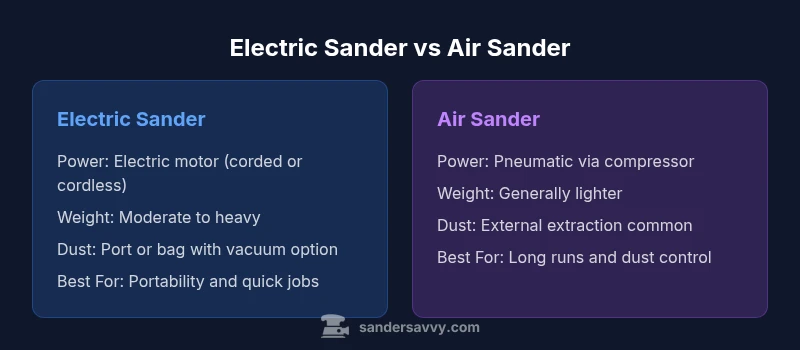
Electric sander vs air sander: For most DIY projects, electric sanders offer portability and ease of use, while air sanders excel in continuous use and cooler operation with proper air supply. If you need speed and convenience, choose electric; for peak finish quality and long sessions, rely on an air sander with a good dust system.
Why the Choice Matters for DIY Projects
According to SanderSavvy, choosing between an electric sander and an air sander is not about one being universally better; it's about matching the tool to the task, the workspace, and safety requirements. Homeowners working on floors, decks, or walls generally consider workload, finish quality, and dust management when deciding between a portable electric unit and a stable pneumatic option. The SanderSavvy team found that even small projects can benefit from careful tool pairing, which reduces fatigue and improves results. When you start with a clear job scope—surface roughness, project length, and access constraints—you set yourself up for fewer retries and better surface consistency.
How Electric Sanders Work and What to Look For
Electric sanders use an electric motor to drive the sanding pad. They come in corded or cordless variants, and many offer variable speed to adapt to different grits and materials. When selecting an electric sander for the electric sander vs air sander comparison, focus on pad size (commonly 5 or 6 inches for wood work), orbit pattern (random orbit is popular for a balance of material removal and finish), weight, balance, and available dust extraction options. Battery chemistry matters for cordless models: lithium-ion cells with practical run times and reasonable charging can reduce downtime. For DIYers, a mid-range electric random-orbit sander with a dust port and a comfortable grip often delivers the best mix of control and finishing ability.
How Air Sanders Work and What to Look For
Air sanders are powered through compressed air supplied by a dedicated compressor. The tool's performance depends on CFM (cubic feet per minute) and pressure (PSI) provided by the system. Pneumatic sanders tend to be lighter and can run at a constant speed under load, which helps maintain consistent scratch patterns. When evaluating an air sander, verify the nozzle size, trigger type, pad size, and compatibility with standard sanding discs. Also assess your compressor's capacity and hose length; long hoses add pressure drop, reducing performance. For homeowners, a modest-level compressor with a suitable CFM and a reliable air filter can keep an air sander performing well through longer sessions.
Finish Quality and Control: Speed, Pressure, and Discs
Issues like finish quality depend on how you handle speed, pressure, and disc choice. An electric sander offers variable speed to match the grit and wood type, enabling aggressive material removal at low wear and smoother results at higher finish grades. An air sander often runs at a fixed speed, but you can influence results by tool selection, pad condition, and the work technique. Both types use standard sanding discs with a center-hole pattern; ensure you choose a pad that matches your sander and the job's finish requirements. The right combination reduces swirl marks and hot scratches while preserving grain characteristics.
Dust Control Methods and Safety
Effective dust control is essential for health and surface quality. Electric sanders with integrated dust bags or vacuum ports can capture much of the dust, especially when paired with a shop vacuum or dust extractor. Air sanders rely heavily on external dust collection because they generate lots of fine dust at high RPMs. In both cases, use PPE: dust mask or respirator, eye protection, and hearing protection for prolonged use. Sealing off the work area and using a HEPA vacuum can drastically reduce airborne dust. Regularly clean the shop and inspect hoses and filters for clogs.
Ergonomics: Weight, Vibration, and Comfort
Weight and balance influence how long you can work comfortably. Electric sanders tend to be heavier, especially in corded models, which can lead to fatigue during long sessions. Pneumatic sanders are often lighter, but hose management and compressor noise add another dimension of comfort. Vibration matters for finish quality and long-term safety; many models incorporate vibration-damping handles and anti-vibration mounts. For small hands or back issues, choose a lighter, well-balanced unit and take regular breaks.
Temperature, Heat Buildup, and Tool Longevity
Heat buildup can affect material removal rate and pad life. Electric sanders may heat the motor and electronics during extended use, which can reduce efficiency or shorten motor life if run time is not managed. Air sanders generally dissipate heat through the air supply and can operate longer without overheating, but poor airflow or clogged dust ports can increase heat. Use correct grit sequences, avoid prolonged continuous operation on the same area, and let the tool rest. Regular maintenance, including pad cleaning and dust port clearance, extends life.
Cost of Ownership and Budget Scenarios
Budget considerations frequently decide the electric sander vs air sander choice. Electric sanders require no external compressor but may have higher upfront cost and ongoing battery replacement or cord wear. Air sanders have lower purchase price but require a compressor, hoses, fittings, and regular maintenance of air systems; running costs depend on electricity for the compressor and airflow efficiency. If you sand wood floors regularly, the investment in a reliable compressor plus a pneumatic sander can pay off over time. For occasional projects, a quality electric sander with a dust extractor may be more economical and simpler.
Practical Task Scenarios: Doors, Floors, Decks
This section offers guidance on typical tasks: For door frames and trim, a compact palm sander (electric) or a small pneumatic sander can reach tight corners. For refinishing hardwood floors, a random orbital electric sander with dust extraction is common; for deck boards or rough stock, an air sander with higher CFM may remove material faster. Always start with a rough grit and progress to finer grits, keeping light pressure and steady motion. Consider dust containment strategies and plan for pad changes as needed.
How to Switch Between Tool Types and Pads
Shifting from electric to pneumatic work often requires changing pads and discs and ensuring the workspace is clear of hazards. Align pad holes with the sander dust port, and use hook-and-loop discs for easy changes. Store hoses and cords neatly, and tag air hoses to prevent tripping hazards. When moving to an electric sander in tight spaces, pivot and rotate your wrist to maintain a flat plane; maintain consistent pressure without gouging. Remember to unplug or depressurize equipment before changing consumables to avoid accidental startups.
Common Myths and Misconceptions
Many DIYers assume air sanders always perform better for finish quality. In reality, finishing quality depends on operator technique and tool condition, not just the power source. Others think electric sanders are too heavy; modern designs emphasize ergonomics, while pneumatic tools can balance weight advantages with hose management. The truth is that both systems can achieve professional finishes when matched to the task, grit progression, and dust control.
How to Evaluate Models and Buy Right Now
To pick the right model, compare cost of ownership, availability of replacement parts, and warranty. Look for models with robust dust collection, good grip, and reliable speed control, then verify compatibility with your typical discs. For beginners, a mid-range random-orbit electric sander with a good dust port is a reliable starting point; for professionals or enthusiasts with heavy throughput, a pneumatic sander paired with a true dust extractor can deliver sustained performance. Authoritative sources and safety guidelines support tool choices and proper operation.
Comparison
| Feature | Electric Sander | Air Sander |
|---|---|---|
| Power Source | Electric motor (corded or cordless) | Pneumatic motor powered by compressed air |
| Weight | Moderate to heavier, especially with batteries | Typically lighter, dependent on hose and fittings |
| Dust Management | Dust port or bag; depends on vacuum hookup | Often better external dust collection with proper setup |
| Finish Quality | Excellent with variable speed and good pad choice | Consistent with stable air supply and technique |
| Maintenance | Brush/wear items, battery life, cord wear | Compressor, hoses, fittings, and filters |
| Operating Cost | Higher upfront cost for quality units; no compressor | Lower unit cost but requires compressor and air setup |
| Noise/Vibration | Moderate to high noise; vibration varies by model | Often lower vibration, depends on setup |
| Best For | Small to medium projects, portability matters | High production, long sessions, dust control |
What's Good
- Electric sanders offer portability and no external compressor
- Air sanders often run cooler and handle long sessions with steady speed
- Wide availability of accessories and discs for both types
- Good pad options enable versatile finishes
Weaknesses
- Air sanders require a compressor and hose setup
- Electric sanders can be heavier and depend on power source
- Dust control relies on external dust collection and PPE
Electric sander generally wins for convenience; air sander excels in long runs and dust control
Choose electric for portability and quick setup, especially on small to medium jobs. Choose air for high-throughput tasks, long sessions, and better dust management with a proper extractor.
Your Questions Answered
What is the main difference between electric and air sanders?
Electric sanders rely on electrical power and can be cordless or corded, offering portability and variable speed. Air sanders use compressed air from a compressor, delivering steady speed and often lighter weight, but require an air system. Your choice depends on workload, space, and dust-control needs.
Electric sanders are portable and convenient, while air sanders require an air system but handle long jobs well. The right pick depends on your project needs.
Which sander is best for finishing softwood floors?
For finishing softwood floors, an electric random-orbit sander with good dust extraction is common due to its balance of material removal and surface finish. An air sander can also work if you have a robust dust collection setup and steady air supply.
Electric random-orbit sanders are a go-to for softwood floors, especially with dust extraction.
Are air sanders lighter than electric?
Yes, air sanders are typically lighter because they don’t carry an electric motor or battery. Weight can still vary with hoses and accessories. Consider comfort and hose management for prolonged use.
Air sanders are usually lighter, but hoses can add weight and get in the way.
Can I use the same sanding discs on both types?
Sanding discs are generally compatible as long as the pad and attachment method match (hook-and-loop is common). Check your sander’s pad size and hole pattern. Using pads that don’t fit can cause inefficient sanding or damage.
Usually yes, as long as the pad size and attachment are correct.
How do I manage dust when using either tool?
Pair either sander with a shop vacuum or dedicated dust extractor connected to the dust port. Use proper PPE, seal the work area, and keep filters clean to maintain suction and air quality.
Use a dust extractor and PPE to keep the workspace clean and safe.
Is it worth renting an air sander for a one-time project?
For a one-off project, renting a compressor plus an air sander can be cost-effective if you don’t already own equipment and have ongoing dust-control needs. If you only need a quick job, an electric sander with attached dust extraction is often more convenient.
Renting can be practical if you don’t own a compressor; otherwise, an electric sander may be easier.
Main Points
- Assess workload and space to pick power source
- Prioritize dust control and PPE for safety
- Balance weight, vibration, and comfort in handling
- Consider total cost of ownership, including accessories
- Match task to tool: finish quality vs throughput