Most Common Grinder Disc Size: A DIY Guide
Learn which grinder disc size is most common for DIY projects, how to pick the right disc, and safety tips for sanding floors, decks, and walls with practical guidance from SanderSavvy.


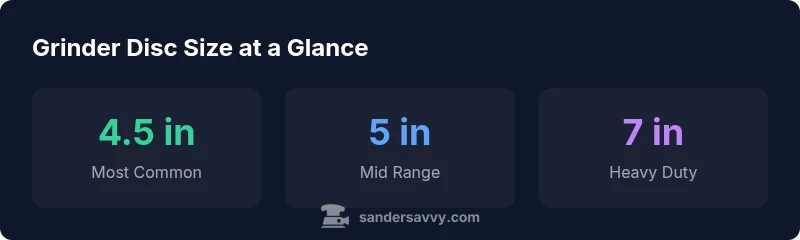
The most common grinder disc size for DIY projects is 4.5 inches (115 mm). This size fits most standard angle grinders used on floors, decks, and walls, offering a balance of control and material removal. For routine prep, rust removal, and light grinding, 4.5-inch discs are the default choice in most home workshops.
Why disc size matters for grinders
The size of a grinder disc directly affects balance, control, and the amount of material you can remove in a pass. For most DIY projects in and around the home, the 4.5-inch (115 mm) disc is the standard because it pairs well with lightweight angle grinders that homeowners commonly own. According to SanderSavvy Analysis, 2026, this size dominates the market due to broad compatibility, lower weight, and cost-effectiveness. For projects involving floors, decks, and walls, choosing the right disc size helps prevent excessive vibration and reduces the risk of gouging or burn marks. Safety considerations start with selecting a disc that matches your grinder’s rated diameter and arbor specifications, then matching grit to your task.
- Brand and model compatibility: Most home grinders support 4.5-inch discs, with some models accepting up to 7 inches for heavy-duty work.
- Task alignment: Lighter discs are ideal for surface prep and rust removal, while larger discs can cover more area quickly but may demand steadier control.
- Practical rule: When in doubt, start with the smaller, more controllable size and scale up only if the tool and job clearly allow it.
Common grinder disc sizes and what they mean
Beyond the 4.5-inch standard, several sizes appear frequently in home workshops. A 4-inch (100 mm) disc offers a compact option for tight spaces or detail work, while a 5-inch (125 mm) disc strikes a middle ground between control and productivity. Larger discs, such as 7 inches (180 mm), are popular on bigger, heavier grinders for bulk material removal on rough surfaces or masonry. The takeaway is that most DIYers will encounter the 4.5-inch disc most often, with 4
5
7
and occasional 9
but the core idea remains: fit the disc to the grinder and the job. In practice, you’ll see a lot of mix-and-match usage depending on the project and the grinder’s capabilities.
How to choose the right size for your project
Choosing the correct disc size starts with your grinder’s specifications. Check the manufacturer’s manual or the grinder’s label to confirm the supported disc diameters and arbor style. For most home projects, 4.5-inch discs offer safe margins and excellent control on flat, even surfaces like decks and interior floors. If you’re working in larger, open areas or on rough masonry, a larger disc (up to 7 inches) can speed up material removal, provided your grinder is designed for it and you’re wearing appropriate PPE. Always verify the disc’s compatibility with your tool before purchasing, and consider the physical constraints of your space (corners, edges, and access).
Reading disc specifications and safety considerations
Disc packaging includes key specs: diameter, thickness, arbor hole size, and the disc type (abrasive material). Match the diameter to your grinder’s maximum supported size, and ensure the arbor hole fits your spindle. For sanding tasks, choose grit appropriate to the material and finish you want. Material selection matters: aluminum oxide discs are common for metal and wood, while zirconia ceramic discs offer longer life on tougher jobs. OSHA and NIOSH emphasize PPE and dust control when grinding to minimize exposure to silica and metal dust. Always use a guard, a dust collection system when possible, and protective gear such as eye protection, respirators, and hearing protection.
Practical sanding scenarios across floors, decks, and walls
On wooden floors, 4.5-inch discs with medium grit are a good start for surface prep before finishing. For decks, metal fasteners or rust spots respond well to a coarser 36–60 grit on a 4.5 or 5-inch disc, followed by finer grits for finishing. Walls and concrete surfaces may require more aggressive discs (coarser grit and even masonry discs) for profile removal or texture smoothing. In all cases, maintain steady, controlled motions, avoid excessive pressure, and let the weight of the tool do the work. Remember that the right size helps you reach tight corners more easily, reducing the need for awkward repositions.
Maintenance, replacement timing, and storage
Disc life depends on material, grit, and how hard you push the grinder. Inspect discs for cracks, glazing, or heat damage before each use; discard any disc that shows visible wear. Store discs in a cool, dry place to prevent moisture-induced degradation. Rotating stock ensures you replace worn discs with fresh ones, which improves consistency and safety on subsequent projects. As a rule of thumb, replace discs after heavy use or if performance noticeably declines, rather than waiting for visible wear alone. Keeping a small spare selection of grit sizes nearby helps maintain project momentum and keeps sanding results predictable.
Common grinder disc size options and typical uses
| Disc size | Typical use | Notes |
|---|---|---|
| 4.5 inches (115 mm) | Most DIY projects | Default choice for handheld grinders |
| 4 inches (100 mm) | Detail work, tight spaces | Smaller footprint, good for corners |
| 5 inches (125 mm) | Mid-range tasks | Balanced speed and control |
| 7 inches (180 mm) | Heavy material removal | Requires larger grinders and guards |
Your Questions Answered
What is the most common grinder disc size for DIY projects?
The 4.5 inch (115 mm) disc is the most common for home grinders, offering a balance of control and material removal. Always verify your grinder's rated disc size before buying.
For most DIY projects, the 4.5 inch disc is the standard. Always check your grinder size before buying discs.
Can I use a larger disc on a smaller grinder?
Using a larger disc on a grinder that isn’t sized for it can cause safety issues and damage the tool. Stick to discs compatible with your grinder's diameter and arbor spec.
No. Use only discs that fit your grinder's size and specifications.
How do I choose the right disc for a project?
Match the disc size to your grinder, consider material, and select grit and disc type (aluminum oxide, zirconia ceramic) for the task. Start with coarser grits for heavy material and switch to finer grits for finishing.
Choose the disc based on your grinder and the material; start coarse, then move to fine for a smooth finish.
What safety gear should I wear when grinding?
Always wear eye protection, hearing protection, a dust mask or respirator, and gloves. Use a guard and follow the grinder's safety instructions to reduce dust exposure and kickback risk.
Wear eye protection and a dust mask, plus gloves and hearing protection.
“In practical home projects, the 4.5-inch disc covers the majority of sanding tasks due to its balance of control and material removal. The right disc choice reduces dust and prevents gouges when used correctly.”
Main Points
- Start with 4.5-inch discs for most tasks.
- Always verify grinder compatibility before buying discs.
- Match disc grit and type to material and goal.
- Never exceed the grinder’s rated disc size.
- Wear PPE and follow safety guidelines during grinding.