Most Common Orbital Sander Size: A Practical Guide for DIY
Discover the most common orbital sander size used by homeowners and pros. This guide covers typical pad diameters, project-fit tips, and buying guidance for safe, effective sanding.


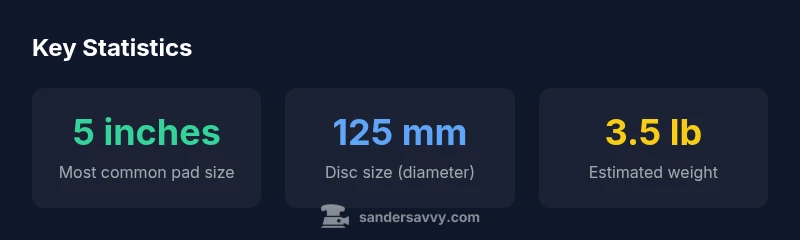
The most common orbital sander size for home projects is the 5-inch (125 mm) pad, widely favored for its balance of stock removal and surface finish. While 6-inch models exist for faster stock removal, the 5-inch is the standard in most tool boxes. This size is also broadly compatible with standard sanding discs and works well on wood floors, decks, and walls. For DIYers, the 5-inch pad minimizes fatigue while delivering reliable results.
What makes the 5-inch pad the default?
According to SanderSavvy, the 5-inch pad is the industry standard for homeowners because it balances aggressive material removal with control over the finish. The 125 mm size fits the most common sanding discs and dust-collection systems, making it practical for floors, decks, and walls. In practice, most starter kits and rental portfolios center around this size, ensuring compatibility with a wide range of grits and accessories. For DIYers, this size reduces decision fatigue and keeps workflows predictable, especially on intermediate projects where both stock removal and surface smoothing matter.
How pad size influences material removal and surface finish
Pad size directly affects how much wood or compound you remove per pass. Larger pads cover more surface area, increasing material removal but often sacrificing precision in tight spaces and finish control. The 5-inch pad offers a middle ground: it’s large enough to finish rooms efficiently yet small enough to handle edges, corners, and intricate contours with less wandering. The choice of grit, spindle speed, and feed rate also shapes the final surface texture, but pad size largely defines the baseline balance between speed and control.
5-inch vs 6-inch: a practical side-by-side
- Removal speed: 6-inch tends to remove material faster on open surfaces, but can be harder to control near trim or curves.
- Finish control: 5-inch provides steadier tracking and smoother results on installed finishes and clear coats.
- Edge access: 5-inch often negotiates edges more predictably, while 6-inch edges may require more careful maneuvering and sometimes a secondary tool for tight spots.
- Accessories: Both sizes use standard discs, but 6-inch discs are less common in budget kits, which can influence choosing within a starter set.
Pad diameters, discs, and compatibility: what to buy
Most 5-inch orbital sanders use standard 5-inch sanding discs, often with 8-hole dust extraction patterns. When shopping, you’ll see discs labeled 5-inch or 125 mm, with various hole patterns and grit ranges. If you expand to 6-inch tools, ensure the discs you buy match the sander’s hole pattern and that your dust-collection system can accommodate the larger port. Investing in a basic assortment of grits from coarse (60–80) to fine (120–180) lets you handle rough stock removal and finish sanding with the same tool.
Weight, ergonomics, and long sessions
Ergonomics matter for multi-hour jobs. The 5-inch models typically weigh between 2.5 and 3.5 pounds, a comfortable range for most DIYers. Look for a model with a well-balanced grip, vibration damping, and an adjustable handle if you plan extended work. A dust-collection port is almost essential for clean air and better visibility. If vibration feels excessive, consider models with better anti-vibration features or switch to shorter sessions with breaks to reduce fatigue.
Grit progression and sanding strategy for typical DIY projects
Start rough with 60–80 grit to flatten high spots and remove old finishes, then move to 120–150 grit for smoothing. For final finishes on bare wood, finish with 180–220 grit. The 5-inch pad is forgiving for this progression, enabling you to switch between grits quickly without changing tools. Always work in a consistent, overlapping pattern and maintain even pressure to avoid gouges. If you are preparing a surface for polyurethane, a final pass with a fine grit will help adhesion and yield a more uniform finish.
Decks, floors, and walls: recommended practices
For decks and floors, the 5-inch sander is the workhorse because it can span larger areas with stable control. When working on walls, corners, or trim, you’ll appreciate the 5-inch pad’s ability to reach nooks while still offering a smooth, uniform finish. Always follow grain direction and test on a hidden area first. Use a dust mask and eye protection, and keep a can of compressed air handy to clear dust from vents and screws.
Common mistakes to avoid with orbital sanders
Avoid using excessive pressure; let the sander do the work with even, light pressure. Don’t skip dust collection—dust can clog discs and impair finish quality. Neglecting to change to appropriate grit when moving from rough to finish can result in a scratched or uneven surface. Finally, neglecting edge access can leave rough edges; pair the 5-inch sander with a detail sander or hand sanding in tight corners.
Quick setup checklist for a starter project
- Choose a 5-inch sander with dust collection and a comfortable grip. 2) Pick a grit progression (60–80, 120, then 180–220). 3) Layout a simple work plan and test a small area. 4) Install the appropriate 5-inch discs and ensure dust-collection hose is connected. 5) Sand in overlapping passes, maintaining consistent pressure, and wipe the surface frequently to check for evenness.
Common orbital sander sizes and typical uses
| Pad size | Common uses | Disc type and holes |
|---|---|---|
| 5 inch / 125 mm | General purpose, floors, walls | 8-hole discs; standard dust collection |
| 6 inch / 150 mm | Faster stock removal in open areas | Large-disc with dust port (often 6-hole) |
| 3 inch / 78 mm | Detail work and edges | Small-disc for tight corners |
Your Questions Answered
What is the most common orbital sander size?
The 5-inch (125 mm) pad is the standard for DIY projects because it balances control with removal speed. It’s the size most homeowners grab first.
The 5-inch pad is the standard for most DIY projects.
Can I use a 6-inch sander for finishing work?
Yes, a 6-inch sander can finish larger areas more quickly, but it’s harder to control in corners and edges. Use it for open surfaces and be prepared for longer edge work.
A 6-inch sander is good for open areas but trickier near edges.
Are 3-inch orbital sanders worth it for DIY projects?
3-inch orbitals are handy for corners and tight spots. They’re less common for general sanding but useful as a companion tool.
A 3-inch sander is great for tight spots, not for large surfaces.
What grit progression works best for most projects?
Begin with 60–80 grit for rough prep, then 120–150 grit, finishing with 180–220 grit for a smooth surface. This is a reliable DIY approach.
Start rough with 60–80, then move up to 120–150, finish with 180–220.
Does pad size matter for decks vs floors?
Yes. Larger pads cover ground faster on floors, while smaller or edge-focused pads help with trimming and railings on decks.
Pad size matters: bigger for floors, smaller for edges.
“For most homeowners, the 5-inch orbital sander is the go-to choice because it offers a balanced combination of control and material removal for a wide range of projects.”
Main Points
- Choose a 5-inch pad for most DIY tasks
- 6-inch models offer faster removal but less control
- Match grit progression to project type and finish goal
- Prioritize dust collection and ergonomics for long sessions