Orbital Sander Size Guide: How Big Is It?
Discover how big an orbital sander is, with clear guidance on 5-inch and 6-inch pad sizes, weight, and practical tips for choosing the right tool for floors, decks, and walls.


For most DIY projects, the size of an orbital sander is defined by its sanding pad diameter. The two most common sizes are 5 inches (127 mm) and 6 inches (152 mm). In practical terms, this means 5-inch models excel in tight spaces and detail work, while 6-inch models cover larger flat areas more quickly. When someone asks how big is an orbital sander, it’s accurate to say that the tool’s footprint is largely determined by the pad size, with the overall body size following suit. Your choice should balance maneuverability with speed, depending on the project scope.
Size Overview: What does 'how big is an orbital sander' mean?
When homeowners and DIY enthusiasts ask how big is an orbital sander, they usually mean the sanding pad diameter that determines how much surface gets covered in a pass and how easily you can reach edges. The most common pad sizes you’ll see on consumer models are 5 inches and 6 inches. A 5-inch pad provides tighter access for corners, trim, and near obstacles, while a 6-inch pad offers a larger sanding area that speeds up project completion on sizable flat surfaces like boards, panels, and room floors. The overall tool size generally scales with pad diameter, but the exact footprint varies by brand and model. For practical planning, picture a 5-inch sander as a precision instrument for detail work and a 6-inch sander as a workhorse for broad areas.
In this guide we’ll compare these sizes in real-world contexts, explain how to choose between them, and cover related specs that affect usability beyond just the pad.
Why pad size matters for finish and speed
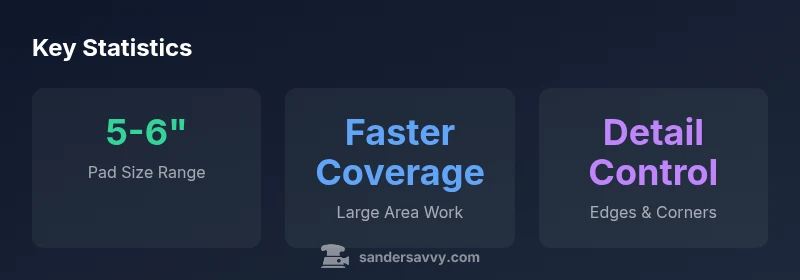
Pad size directly influences both finishing quality and sanding speed. A 5-inch pad concentrates abrasive area into a smaller circle, which is ideal for edges, curves, and joints where larger tools can’t reach. It also gives you finer control over pressure, helping you avoid gouges when working close to trim, rails, or molding. A 6-inch pad, by contrast, covers more surface per pass, which translates to faster material removal on wide, flat surfaces like flooring planks or wide deck boards. The trade-off is reduced maneuverability in tight spaces and a slightly steeper learning curve for achieving an even finish across irregular shapes. For homeowners tackling mixed tasks, having both sizes handy is a practical strategy to optimize speed and accuracy on different sections of the project.
In practice, many DIYers start with a 6-inch sander for the bulk of the work and keep a 5-inch unit on hand for trimming, edges, and corners. This dual-approach helps maintain a consistent finish while preserving time on larger tasks.
Other dimensions that influence usability beyond pad size
Weight and ergonomics matter almost as much as pad diameter. Lighter models reduce arm fatigue during long sessions, while heavier tools can feel more stable on flat surfaces but may be tiring to maneuver around doors, cabinets, or stairways. Noise level and vibration are also important, as higher vibration can lead to operator fatigue and inconsistent pressure.
Speed control is another key factor. Many orbital sanders offer variable speed settings to adapt to different grits and materials. Lower speeds minimize heat buildup on delicate finishes, while higher speeds maximize material removal on rough surfaces. Accessibility features, such as a comfortable grip and a dust-collection hood that seals well to the workpiece, further determine how big of a difference pad size makes in everyday use.
How to choose the right size for your project: a quick decision guide
Start with project assessment: are you sanding a large, open surface like a floor or deck, or are you refining edges and corners near windows and trim? If the project involves broad areas with minimal detail, a 6-inch pad is usually the better choice for speed. If access is constrained or the area includes intricate shapes, a 5-inch pad will help you achieve a consistent finish with more finesse. Consider keeping both sizes if your budget allows, as this reduces time switching tools and changing discs between tasks. Finally, verify that your sander’s dust-collection system is compatible with the workpiece material and your vacuum setup to maintain a clean, safe workspace.
A practical starter kit for most DIYers includes one 5-inch sander for tight spaces and one 6-inch sander for larger surfaces, plus a basic set of abrasive discs in a range of grits to cover initial material removal through final finishing.
Compatibility, discs, and accessories: keeping the math simple
Disc compatibility is typically straightforward: most consumer orbital sanders use hook-and-loop (velcro) discs sized to the pad. If you’re unsure about pad compatibility, check the owner’s manual or the tool’s labeling. Keep a small assortment of grits (coarse for initial material removal, medium for leveling, and fine for finishing) and ensure your discs are designed for the pad size you’re using. Dust collection is often improved by pairing a properly sized sander with a compatible vacuum hood and a clean, seal-tight connection to reduce airborne dust and improve finish quality.
In summary, pad size matters, but it’s one of several factors that determine the final finish. A thoughtful combination of pad size choice, grit progression, technique, and dust control yields the best results for floors, walls, and decks.
Orbital sander pad size overview
| Pad Size | Typical Uses | Pros | Cons |
|---|---|---|---|
| 5 inches (127 mm) | Edges, corners, trim work | Better access and control in tight spaces | Slower for large flat surfaces |
| 6 inches (152 mm) | Large flat surfaces, panels, boards | Faster material removal on wide areas | Less maneuverable in tight spots |
| Other sizes (rare) | Specialized shapes or tasks | Niche applications | Limited disc availability |
Your Questions Answered
What are the most common orbital sander pad sizes?
The most common sizes are 5-inch and 6-inch pads. These two diameters cover most DIY tasks from detail work to large area sanding. Always verify the tool’s label for the exact size.
Most sanders use 5- or 6-inch pads.
Can you use a 5-inch pad on a 6-inch sander?
No. Pad sizes are matched to the tool’s mounting system. A 5-inch disc won’t fit a 6-inch sander and attempting to force it can be unsafe or damage the tool.
Pads must match the sander size.
Are there orbital sanders designed specifically for decks vs floors?
For large flat surfaces like floors, a larger pad size helps cover more area quickly. For decks with edges and railings, a smaller pad offers better control.
Use bigger pads for wide areas, smaller for edges.
What should I consider besides pad size when buying?
Look at project scope, access, comfort, weight, noise, and how well the dust-collection system integrates with your vacuum setup.
Think about your job, not just pad size.
Is pad size the only factor affecting finish quality?
No. Grit choice, pressure, feed rate, and technique all matter. Pad size sets the baseline, but technique determines the final look.
Pad size matters, but technique matters too.
“Choosing the right pad size is the most practical step you can take to balance speed and finish in sanding projects.”
Main Points
- Start with the pad size that matches the work area.
- Use 5-inch for edges and intricate shapes, 6-inch for broad surfaces.
- Have both sizes on hand for mixed projects.
- Always pair pad size with correct grit and dust control.
- Check compatibility with your sander’s mounting system before buying discs.