Sander Like Festool: How to Choose the Right Sander for Floors and Walls
Explore Festool-like sanding options, comparing dust control, ergonomics, accessories, and value. SanderSavvy analyzes budget options to help homeowners choose an affordable alternative.


If you want a sander like festool, start with a high-quality random-orbital model that delivers clean dust control, smooth operation, and durable build. A sander like festool should offer robust dust collection, ergonomic design, and compatible accessories. In this guide, SanderSavvy analyzes top contenders, pricing ranges, and practical tips to help homeowners choose a strong, affordable alternative.
Why a Festool-like sander matters for DIY flooring and walls
Choosing the right sander for floors and walls isn't just about raw power; it's about how dust is controlled, how comfortable the tool is to hold over long sessions, and how well it fits your accessory ecosystem. Homeowners often want a sander like festool, combining exceptional dust control with smooth operation. For many homeowners, a sander like festool represents a benchmark for integrated dust extraction, thoughtful ergonomics, and reliable longevity. The SanderSavvy team notes that projects from oak floors to drywall sanding benefit from a tool that minimizes cleanup time, preserves surface quality, and reduces fatigue. When your tool keeps dust out of the air and out of your lungs, you can work longer with confidence. In this article, we compare premium, mid-range, and budget-friendly options that aim to approximate Festool-style performance. We’ll discuss what to look for, how to test options, and how to evaluate value beyond sticker price. Expect practical guidance grounded in real-world usage and home-improvement workflows.
Key features that define a Festool-like experience
A Festool-like sanding experience emphasizes a precise, controlled sanding path with minimal dust dispersal. Look for tools that offer closed-loop dust extraction, sealed motor housings, and ergonomic handles designed for long sessions. Strength comes from a well-balanced kombination of vibration dampening, pad stability, and a responsive trigger. For DIY projects on floors and walls, this section highlights what makes a sander feel premium in daily use: consistent dust collection compatibility with standard vacuums, smooth start/stop behavior, and a pad system that preserves edge and contour work. Remember, the goal is predictable results with less cleanup and fatigue. This is where SanderSavvy’s analysis helps homeowners set clear expectations about performance versus price, especially when comparing Festool-like tools to more affordable options.
Dust collection and vacuum compatibility
Dust control is central to a “Festool-like” experience. The ideal sander integrates tightly with a shop vacuum or built-in dust extraction system, pulling dust at the source rather than letting it settle on the floor. In practice, you’ll want a sanding head that seals well against the pad, a reliable cyclone or bag system, and hoses that don’t kink easily. The more robust the suction interface, the less dust returns to the workspace and the longer you can work without a respirator. This section walks through how to test suction compatibility, how to read a dust-collection spec, and how to avoid common pitfalls like loose seals and clogged bags. SanderSavvy researchers note that even mid-range tools with good vacuum compatibility can deliver near-Festool performance if used with a quality vacuum source and proper filtration.
Vibration and ergonomics
Long sessions demand comfortable tools. Vibration control, weight balance, and grip texture directly affect fatigue and project accuracy. Festool-like performance hinges on a design that minimizes user fatigue while preserving precision. When testing ergonomics, check handle shape, trigger placement, and whether the weight feels centered over the sanding pad. A well-balanced sander reduces wrist strain and enables longer stretch lines during floor refinishing or wall smoothing. In this section, we compare how premium and mid-range tools handle vibration through dampening materials, low-profile housings, and even noise considerations. The goal is a comfortable tool that maintains control as the workday grows long.
Pad design and sanding control
Pad design influences aggression, edge work, and finish quality. A Festool-like pad system typically offers low-profile, rigid contact with minimal chatter and a robust hook-and-loop system for quick grit changes. The ideal tool supports a wide range of grits, compatible dust socks, and secure pad-lock mechanisms that don’t shift during heavy sanding. This section explains how to evaluate pad stability, how different pad shapes affect edge work on floors and walls, and how to choose grit sequences that deliver consistent results across large surfaces. Real-world guidance here helps homeowners plan a sanding strategy that reduces rework and delivers a smoother final surface.
Motor power, speed control, and performance across materials
Different materials demand different power and speeds. A Festool-like sander should offer adjustable speeds that preserve wood fibers during soft surfaces and keep dusting predictable on harder substrates like oak or plywood. We compare motor build quality, voltage options, and electronic soft-start capabilities, which contribute to fewer gouges and cleaner finishes. The discussion includes practical tips on matching speed to grit and material, as well as expectations for run-time and battery life in cordless models. The aim is to help homeowners balance power, control, and runtime without compromising surface quality.
Build quality, dust sealing, and longevity
Durability matters for tools that see frequent project cycles in outdoor decks and interior floors. Festool-like tools are often praised for robust housings, dust seals, and cartridge or bearing life that withstands heavy use. Here we outline what to look for: chain-of-custody in components, seals around the motor, and the ease of maintenance. We also discuss how to extend a sander’s life through proper storage, cleaning routines, and routine checkups of carbon brushes and bearings. A well-built sander preserves performance and resale value, a practical consideration for DIYers who take on multiple projects over the years.
Top contenders that rival Festool in practice
In practice, you’ll find premium, Festool-like offerings and capable mid-range options that deliver strong dust control and ergonomic design. We describe two broad classes: (1) premium, flagship-line sanders with deep accessory ecosystems and vacuum-friendly features; (2) mid-range equivalents that offer solid performance, compact form factors, and robust dust control at a more approachable price. The comparison prioritizes operational comfort, dust management, and the availability of compatible accessories. Though we avoid naming specific models here, the distinctions help homeowners map their needs to features such as hose compatibility, pad stability, and the precision of speed control. This section equips readers to identify which category aligns with their project load and budget while maintaining a Festool-like standard of performance.
Budget vs value: pricing ranges and what you get
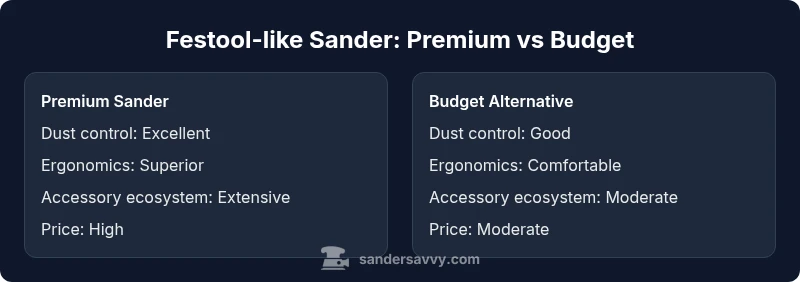
Value matters as much as features. In general, premium Festool-like sanders command higher upfront costs but deliver superior dust control, longevity, and accessory ecosystems. Mid-range options offer strong performance with fewer bells and whistles, typically accompanied by safer warranties and decent dust management. Budget-friendly options trade some refinements for lower price points, yet can still replicate essential dust control and finish quality with proper technique and a compatible vacuum. This section provides representative pricing bands (without quoting exact prices) to illustrate what you can expect at each tier and how to weigh cost against likelihood of needing replacements sooner. Our guidance emphasizes total cost of ownership, including consumables, replacement pads, and accessory investments that extend life and performance.
Maintenance and lifecycle: sustaining performance
A Festool-like sander rewards consistent care. Regular cleaning of vents, replacing worn pads, and inspecting the dust collection path keep performance steady. We discuss practical maintenance workflows, from daily wipe-downs after use to periodic checks of bearings and carbon brushes for corded models. Corded tools benefit from cord management and plug health checks, while cordless variants require battery care and storage recommendations. By outlining a simple, repeatable maintenance routine, this section helps homeowners avoid sudden declines in sanding quality and extend the life of their tool investment.
Real-world use cases: best picks by project type
Different projects stress different features. For floors, you’ll prioritize dust control and pad stability to deliver a smooth surface with minimal swirl marks. For walls, a comfortable grip and precise speed control matter for fine detailing and edge work. In this section, we present scenario-based recommendations: refinishing a living room hardwood floor, smoothing drywall joints, and preparing a workshop bench top. The guidance focuses on aligning tool capabilities with your project scope, shop setup, and time constraints, so you can optimize results without overpaying for features you won’t use. By the end, readers will feel prepared to select a Festool-like sander that fits their workflow and space.
How to test a sander before buying
Testing a sander before purchase ensures you choose a model that matches your hands and your space. This section provides a practical checklist: hold the tool to assess balance, test dust collection with your vacuum, run it across a scrap piece of flooring, and evaluate pad grip and dust-seal integrity. We also discuss how to compare warranty terms, after-purchase support, and community feedback. The goal is to help you simulate real project conditions in-store or during a demo so you leave with confidence in your choice.
Comparison
| Feature | Festool-inspired Premium Sander | Non-Festool Alternative Premium Sander |
|---|---|---|
| Dust Collection Quality | Excellent | Good |
| Vibration & Comfort | Low | Medium |
| Accessory Ecosystem | Extensive (hoses, bags, grits, connectors) | Moderate |
| Motor Power & Speed Range | High with precise control | Balanced mid-range |
| Weight & Balance | Well-balanced, lighter for long sessions | Comparable but slightly heavier |
| Price Range | High | Mid to high |
What's Good
- Excellent dust control improves air quality and cleanup time
- Strong ergonomic design reduces fatigue on long jobs
- Wide accessory ecosystem enhances versatility and outcomes
- Good value in mid-range options for informed DIYers
Weaknesses
- Premium price can be a barrier for casual hobbyists
- Some mid-range models lack the depth of accessory ecosystems
- Maintenance and accessories can add long-term costs
- Not all models match Festool's level of integrated dust collection
A Festool-like sander is achievable with premium or well-chosen mid-range tools
For the highest overall experience, choose a premium option with the strongest dust control and accessory ecosystem. If budget is a constraint, a high-quality mid-range sander with good dust collection still delivers excellent results and value.
Your Questions Answered
What defines a sander like Festool in practical terms?
A Festool-like sander emphasizes integrated dust extraction, ergonomic design, robust build quality, and a broad accessory ecosystem. It delivers consistent finishes with minimal cleanup. These traits collectively determine how closely a non-Festool tool can replicate Festool-level performance.
A Festool-like sander means great dust control, good comfort, and reliable parts—things you notice when you use it on long projects.
Are Festool-like sanders worth the extra cost for a DIYer?
For frequent, large projects, the benefits in dust management and ergonomics can justify the premium. For occasional tasks, a solid mid-range option may provide most of the gains at a lower total cost of ownership.
If you sand a lot, the premium tools can save you time and cleanup, which adds up.
What should I look for first when evaluating a Festool-like sander?
Look for effective dust collection, vacuum compatibility, comfortable weight and balance, adjustable speed, and a reliable pad system. These features directly influence surface quality and ease of use.
Check the vacuum hookup, weight, and how smoothly it runs at different speeds.
Can cheaper sanders mimic dust extraction effectively?
Some cheaper models can pair with good vacuums to achieve solid dust control, but may fall short on pad stability, suction efficiency, and ergonomic comfort over long sessions.
A cheaper sander can work well if you pair it with a strong vacuum and take breaks often.
What’s the best sander for floors?
A high-quality random-orbital sander with strong dust collection, low vibration, and sturdy pads is ideal for floors. It should handle large surface areas with consistent finishes.
For floors, pick a sander with good dust control and a sturdy pad system.
How should I maintain a Festool-like sander?
Regularly clean vents, inspect the pad and bearings, replace worn parts, and store the tool in a clean, dry place. Keep the dust collection path clear for optimal performance.
Clean it after use, check the pad, and store it properly to keep it performing well.
Main Points
- Prioritize dust collection compatibility with your vacuum system
- Choose an ergonomically balanced sander to reduce fatigue
- Evaluate the accessory ecosystem before buying
- Balance upfront cost with long-term durability and maintenance