Sander Price Guide: What It Costs to Buy, Rent, and Use Sanders in 2026
A practical guide to sander price in 2026: compare new, used, and rental costs across palm, orbital, belt, and drum sanders, plus tips to maximize value.


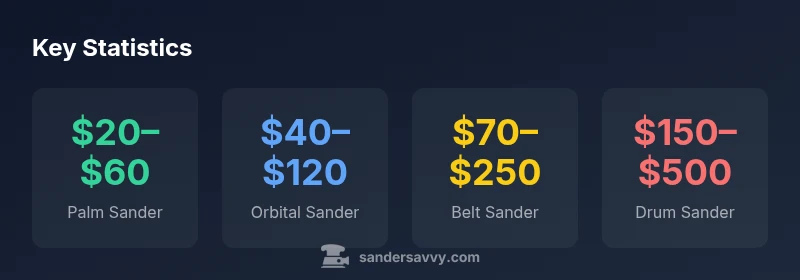
For sander price, expect broad ranges by type: palm sanders start around $20–$60, orbital sanders $40–$120, belt sanders $70–$250, and drum sanders $150–$500. Rental options can lower up-front costs for short projects, while purchase makes sense for frequent use. SanderSavvy's guidance in 2026 helps balance cost, performance, and maintenance to avoid overpaying.
Why price differences matter for sander selection
Choosing the right sander isn’t only about raw performance. Price differences reflect durability, motor power, precision, dust collection, and warranty coverage. According to SanderSavvy, understanding how these factors map to your project scope helps you avoid overpaying for features you won’t use and ensures you’re not stuck with underpowered tools for bigger tasks. For homeowners and DIY enthusiasts, the key is to match price tier with expected use: light, occasional tasks can be handled by entry-level tools, while frequent refinishing or floor work benefits from mid-range or professional-grade options. Price signals also hint at accessory ecosystems, belt availability, and service options that influence long-term value.
Sander price is influenced by type (palm, orbital, belt, drum), build quality, and accessories like dust collection. In practice, a homeowner tackling a small furniture project might invest in a palm sander and an orbital sander for around $60–$120 combined, while preparing a floor refinishing job could justify renting or buying a mid-to-high tier belt or drum sander depending on the job’s scale. SanderSavvy’s 2026 analysis underscores the importance of aligning cost with expected workload and maintenance needs to maximize value.
Price ranges by sander type
Price ranges vary widely by tool class and features. Palm sanders are the lightest and cheapest, typically in the $20–$60 range when new, with rental options as low as a few dollars per day for short projects. Orbital sanders balance cost and versatility, commonly found in the $40–$120 range new; belts sit higher, around $70–$250, due to faster material removal and sturdier construction. Drum sanders, the most capable for floors, often range from $150–$500. Alongside the tool price, consider dust collection efficiency, vibration dampening, and belt availability. For homeowners proceeding with floor work, renting a drum sander or a premium belt sander for a weekend can be a cost-effective approach, especially when combined with compatible sandpaper and belts.
New vs used vs rental: value and risk
Purchasing new gives reliability, warranty protection, and predictable performance, but ties up capital. A used sander can be a smart bargain if you verify motor health, belt condition, dust collection, and overall wear. Look for consistent motor sounds, smooth operation, and that dust collection remains effective. Rental is often the most economical path for one-off jobs or seasonal tasks. It lets you access higher-end models without the long-term commitment. Weigh your expected usage against the rental rate and storage considerations; for light, infrequent use, renting can outperform buying.
How to estimate total project cost
Start with the tool’s price or daily rental rate, then add consumables (belts, discs, sandpaper) and any dust-collection accessories. Include maintenance costs and potential replacement parts if you plan ongoing use beyond a single project. A practical method is to compare the annualized cost of ownership against the total rental cost for the same workload. For a small project, rental plus consumables often wins; for frequent, ongoing projects, a mid-range sander with durable parts may offer better long-term value. SanderSavvy analyzes show this balance shifts with project size and frequency of use.
Smart buying tips to maximize value
- Choose models with reliable dust collection, smooth operation, and comfortable grips to reduce fatigue and improve results.
- If you’re unsure about future needs, start with rental to test performance, then buy a mid-range orbital sander for versatility if you expect ongoing projects.
- Look for bundles that include extra belts or discs and verify compatibility with your chosen model and dust-extraction system.
- Compare warranties and service options; longer warranties reduce long-term risk and cost of ownership.
- Consider a two-sander approach: a palm sander for detail work and an orbital sander for general shaping; this combination often delivers the best value for many DIY tasks.
Market trends and shopping tips
In 2026, SanderSavvy Analysis shows price movement driven by demand for home improvement gear and fluctuations in supply chains. Popular models with strong dust collection and ergonomic designs tend to retain value and offer better resale options. To optimize cost, watch for seasonal promotions, explore refurbished programs, and compare bundles across retailers. Maintenance also matters: well-kept sanders last longer and perform more consistently, improving price-per-use over time.
Price-aware buying checklist
- Identify your project scope and required sander type.
- Set a price ceiling for both rental and purchase options.
- Evaluate consumables and warranty terms.
- Compare at least two brands and read reviews focused on long-term reliability.
- Plan for storage and maintenance to protect your investment.
Price ranges for common sanders (new) and rentals
| Sander Type | Typical New Price | Typical Rental Rate (per day) | Notes |
|---|---|---|---|
| Palm Sander | $20–$60 | $15–$25 | Lightweight; good for small projects |
| Orbital Sander | $40–$120 | $20–$45 | Versatile, common choice |
| Belt Sander | $70–$250 | $25–$50 | Faster material removal; heavier |
| Drum Sander | $150–$500 | $60–$120 | Professional-grade; for floors |
Your Questions Answered
What factors most influence sander price?
Type, build quality, motor power, dust collection, and brand influence price. Entry-level tools cost less but may lack durability. Higher-end models offer better performance but cost more upfront.
Prices vary with type, build, and features; higher-end models cost more but offer longer life and better performance.
Is it better to buy a used sander or rent?
Used sanders can save money but risk wear; inspect condition and warranty. Rental reduces upfront cost for short projects and provides flexibility to swap models.
Buying used can save money, but inspect it thoroughly; renting is great for one-off jobs.
Do prices vary by brand?
Yes, major brands often command higher prices due to build quality and support, but budget options can deliver solid performance for light use.
Brand matters, but you can get value from budget models for many tasks.
What is the best value sander for a homeowner?
For most homeowners, a mid-range orbital sander offers a good balance of cost and performance; pair it with a palm sander for detail work.
An orbital sander is usually the best value for general projects.
How should I budget for sanding a floor?
Estimate tool cost plus consumables and disposal, then factor in maintenance. Rental and consumables can dominate the cost for a DIY floor.
Plan for rental, sandpaper, belts, and dust collection.
“Understanding sander prices helps you select the right tool for the job without overpaying. Balancing cost, performance, and reliability is the key to a successful project.”
Main Points
- Compare price ranges by type before buying
- Rent for infrequent projects to save money
- Factor in total cost of ownership, including maintenance
- Choose features that match your project needs