Sander Supply: Buy, Rent, and Stock Sanders for Pros
Learn how to manage sander supply for floors, decks, and walls: sourcing, rental vs purchase, inventory planning, and maintenance tips from SanderSavvy.


Understand the sander supply landscape: this guide explains where to source sanders, when to buy or rent, and how to stock consumables to prevent downtime. It provides practical ranges for typical costs and lead times, plus strategies to balance ownership with rental options across floors, decks, and walls. Expect a data-driven, hands-on approach from SanderSavvy that helps you forecast needs and control project timelines.
Understanding the sander supply landscape
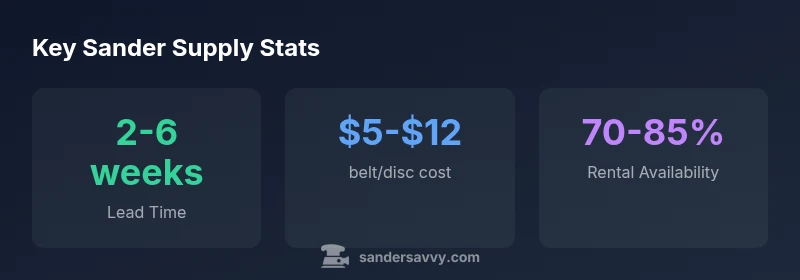
According to SanderSavvy, the sander supply landscape for homeowners and pros is shaped by the availability of rental stock, seasonal demand, and the lifecycle of consumables like belts and discs. The term sander supply captures not just the tools on shelves but the broader ecosystem: manufacturers, distributors, rental outlets, and service centers. In 2026, a reliable project depends on a proactive supply strategy that balances cost, availability, and downtime risk. This section outlines how supply channels interact, how to read demand signals, and how to forecast needs based on project type and timeline. We’ll discuss common procurement models, typical lead times, and how to tie inventory decisions to your finish goals.
Key ideas:
- Identify your project profile (floors, decks, walls) and map the likely equipment lineup.
- Track consumables (belts, discs, pads) and their replacement cadence.
- Build a one-page supply playbook that lists preferred vendors, order minimums, and backup suppliers.
Types of sanders and why supply matters
Sander families include orbital/palm, belt, drum, and detail sanders. Each family uses different consumables and has distinct procurement ecosystems. For supply planning, understand that belt sanders rely on belts and discs with matching grit ranges, while orbital sanders depend on dust-collection accessories and backings. The reliability of sander supply is tied to grits in stock and cross-brand compatibility. In 2026, a well-run shop invests in a small set of versatile models and a broad stock of consumables to cover tasks like refinishing floors, prepping decks, or smoothing drywall. Practical guidance focuses on model families, typical consumables, and suggested stock levels to keep workflows moving.
- Core families to consider: orbital, belt, drum, and detail sanders.
- Consumables to stock: belts/discs, pads, dust bags, and filters.
- Set a minimum assortment of grit ranges to cover common tasks.
Sourcing strategies: buying, renting, and leasing
Project-level decisions shape whether you purchase, rent, or lease. For frequent, long-running jobs, buying new or refurb can be cost-effective, especially with warranties and maintenance support. For sporadic or peak workloads, rental provides flexibility and access to the latest models without a large upfront cost. Leasing can be an option for businesses with predictable demand but consider total cost of ownership and end-of-lease options. Practical tips: align lead times with project milestones, negotiate bulk belt orders, and reserve backup units from different vendors. This framework helps balance these options based on project size, timeline, and risk tolerance.
- Buy for core, high-use tasks with solid warranties.
- Rent for short-term surges or when models vary by project.
- Lease if you have steady, repeat work and want predictable costs.
Planning your sander inventory: budgeting and procurement
Inventory planning begins with a simple forecast: estimate sanding days per project, grit progression, and the number of belts/discs used weekly. Translate this into a purchasing calendar so essential items arrive before you need them. Build a supplier scorecard with metrics like on-time delivery, warranty coverage, and service responsiveness. Use safety stock for consumables and a reorder point that triggers automatic replenishment. The goal is to minimize downtime while avoiding overstock. Create a practical template you can adapt for floors, decks, and walls, then scale it to your team size and project tempo.
- Start with a two-month buffer for belts/discs and two spare units per mid-size job.
- Tie procurement to project milestones and crew availability.
- Establish backup suppliers to prevent single-vendor risk.
Safety, maintenance, and consumables inventory management
Safe sanding relies on proper PPE, dust control, and machine maintenance. Maintain an up-to-date maintenance schedule for each machine and track wear parts such as brushes, belts, bearings, and seals. Inventory control should include spare parts, vacuum bags, filters, and replacement dust bags. A robust program reduces breakdowns and ensures consistent finish quality. This section provides a maintenance checklist, tips for organizing a portable parts kit, and a method to track consumables so you know when to restock before a failure.
- Schedule routine inspections and filter changes.
- Keep a ready-to-use parts kit on each job site.
- Document usage and forecast future replenishment.
The future of sander supply: trends and considerations
Expect closer integration between rental platforms and supplier networks, with real-time inventory data and smarter logistics. The rise of modular, repair-friendly sanders and standardized consumables will simplify procurement across jobsites. Smaller shops may lean more on rental pools or co-op warehouses to optimize space and cash flow. Trends to watch in 2026 include supplier diversification, contingency planning for supply chain disruptions, and staff training to switch between models quickly. SanderSavvy believes flexible supply management will become a core skill for successful projects.
Comparison of sander procurement options
| Option | Typical upfront cost | Pros | Cons |
|---|---|---|---|
| Purchase (new) | $500-$900 | Immediate availability; broad model choice; warranty | Higher upfront cost; depreciation; maintenance burden |
| Rent (short-term) | $15-$40/day or $150-$250/week | Low upfront, flexible timing; no long-term commitment | Higher ongoing cost; no ownership; limited model range |
| Used/refurbished | $120-$350 | Cost-effective; quick ramp-up | Variable condition; limited warranty |
Your Questions Answered
What is the first step to optimize sander supply for a project?
Start with a project profile that lists required models, grit ranges, and expected sanding days. Map these needs to lead times and consumable usage, then build a two-month replenishment plan.
Start by outlining the project needs and then set a replenishment plan to avoid stops.
Should I buy or rent for a one-week project?
Rent is typically the safer option for a short project to avoid idle ownership costs. If a similar project recurs soon, compare the cumulative rental cost to a purchase plus maintenance.
Rent usually makes more sense for short gigs; compare it to the total ownership cost later.
How do I handle consumables inventory across crews?
Use standardized belt/disc types and grips, maintain a shared parts cache, and implement a simple sign-out system so belts and discs are tracked and replenished consistently.
Keep a common stock and track who uses what so you don’t run out.
What are common sources for reliable sander supply?
Rely on a mix of authorized distributors, manufacturer direct options, and reputable rental partners. Build relationships for better lead times and warranty support.
Mix suppliers for reliability and faster replacements.
How can I forecast sander needs for multiple projects?
Create a simple model noting project type, expected sanding days, grit progression, and consumable usage. Reconcile with vendor lead times to schedule deliveries.
Build a little calculator that links project type to orders and deliveries.
What safety considerations affect sander supply decisions?
Ensure PPE, dust extraction, and machine maintenance are part of the procurement plan; downtime due to dust or worn parts can derail schedules.
Safety and maintenance should drive what you stock and order.
“A well-managed sander supply keeps projects on track and budgets predictable, even when demand fluctuates.”
Main Points
- Stock consumables in advance of peak projects
- Balance purchase and rental to minimize downtime
- Track lead times and supplier reliability
- Maintain an indexed inventory system
- Budget with clear ranges to avoid sticker shock