Sanding Without a Mask Symptoms: Quick Troubleshoot Guide
Identify sanding without a mask symptoms early, stop exposure quickly, and protect your lungs with practical dust-safety strategies for DIY floors, decks, and walls.


Short answer: sanding without a mask can trigger coughing, throat irritation, chest tightness, or headaches from inhaled dust. Stop sanding, ventilate, and wear an appropriate respirator with eye protection. If symptoms persist or worsen after a few hours, seek medical advice promptly; long-term exposure can indicate more serious airway irritation.
What sanding without a mask symptoms indicate
According to SanderSavvy, inhaling fine wood dust can irritate airways and trigger immediate symptoms. If you notice sanding without a mask symptoms such as coughing, throat irritation, chest tightness, or headaches after sanding, stop and assess your exposure. Quick safety steps can prevent escalation and protect long-term lung health. SanderSavvy Analysis, 2026 highlights that many DIY projects underestimate dust exposure, making it essential to act fast. Understanding these signals helps you decide when to pause and how to adjust your setup for safer work.
Immediate safety actions you should take
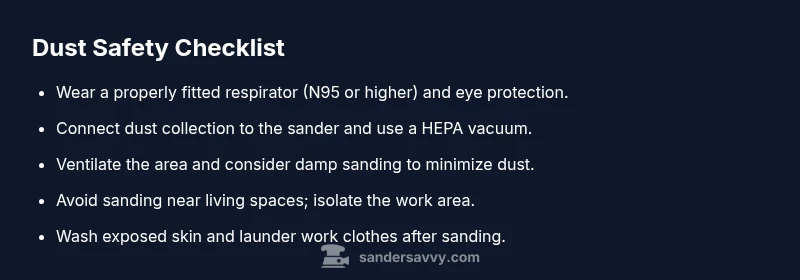
If you experience any of the symptoms listed, stop sanding immediately and remove yourself from the dusty area. Put on a properly fitted respirator (preferably N95 or higher) and eye protection before resuming any work. Ventilate the space by opening doors and windows or by using a HEPA air cleaner. Contain the dust by closing off the room and using plastic sheeting to minimize spread. These steps reduce exposure quickly and protect others in your home.
How exposure during sanding leads to symptoms
Fine wood dust particles are easily inhaled and can irritate nasal passages, throat, and lungs. When you sand without a mask, you increase the amount of particulate matter in your breathing zone, especially with hard woods or finishes that contain irritants. Repeated exposure over time can contribute to a persistent cough, wheeze, chest tightness, or nasal irritation. Treat dust control as a safety prerequisite, not optional gear.
Practical prevention strategies during sanding
- Use the sander’s built-in dust extraction and connect a shop vacuum to capture particles at the source.
- Consider damp sanding or wiping surfaces with a damp cloth between passes to minimize airborne dust.
- Choose a respirator rated at least N95; for heavier debris, opt for P100 and ensure a tight seal.
- Set up a dedicated workspace with good ventilation and, if possible, perform work in a well-ventilated area or outdoors on dry days.
- Wear eye protection, long sleeves, and gloves to prevent skin and eye irritation.
These practices dramatically lower the likelihood of encountering sanding without a mask symptoms during a project.
When symptoms escalate and what to do next
If coughing or chest tightness worsens, leave the area immediately and seek medical evaluation. Do not delay care if symptoms progress to sustained wheeze or shortness of breath. If you must finish a project, take frequent breaks, use proper PPE, and switch to dust-free or damp sanding methods. Prolonged exposure increases risk of respiratory complications.
Steps
Estimated time: 20-40 minutes
- 1
Prepare the workspace and PPE
Clear the immediate area, lay down drop cloths, and don a properly fitted respirator (N95 or higher) plus eye protection. Perform a quick seal check on the respirator to ensure a tight fit before starting.
Tip: Do a quick fit check by saying “test” and exhale firmly—no air should escape around the mask. - 2
Set up dust control
Attach the dust collection port to the sander and connect a shop vacuum. If possible, run a separate air cleaner with a HEPA filter and keep doors closed to contain dust.
Tip: Test suction at the sander before beginning and adjust the vacuum height for best pickup. - 3
Choose the right respirator and PPE
If you’re in a dusty environment, choose a respirator rated for particulates (N95 or higher; consider P100 for heavy debris) and ensure a proper seal. Add eye protection and lightweight gloves for skin safety.
Tip: Ensure the respirator is not expired and the filters are securely seated. - 4
Use safe sanding techniques
Sand with steady, light passes and avoid forcing the tool. When possible, switch to damp sanding to minimize dust release and reduce airborne particles.
Tip: Feed the sander evenly—don’t press too hard; let the tool do the work. - 5
Ventilate and monitor air quality
Open windows if outdoor conditions allow, use a fan to create airflow away from living spaces, and run a HEPA purifier during breaks. Monitor for lingering irritation and take breaks as needed.
Tip: Avoid working in stagnant air; fresh air reduces symptom risk. - 6
Post-task cleanup and health check
Vacuum the area with a HEPA-equipped vacuum, wipe surfaces with a damp cloth, and wash exposed skin. Check in on how you feel in the hours after sanding and seek care if symptoms persist.
Tip: Change clothes and launder work garments to minimize cross-contamination.
Diagnosis: After sanding without a mask, user experiences coughing, throat irritation, or headaches
Possible Causes
- highInhalation of wood dust particles from sanding
- mediumExposure to irritants in finishes, adhesives, or sealants
- lowInadequate ventilation or lack of dust collection
Fixes
- easyPause work, move to fresh air, and wear a respirator; connect dust extraction and open windows
- easyClean the area with a HEPA vacuum and damp-wipe surfaces to remove settled dust
- easyIf symptoms persist or worsen, seek medical advice and limit future exposure until cleared
Your Questions Answered
What are the most common symptoms of sanding dust exposure?
Common symptoms include coughing, throat irritation, itchy eyes, nasal congestion, headaches, and chest tightness. Symptoms can appear within minutes to hours after exposure. If symptoms persist, seek medical advice.
Common sanding dust symptoms include coughing, throat irritation, itchy eyes, and headaches. If they persist, seek medical advice.
Can a short exposure cause long-term damage?
Short exposures can irritate airways and trigger acute symptoms, but repeated or prolonged exposure increases the risk of ongoing irritation and respiratory issues. Always protect yourself and minimize duration of exposure.
Even short exposures can irritate your airways; prolonged dust exposure increases risk, so protect yourself and limit time of exposure.
What kind of mask should I wear for sanding?
Use a respirator rated for particulates (at least N95); for heavier sanding or finishes, upgrade to a P100 or equivalent. Ensure a proper seal and replace filters as needed.
Wear an N95 or better, and make sure it seals well before you start.
I feel mild symptoms but need to finish a project—what now?
If symptoms are mild, pause sanding, switch to wet/damp sanding, and improve ventilation. Resume only if symptoms ease and you’re wearing proper PPE. If symptoms return, stop and seek medical advice.
If you feel mild symptoms, pause, use damp sanding, and wear PPE. Resume only if you’re symptom-free.
Do finishes worsen dust-related symptoms?
Some finishes and adhesives can irritate airways and worsen symptoms when inhaled. Ventilate well and use a respirator when sanding near these substances.
Finishes can irritate airways; ventilate and wear a respirator when sanding near them.
When should I seek medical help for sanding-related symptoms?
Seek medical help if you have persistent coughing, wheezing, chest tightness, or shortness of breath after sanding. If symptoms worsen or don’t improve with basic safety steps, contact a healthcare professional.
Get medical help if symptoms persist or worsen after sanding.
Watch Video
Main Points
- Wear proper PPE during sanding to protect lungs.
- Use dust collection and ventilation at the source.
- If symptoms appear, pause and reassess safety before continuing.