Air Sander vs Electric: A Practical Comparison
Compare air-powered sanders and electric sanders to decide which tool fits your workshop needs. This analytical guide covers power, control, maintenance, noise, and safety for wood floors, decks, and walls.


Air sanders and electric sanders both remove material efficiently, but they excel in different workflows. If you already have a reliable compressor and want sustained removal with light tool weight, an air sander can deliver rapid stock removal for long sessions; otherwise, an electric sander offers portability and straightforward setup for most DIY tasks.
What Is an Air Sander vs Electric Sander?
Air sanders, also known as pneumatic sanders, use compressed air to drive the sanding pad. They typically feature a lightweight body and a free-rolling pad that matches the speed of the air flow. Electric sanders rely on an onboard motor, whether corded or battery-powered, to spin the pad at a fixed or variable speed. In practice, this means air sanders excel when you need extended stock removal with less overall weight, provided you have a compatible compressor and adequate air quality. Electric sanders shine when you want quick setup, portability, and no hoses or compressors clogging your workspace. According to SanderSavvy, the decision between these tools often hinges on compressor availability, space, and the scale of your project. The team found that homeowners juggling floors, decks, and walls benefit from understanding how these tools behave under real-world conditions, especially in terms of heat buildup, dust control, and maneuverability.
How Power Sources Drive Performance
Power source matters beyond raw torque. Pneumatic systems deliver substantial consistent force at varying speeds depending on air pressure, which means you can dial in aggressive stock removal or fine finish work by adjusting the throttle. Electric sanders rely on the motor's torque and electronic control to maintain speed under load. This difference translates to how each tool behaves when you hit hard grain, soft filler, or rounded edges. In a workshop setting, an air sander can perform long sessions with relatively cooler operation because the compressed air dissipates heat more effectively, while an electric sander may heat up under heavy loads if the motor works hard for extended periods. The practical takeaway is to align your choice with typical work patterns—lump removal versus precise finishing.
Speed Control, Torque, and Consistency
Air sanders commonly offer variable speed through air pressure and trigger control. The speed response can be instant, which is excellent for rapid changes in material, but it also requires a practiced touch to avoid gouging. Electric sanders provide smoother control via built-in speed controls or electronic soft-start features. For finishing tasks where consistent scratch patterns matter, electric sanders with stable RPM often outperform air units in the hands of casual DIY users. However, pro woodworkers who manage large stock removal on flat surfaces may prefer the raw power and predictable behavior of a pneumatic tool when paired with a quality regulator and moisture control system.
Weight, Balance, and Ergonomics
Weight directly impacts user fatigue. Air sanders tend to be lighter at the head because the main mass is the compressor-driven mechanism rather than the motor and drive train. That said, pneumatic hoses add some tethering that can impact maneuverability on tight edges or overhead work. Electric sanders, especially battery-powered models, are popular for their portability, eliminating hoses and air lines. The trade-off is typically a heavier tool body and, in some cases, shorter continuous run time between charges. For floors and decks that require many hours of sanding, the lighter air unit can reduce fatigue, while for quick touch-ups in tight spaces, the cordless electric sander may feel more nimble.
Dust Collection and Shop Setup
Dust management is a major factor in choosing between tools. Air sanders often pair with dust ports that connect to a shop vacuum or cyclone system, which can dramatically improve visibility and reduce health risks in enclosed spaces. However, the effectiveness depends on hose routing, regulator settings, and compressor duty. Electric sanders also use dust collection systems, with the added convenience of not dealing with air lines. In dry, well-ventilated spaces, both types can perform effectively if you use a dedicated dust extractor and the right sanding pads. The key is to ensure a consistent, adequate dust collection path and to seal work areas when possible to minimize airborne particulates.
Noise, Air Quality, and Environmental Considerations
Air tools can be noisier due to the compressor and the high-velocity air exhaust. In a shared workshop or indoors, you’ll want to pair your setup with sound-dampening measures and a properly maintained compressor that includes moisture filters. Electric sanders run on electricity and produce less ambient air movement, though they generate wheel noise and vibration that can affect long sessions. Regardless of tool type, always wear hearing protection, eye protection, and a good dust mask or respirator. If your environment has strict noise or air-quality constraints, electric sanders with proper dust collection edges out in terms of comfort for extended indoor use.
Maintenance, Reliability, and Lifespan
Air sanders require basic upkeep: regular lubrication of the air motor, clean air filtration, and moisture separation before the regulator. The hoses and fittings can wear with frequent setup and breakdown. Electric sanders demand motor maintenance through proper cooling, occasional belt checks (where applicable), and battery care for cordless models. The choice often hinges on your maintenance tolerance: if you want minimal upkeep and a simple plug-and-play operation, electric models may win; if you want sustained stock removal with fewer heat-related concerns, a well-maintained air sander can be more economical in the long run.
Task-Based Recommendations: Best-Case Scenarios for Each Tool
- Air sander: Ideal for large, flat surfaces where you need high material removal rates across long sessions, such as wide floor boards or deck surfaces. It’s also advantageous when your workflow includes multiple extensions and you can control dust via an extractor.
- Electric sander: Best for interior work, tight corners, finishing tasks, and setups where you want immediate readiness without a compressor. Battery-powered variants offer great portability for quick refinishing projects or working in spaces without convenient access to electricity.
Practical Buying Considerations: Cost, Compatibility, and Accessories
Costs vary widely by brand and model, but the key decision is whether you value portability and simplicity (electric) or raw removal efficiency with the right compressor setup (air). Consider the available pad sizes, grit ranges, and the compatibility of your current dust extraction system. A robust compressor, regulator, and moisture filter add to the initial investment for an air system, but they can pay off on high-volume, long-duration jobs. Electric sanders tend to require less ancillary gear, but you should budget for batteries, chargers, and replacement pads. Regardless of type, invest in quality sanding discs and dust ports, as these directly impact finish quality and surface preparation time. SanderSavvy emphasizes testing tools in practice—try a few passes on a scrap piece to observe how each tool handles edges and grain changes before committing to a project.
Getting Started: A Quick-Start Checklist
- Assess project scale: large flat surfaces or tight interior spaces?
- Confirm available power: a reliable compressor with proper filtration or a strong electrical outlet/battery capacity.
- Choose pad size and grit range appropriate to the work (coarser grits for stock removal, finer grits for finishing).
- Set up a dust-extraction path and ensure hose routing minimizes snag points.
- Test on scrap wood to compare heat, noise, and finish quality.
- Plan for maintenance: lubrication for air, cleaning and battery care for electric.
Real-World Tips: Workflow Optimization
- Maintain consistent pressure and move in even, overlapping passes to avoid gouges.
- For air sanders, regulate air pressure to balance speed and control; avoid blasting at very high pressure for noisy, rough starts.
- When using electric sanders indoors, enable dust extraction, seal off nearby gaps, and schedule breaks to reduce heat buildup.
- Keep spare pads and grit on hand; different wood types require different grit sequences.
- Finally, clean tools after use to prevent rust and prolong life, particularly for air tools where moisture can be more problematic if not filtered properly.
Comparison
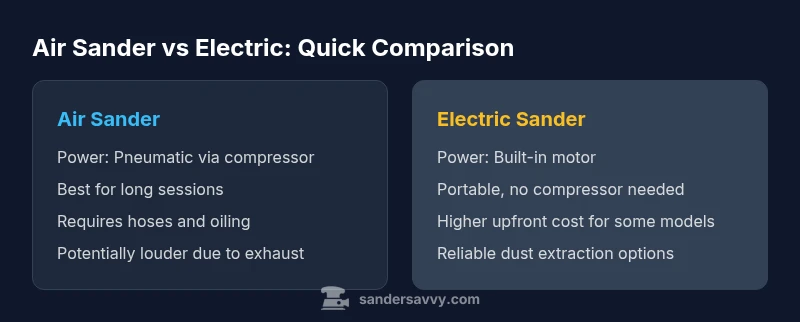
| Feature | Air Sander | Electric Sander |
|---|---|---|
| Power Source | Pneumatic via compressor | Built-in motor (corded or battery) |
| Speed Control | Variable via air pressure/throttle | Electronic or fixed speed with variable options |
| Weight (head)** | Typically lighter per stroke; hoses add weight | Generally heavier body with motor/battery |
| Dust Collection | Dust port; strong compatibility with shop vacs | Integrated dust collection; depends on model |
| Maintenance | Lubrication and moisture control in lines | Motor cooling, belt/pad checks, battery care |
| Noise | Can be louder due to compressor and exhaust | Depends on model; often quieter without hoses |
| Initial Cost | Lower upfront if you already own a compressor | Moderate to high; depends on battery packs |
| Best For | Sustained stock removal on large flat surfaces | Portability and finishing work in tight spaces |
What's Good
- Powerful, continuous stock removal when paired with a good compressor
- Lighter head mass reduces fatigue on long sessions
- Excellent dust extraction compatibility with shop vacs
- Wide availability of pads, grits, and regulators
- Durable tools with simple, rugged construction
Weaknesses
- Requires investment in a compressor and plumbing/hoses
- Moisture and oil management adds maintenance steps
- Noise management and air line routing can complicate indoor use
- Performance depends on compressor stability and air supply
- Potential risk of moisture-related corrosion if not filtered
Air sanders excel for heavy, continuous work when you have a reliable compressor, but for most DIYers, an electric sander offers easier setup and portability.
Choose air sander for high-volume stock removal and flat surfaces with an available compressor. Choose electric sander for portability, indoor use, and straightforward setup without extra equipment.
Your Questions Answered
Is an air sander better for large flat surfaces or heavy stock removal?
Yes. Air sanders typically offer sustained stock removal on large flat surfaces, especially when you can maintain a steady compressor supply. They are less limited by battery life and can run longer sessions without recharging. However, ensure your compressor can deliver consistent pressure and that you have a good dust extraction setup.
Air sanders are great for big jobs if you have a steady compressor.
Can I use an air sander indoors without exhausting fumes or moisture?
Indoor use is possible with proper dust collection and moisture filtration, plus a well-balanced compressor setup that minimizes humidity in the intake line. If you must work indoors, prioritize a dedicated dust extractor and consider temporary venting to prevent moisture buildup in the lines.
Yes, with good dust extraction and moisture control.
Do air sanders require a compressor, or can they run on a portable power source?
Yes, air sanders require a compressor to supply the necessary air pressure. They do not run on battery power. Ensure your setup includes a regulator, moisture filter, and appropriate hoses to prevent pressure spikes that affect finish quality.
They need a compressor, not a typical battery pack.
Which is better for finishing work, air or electric sanders?
Electric sanders often offer more consistent RPM and smoother finishes for finishing work, particularly with high-quality dust collection. Air sanders can also finish well when tuned correctly, but they require more operator skill to avoid gouges on delicate surfaces.
Electric sanders usually give steadier finishes.
Are air sanders more expensive to maintain than electric sanders?
Air tools require regular lubrication, moisture filtration, and line maintenance, which adds routine tasks. Electric sanders require motor and battery care plus occasional part replacements. Overall, maintenance costs depend on usage and the quality of the equipment.
Maintenance varies; air tools need more line upkeep, electronics need battery care.
What setup minimizes dust when using either sander?
Use a high-quality dust extraction system connected to the sander’s port, seal gaps around the work area, and select appropriate grit sequences for the material. For air sanders, ensure the regulator and moisture filters are optimized to prevent oil mist from contaminating dust collection.
Connect a good dust extractor and seal the workspace.
Main Points
- Assess your workshop power: compressor vs. electricity
- Choose air for long sessions and large surfaces; choose electric for versatility
- Prioritize dust collection and pad compatibility
- Test tools on scrap wood to judge finish quality
- Plan for maintenance and potential noise/air concerns