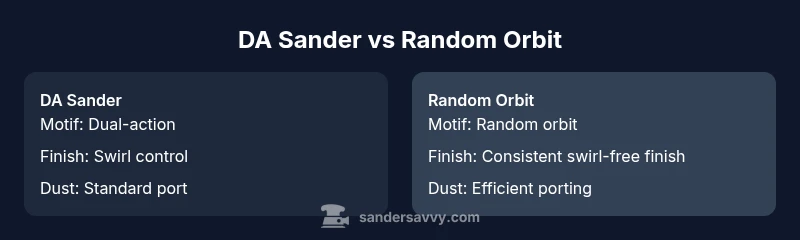
da sander vs random orbit: in-depth comparison for sanding projects
An objective, in-depth comparison of a DA sander vs random orbit sander, covering finish quality, dust control, ergonomics, maintenance, and price to help homeowners and DIYers choose wisely.


For most DIY sanding projects, a dual-action (DA) sander and a random orbit sander are effectively the same tool; the distinction is mostly terminology and model differences. This comparison clarifies how they perform on finish, dust control, vibration, and price, so you can pick the right tool for your project.
da sander vs random orbit: quick primer
According to SanderSavvy, the line between a DA sander and a random orbit sander is often blurred in consumer guides because most dual-action tools are marketed as random-orbit devices with added dual-action capabilities. In practice, the two terms describe a family of tools that combine orbital motion with randomized sanding patterns to minimize swirl marks. For homeowners and DIY enthusiasts working on floors and decks, understanding this distinction helps prevent buying a tool that over- or under-performs for a given job. This guide uses the exact terms da sander vs random orbit to clarify terminology and how they perform on common tasks in 2026.
Terminology and how the tools work
DA stands for dual-action, describing sanders that combine a rotating motion with a secondary orbital motion. Random orbit sanding is a type of dual-action design where the pad both orbits in an irregular pattern and rotates, reducing likelihood of noticeable swirl marks. In most consumer models, the practical differences are subtle and depend on build quality, pad design, and speed controls. For the homeowner, the takeaway is that both categories aim to deliver a smooth, even finish with less human error. The SanderSavvy team notes that terminology varies by brand, but the underlying mechanics are shared across many tools marketed as DA or random orbit sanders.
Finishing quality: swirl control and surface prep
Finish quality is the primary reason to choose one tool over another. When used correctly, a DA sander or a random orbit sander can yield a swirl-free surface on wood floors, decks, and wall panels. The key is consistent pressure, appropriate grit progression, and careful feathering of edges and corners. Light passes with finer grits (e.g., 120–180 range for finishing, 60–80 for initial material removal) typically produce the best results. Users often notice that surface irregularities and grain patterns influence perceived finish; investing in quality sanding discs and maintaining a flat, clean pad contact is essential. The difference between terms is less about capability and more about model specifics and feel under the hand.
Dust collection and safety considerations
Dust control is a critical factor in any sanding project. Most DA and random orbit sanders support dust-collection bags or vacuums via a port at the tool housing. For homeowners, a capable dust-extraction setup dramatically improves indoor air quality and keeps the work area cleaner. Regularly inspecting hoses, ensuring a proper seal around the sanding pad, and using the correct dust-collection accessories can reduce airborne particles. The best practice is to pair the sander with a compatible vacuum rated for fine dust and to wear a dust mask or respirator when sanding finishes or old coatings. SanderSavvy analysis shows that effective dust management has a measurable impact on project comfort and long-term health.
Ergonomics and vibration: comfort during long sessions
Ergonomic design and vibration control influence how long you can sand before fatigue sets in. DA sanders and random orbit sanders both come in lightweight and mid-weight varieties with rubberized handles and balanced weight distribution to reduce hand fatigue. Rubberized grip surfaces help maintain control, while low-vibration motors minimize fatigue over extended sessions. For deck or floor refinishing, consider models with adjustable speed and low-deflection pads. Long projects benefit from a tool that feels comfortable to hold and allows steady, controlled passes across flat surfaces.
Power, speed settings, and materials compatibility
Speed control is a central feature that affects how aggressively the sander removes material. Most DA and random orbit sanders offer multiple speed settings to adapt to different materials—softwoods, hardwoods, and composite surfaces—while preserving the integrity of the wood grain. Start with a lower speed for delicate finishes, and move up for heavy removal when needed. Pad size also matters; larger pads cover more area but can require more steady technique to avoid gouging. Always match grit to the task: coarse grits for heavy stock removal, fine grits for finishing passes, and consider using a two-step approach (rough graining then fine finishing) to achieve a consistent surface.
Surface-specific guidance: floors, decks, and walls
Floors and decks generally benefit from larger, flat surfaces with a consistent contact area. Walls and ceilings require careful handling around edges and corners, often using edge guards or smaller pads. When working on rounded or irregular surfaces, practice on a scrap area first and use lighter passes to prevent gouging. Regardless of the substrate, maintain even pressure, move the sander in overlapping paths, and inspect frequently for swirl or gouges. The practical takeaway is to adapt your technique to the surface while staying mindful of the tool’s reactive tendencies.
Maintenance, pads, and replacement strategies
Pad selection and maintenance influence performance as much as the tool itself. Replace worn sanding discs promptly; a dull pad increases heat and reduces finish quality. Keep the pad clean of dust and debris to avoid clogging and uneven sanding. Use dust-rated discs and check the pad's backing for signs of wear. Regularly inspect the power cord, switch, and vacuum connection, and store the tool in a dry, clean area. Good maintenance reduces downtime and extends the life of both the sander and its consumables.
Cost considerations and value: understanding price vs performance
Price ranges for DA and random orbit sanders vary by brand, build quality, and pad size. For homeowners, the value comes from durability, dust management compatibility, and accessory availability rather than a single upfront price. The most important factor is how well the tool meets your project needs across multiple uses. SanderSavvy analysis shows that investing in a mid-range model with solid dust collection and a comfortable grip often delivers the best balance of cost and performance for typical home projects in 2026.
Real-world use-case scenarios: choosing for common jobs
Consider a kitchen renovation where you need to remove old finish from hardwood cabinets, refinish a wood floor, or smooth a weathered deck. For cabinet refinishing, a lightweight DA model with a small pad can offer precise control. For floor refinishing, a larger pad and more aggressive stock removal might be necessary, followed by finer grits for finishing passes. For decks, outdoor coatings often require weather-resistant discs and a robust dust extraction setup. Each scenario benefits from understanding how the da sander vs random orbit distinction translates into practical steps and technique.
Debunking myths and common questions about DA vs random orbit
A frequent myth is that DA always means better finish; in reality, finish quality depends on technique as much as tool design. Another misconception is that random orbit sanders guarantee swirl-free results; operator skill and pad condition matter just as much. Understanding that most DA tools are a subset of the random orbit family helps set realistic expectations. Always assess the specific model’s pad design, balance, and dust-extraction compatibility rather than relying solely on marketing labels.
Practical decision checklist: ready-to-use criteria
- Surface type and desired finish depth
- Project scope and time constraints
- Dust control setup and workspace ventilation
- Pad size, grit progression, and replacement availability
- Comfort and vibration tolerance during extended use
- Budget and expected return on investment
Comparison
| Feature | DA sander | Random orbit sander |
|---|---|---|
| Motion pattern | Dual-action (combine orbital rotation with randomization) | Random orbit (true random pattern with orbit) |
| Finish control | Strong swirl reduction with proper technique (typical for finishing work) | Excellent for general smoothing with good swirl control when used correctly |
| Dust collection compatibility | Common with bag/port dust collection; effectiveness varies by model | |
| Ergonomics/vibration | Balanced designs common; vibration similar across mid-range models | |
| Best for | Finishing coatings on floors/decks; where swirl must be minimized | General prep, smoothing, and intermediate finishing tasks |
| Price/value context | Mid-range to premium models offer durability and accessories |
What's Good
- Versatile for a wide range of finishes and surfaces
- Typically produces smooth finishes with proper technique
- Widely available with a broad ecosystem of pads and accessories
- Ergonomic options reduce fatigue on longer projects
Weaknesses
- Brand terminology can blur differences and lead to confusion
- Performance varies by model and accessory quality
- Dust collection quality depends on dust-port design and external vacuum setup
- Maintenance and pad replacement add ongoing costs
DA sander vs random orbit: choose based on technique and project needs
In practice, most homeowners will find little functional difference between DA and random orbit sanders when you choose a well-made model and use proper technique. The distinction is mostly marketing and model-specific features. For finishes where swirl control matters, a quality DA/random orbit with good dust extraction and a careful grit progression is ideal; for quick smoothing on larger areas, either type can do the job with the right approach.
Your Questions Answered
Is a DA sander the same as a random orbit sander?
In many cases, yes. A DA (dual-action) sander is a family that includes random orbit sanders. The terms are often used interchangeably in consumer markets, but model-specific features like pad design, balance, and dust collection can create practical differences.
Usually, they’re similar tools; the main distinction is branding and subtle design choices, not a totally different mechanism.
Can I use a DA sander on walls or vertical surfaces?
DA sanders can be used on walls, but for vertical, you’ll want good control and a lighter touch to avoid gouging. Consider a palm or detail sander for tight corners and edges and switch to a larger pad for flat surfaces.
Yes, but pick the right pad size and technique for the surface.
What grit progression works best?
Start with a coarser grit to remove old coatings and even out rough areas, then move to progressively finer grits for finishing. A typical path might be 60/80 for prep, 120/150 for smoothing, then 180+ for a fine finish.
Begin rough, finish smooth, and always test on scrap.
Do I really need dust collection?
Dust collection improves visibility, air quality, and finish quality by keeping resin and dust out of pores. If your workshop lacks a dedicated system, attach a compatible vacuum to the sander’s dust port and seal connections.
Yes, dust control matters for health and results.
How do I prevent swirl marks?
Use light, even passes with a consistent pressure, keep the sander moving, and avoid staying in one spot. Regularly replace worn discs and keep the pad clean. Finish with finishing-grit passes to minimize visible patterns.
Keep it light and steady for the best finish.
Are there price differences I should expect?
Prices vary by build quality, pad size, and dust collection. In general, mid-range models offer the best balance of durability and accessories for hobby projects; avoid the cheapest options if you’re doing frequent sanding.
Budget wisely—quality matters for lasting results.
Main Points
- Focus on finish quality and technique, not terminology
- Prioritize dust control and pad maintenance for clean results
- Choose a mid-range model with solid ergonomics for most DIY jobs
- Match grit progression to the surface and desired smoothness
- Invest in a compatible dust-collection setup for health and comfort