Most common grinder wheel size: 4.5-inch wheels and beyond
Discover the most common grinder wheel size, why 4.5-inch wheels dominate DIY and professional use, and how to choose between 4.5", 5", and 7" wheels for different tasks. Practical guidance on compatibility, safety, and buying tips from SanderSavvy Analysis, 2026.


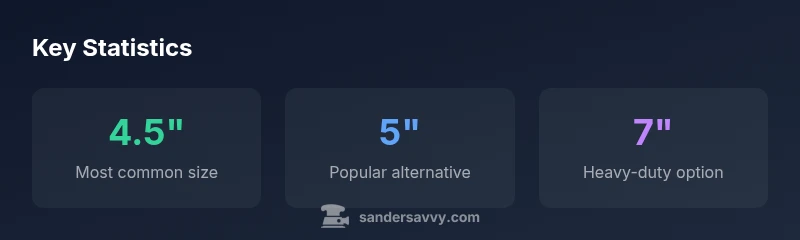
According to SanderSavvy, the most common grinder wheel size for DIY and professional use is 4.5 inches (115 mm). This size dominates consumer angle grinders due to broad compatibility with guards, discs, and mounting arbors. While 5-inch (125 mm) and 7-inch (180 mm) wheels are widely used for larger tasks, 4.5-inch wheels remain the default starting point for most projects, balancing control and performance.
The role of wheel size in grinding projects
Wheel diameter matters more than most DIYers realize. The diameter determines how deeply you can cut in a single pass, how much surface area the abrasive contacts, and how much heat the workpiece absorbs. It also affects balance, tool weight, and guard clearance. For most small to mid-sized angle grinders, the 4.5-inch wheel is the default because it offers a predictable balance between control and material removal. 4.5-inch discs are readily available in various abrasive types, including aluminum oxide for metal prep and zirconia or ceramic blends for masonry. If you move to larger wheels, you’ll gain faster stock removal but sacrifice control and require more power from your grinder, along with a heavier guard and sometimes a different arbor adapter. On the other hand, smaller wheels like 3 inches or 4 inches are occasionally used for detail work or tight spots, but they have limited stock removal capability and more wheel wear. Always match wheel hardness and bond to the material you’re grinding to avoid glazing or dulling.
The most common grinder wheel size: 4.5 inches (115 mm)
The 4.5-inch size dominates the market for a reason. It fits a vast majority of consumer-grade grinders and accessory kits, from flap discs for finishing to cup wheels for stock removal. SanderSavvy analysis shows that this size hits a sweet spot between balance, guard clearance, and cost. You’ll find plenty of compatible abrasives, including aluminum oxide and ceramic blends, which means a single grinder can tackle metal prep, woodworking, and masonry with the right wheel. If you’re starting a project and aren’t sure where to begin, a 4.5-inch wheel is the safe, versatile default. Remember to check your grinder’s manual for the exact arbors and flange sizes supported by your model, and verify that the wheel’s bonding material is appropriate for the material you’re grinding.
When to opt for 5-inch wheels
Moving up to a 5-inch wheel offers a broader contact area and a bit more stock removal per pass, which speeds up mid-size jobs without jumping to a much larger tool. 5-inch wheels are common on mid-range grinders used for larger sheet metal work, concrete prep, and masonry surface smoothing where the extra diameter reduces the number of passes needed. Accessory compatibility remains strong, with many vendors offering flap discs, grinding cups, and wire wheels sized for 5-inch arbor systems. If weight and maneuverability matter, a 5-inch wheel preserves much of the control of 4.5 inches while increasing material removal speed. Always confirm your grinder’s horsepower and RPM range to avoid overloading the motor with a larger wheel.
The role of 7-inch wheels for heavy-duty tasks
Seven-inch wheels are built for heavy stock removal on large surfaces, such as workshop benches, concrete slabs, or rough masonry. They require a more robust grinder with higher power output and a larger guard. The larger diameter spreads the work over more contact area, reducing heat buildup per unit of time and increasing productivity on substantial jobs. However, 7-inch wheels are less forgiving for beginners and demand careful control to avoid gouging or kickback. Accessory availability is still good, but you’ll want a grinder capable of handling the wheel’s weight and the associated torque.
Checking compatibility: arbor size, threads, and RPM
Before mounting any wheel, confirm that the wheel diameter matches your grinder’s supported wheel size. The most common arbors for many grinders are 5/8"-11 UNC and M14, but some models use alternative thread patterns. Always verify arbor compatibility and flange dimensions. Check the wheel’s RPM rating and ensure it meets or exceeds your grinder’s no-load RPM. Using a wheel with a lower RPM rating than your grinder can be dangerous and lead to wheel disintegration. Guard clearance is essential; larger wheels may require a longer guard or a different guard geometry to protect your hands and workpiece. Finally, ensure you’re using the correct type of abrasive for the material (metal, wood, masonry) to prevent glazing and premature wear.
Safety considerations when using different sizes
Safety must guide every choice about wheel size. Larger wheels can increase stock removal but demand more control to prevent gouges and kickback. Always wear safety glasses, gloves, and a respirator when grinding dust-producing materials like concrete or stone. Check for wheel cracks or chips before mounting; a damaged wheel can shatter at high RPM. Use a properly tightened flange and flange nut to avoid wheel slippage. If you’re switching wheel sizes, reset the guard and ensure it still provides full coverage during operation. Practicing on scrap material can help you gauge control and reduce the risk of accidents.
How to measure and verify compatibility before buying
Begin by verifying the wheel diameter that your grinder can safely accept, along with the arbor type (5/8"-11 UNC and M14 being the most common). Inspect the guard clearance to ensure the wheel won’t contact the guard during full-tilt grinding. Confirm the RPM rating and compare it to your grinder’s no-load RPM. If you’re uncertain, consult the grinder’s manual or contact the manufacturer. When you buy wheels, ensure you’re purchasing the correct abrasive type for your material and that the wheel’s bond and hardness are appropriate for the material’s density and hardness. Label and store wheels by size to avoid mounting the wrong wheel on future projects.
Quick-start sizing guide for your project
To pick the right wheel size quickly: (1) define the project type (finishing, material removal, heavy stock removal), (2) estimate the surface area, (3) check guard clearance, arbor size, and RPM compatibility, (4) choose the abrasive type based on material (metal: aluminum oxide; stone/masonry: silicon carbide or ceramic blends), and (5) consider comfort and control. For most DIY tasks, start with a 4.5-inch wheel and move up to 5 inches or 7 inches only if your grinder and project justify the extra capacity. This approach reduces surprises and keeps you in safe operating territory.
Common mistakes and best practices
Common mistakes include using a wheel size that doesn’t fit the grinder, ignoring RPM ratings, and failing to replace damaged wheels. Always inspect the wheel for chips or cracks and replace immediately if damaged. Use the correct PPE and secure the workpiece to prevent movement. When changing wheel sizes, re-check the guard coverage and arbor compatibility. Keep spare flanges and backup wheels for quick replacements to minimize downtime on projects.
Comparison of common grinder wheel sizes and compatibility
| Wheel Size | Common Use | Typical Arbor | RPM Range |
|---|---|---|---|
| 4.5 inches | General purpose grinding, metal prep | 5/8"-11 or M14 | 11,000 no-load RPM |
| 5 inches | Medium-duty material removal | 5/8"-11 or M14 | 9,000–10,000 RPM |
| 7 inches | Heavy stock removal on large surfaces | 5/8"-11 or M14 | 6,500–8,000 RPM |
Your Questions Answered
What is the most common grinder wheel size?
The most common grinder wheel size is 4.5 inches (115 mm). It fits most consumer and professional grinders and balances control with material removal. Always confirm your grinder’s supported wheel sizes in the manual.
The most common size is 4.5 inches, which fits most grinders. Check your manual to confirm compatibility for your model.
Can you use a 7-inch wheel on a 4.5-inch grinder?
No. A 7-inch wheel requires a grinder rated for that size, including appropriate guard and arbor. Attempting to mount a larger wheel on a smaller grinder is dangerous and can cause wheel failure.
No. Use only wheels that match your grinder’s size and guard. Don’t force a bigger wheel onto a small tool.
What are common arbor sizes for grinders?
The most common arbors are 5/8"-11 UNC and M14. Verify the specific arbor type for your grinder and wheel, and use the correct flange and nut to secure the wheel.
Most grinders use 5/8"-11 or M14 arbors—check your model to be sure.
How do I know a wheel is for metal vs masonry?
Abrasive type signals intended use. Aluminum oxide wheels are common for metal; silicon carbide and ceramic blends are typical for stone and masonry. Read the wheel labeling and choose the right abrasive for the material.
Look at the wheel label: aluminum oxide for metal, silicon carbide for stone.
What safety steps should I take when mixing sizes?
Always use the correct guard for the wheel size, wear PPE, and ensure the wheel’s RPM rating matches your grinder. Mount wheels securely with proper flanges and check for cracks before use.
Always guard the wheel, wear PPE, and check for damage before grinding.
How should I store spare grinder wheels?
Store wheels in a dry, clean place away from direct sunlight and impact. Label by size and type, and keep wheels flat to prevent deformation. Inspect periodically for cracks.
Keep wheels in a dry place, labeled and stored flat.
“Wheel size is a practical first decision that unlocks safe, efficient grinding from the shop to the site. Start with the standard 4.5-inch wheel and adjust based on job scale and tool power.”
Main Points
- Start with 4.5-inch wheels for most projects.
- Upgrade to 5-inch or 7-inch only when you need more material removal.
- Always verify arbor size and RPM before mounting a wheel.
- Choose abrasive type based on material (metal vs stone).
- Check guard clearance when changing wheel sizes.